Paris, The Louvre, and The Code of Hammurabi

A recent discussion in the blogosphere about contracts reminded me of a real highlight at The Louvre: The Code of Hammurabi. We walked our legs off, following the nearly incomprehensible map of the Louvre and tromping for what felt like miles through rooms of antiquities so complete it was like walking through slices of history. (More later on those rooms!)

Ah, but The Code of Hammurabi, standing supreme in its room, is well worth the effort.
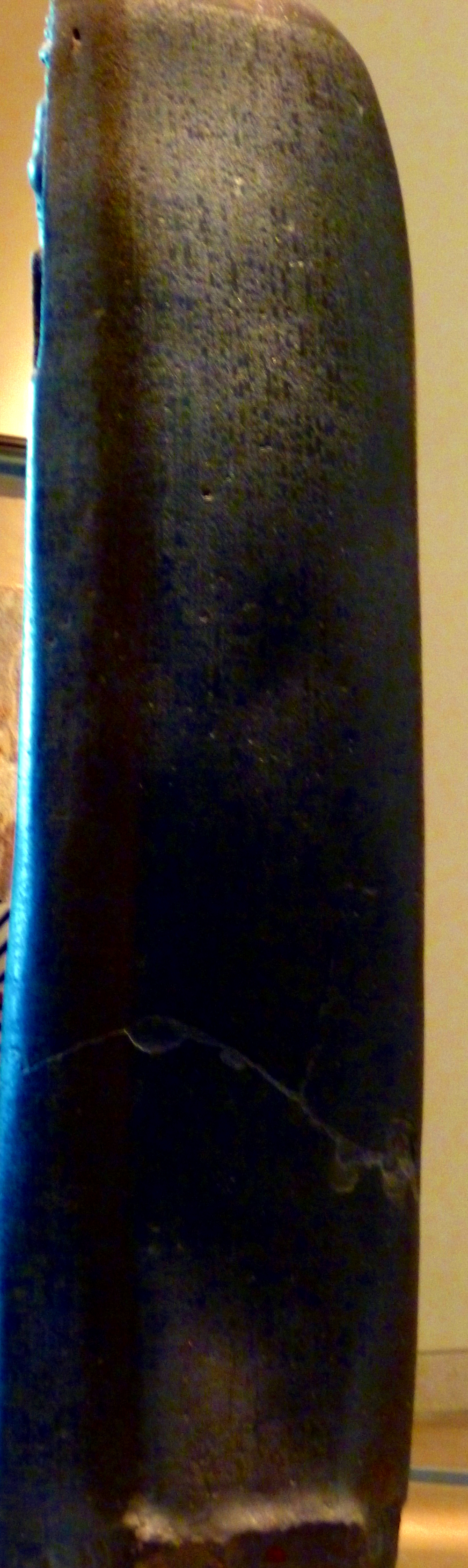
The Code of Hammurabi

The Code of Hammurabi is one of the earliest written laws, dating back to the Old Babylonian period. According to Wikipedia:

…dating back to about 1772 BC. It is one of the oldest deciphered writings of significant length in the world.  … Nearly one-half of the Code deals with matters of contract, establishing, for example, the wages to be paid to an ox driver or a surgeon. 

Of course, its translation at the museum is into French. I did try to read it, but my French is very weak and I didn’t pick up on how much was devoted to contract law.

Code of Hammurabi translation to French

There are a lot of things wrong with my society. Probably there always will be. Hopefully different things because hopefully we will continue to evolve into an enlightened society. Seriously, can we get there already? But this relic made me stop and appreciate living in a society governed by law. Even if some of the laws seem about as outdated to me as the ones chiseled on this stone, and other laws we need don’t yet exist, we all basically agree there is law and, for the most part, we all follow the law. A civil society order affords the freedom to live, have property, not to be property, and to know what to expect. And this big rock did the same thing for the Babylonians. There in the center of town for all to see, it listed the rules and the punishments for breaking those rules.

The institutions of law compose a fundamental basis for a fair society. And a fair society is one that thrives.
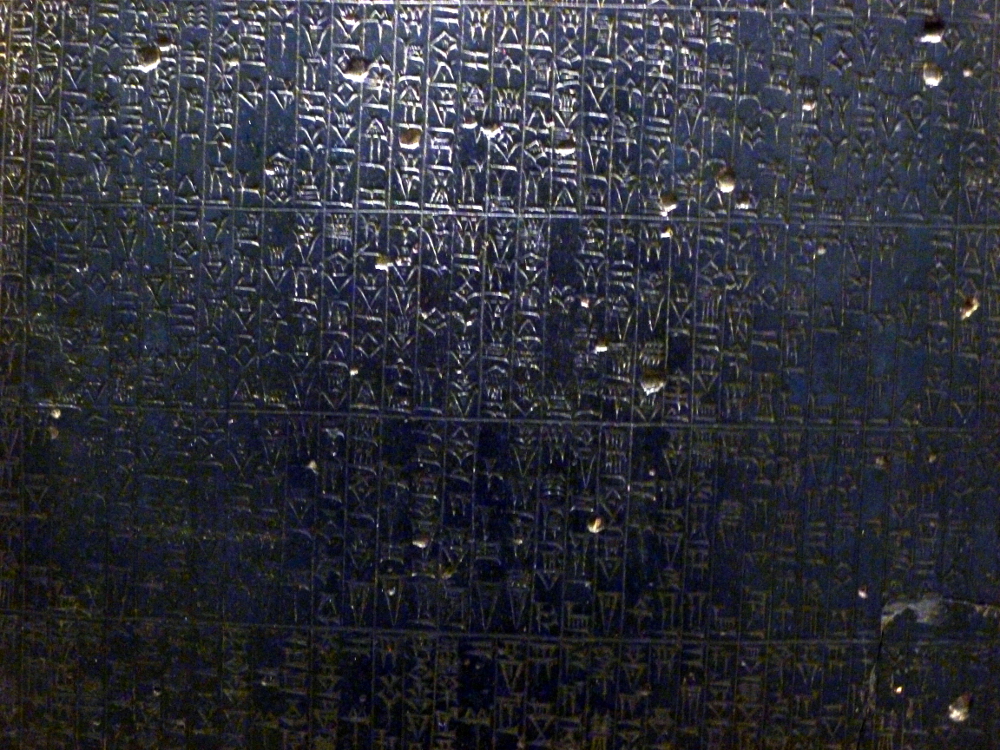
Code of Hammurabi detail

(Wikipedia is worth checking out on this topic. There’s an earlier set of laws, for example, called The Code of Ur-Nammu, from a city-state called Ur in Mesopotamia. I just love all the words. Ur. Mesopotamia. Ur’s patron deity was Nanna (god of the moon). I want to write a story about Nanna and the king of Ur.)

Paris art, Pierre Bonnard and the Nabis

With the benefit of hindsight and museum curators, it’s easy to know what is “great art” and what constitutes a “school of art.” But in real time, artists have to believe in themselves, often without recognition. There is usually not an expert who comes along with a magic wand and deems:  “Thou art an Artist.” An artist must believe in her or himself. And if they can team up with other artists to create a “school,” this again happens only because they decide this and make it so. Artists are brave souls who enrich our lives in ways that sometimes last for centuries.

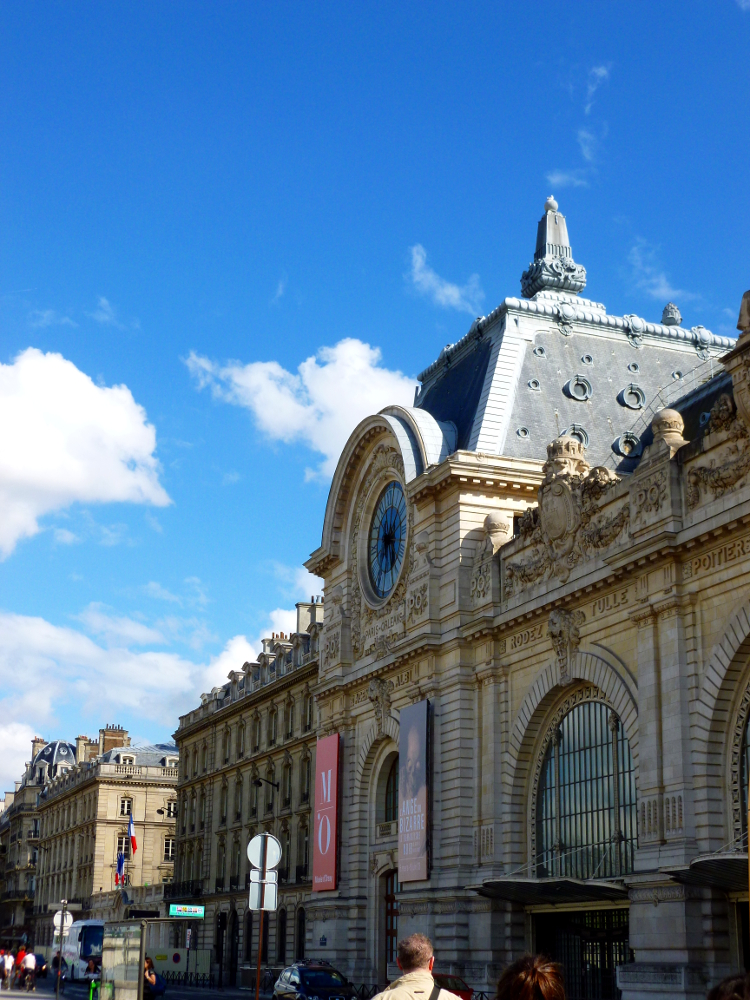
I first was introduced to the work of Pierre Bonnard by a painting teacher at a little adult education class I took in Palo Alto. I was fascinated by how he painted walls, with so many colors. To see one of his paintings with the multi-colored walls, see this blog post about New York and art. On that day, I was  thrilled to come upon one of his paintings in the Monet gallery. The Bonnard was there only because the Monet usually occupying that space was “away on tour.” At the D’Orsay Museum in Paris,

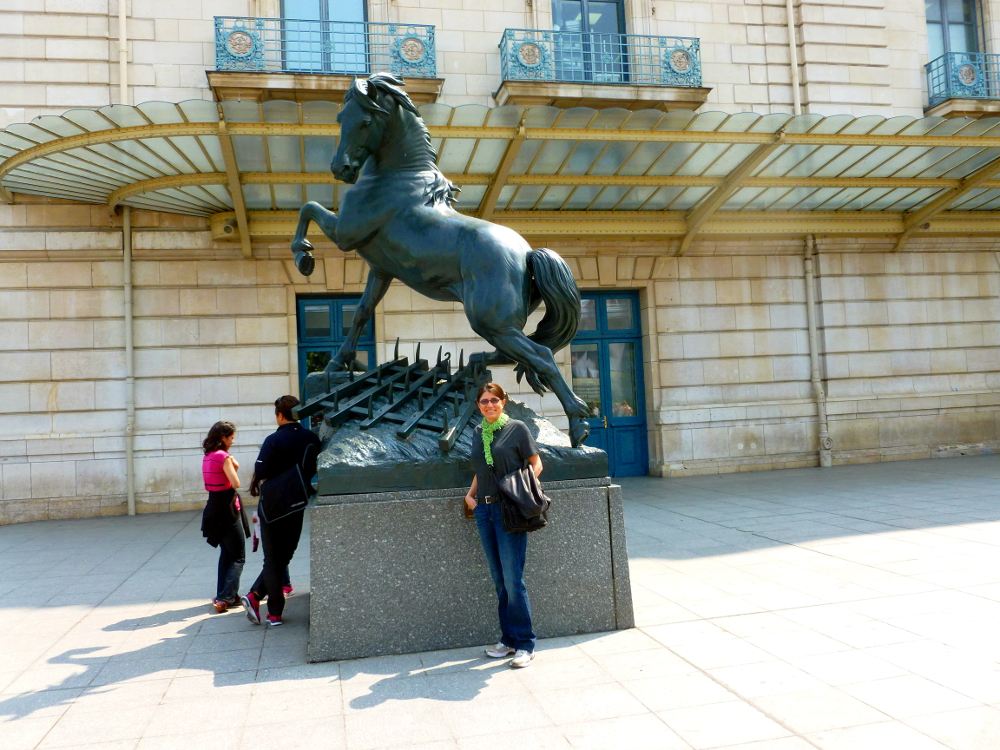
Outside the D'Orsay Museum
Outside the D’Orsay Museum
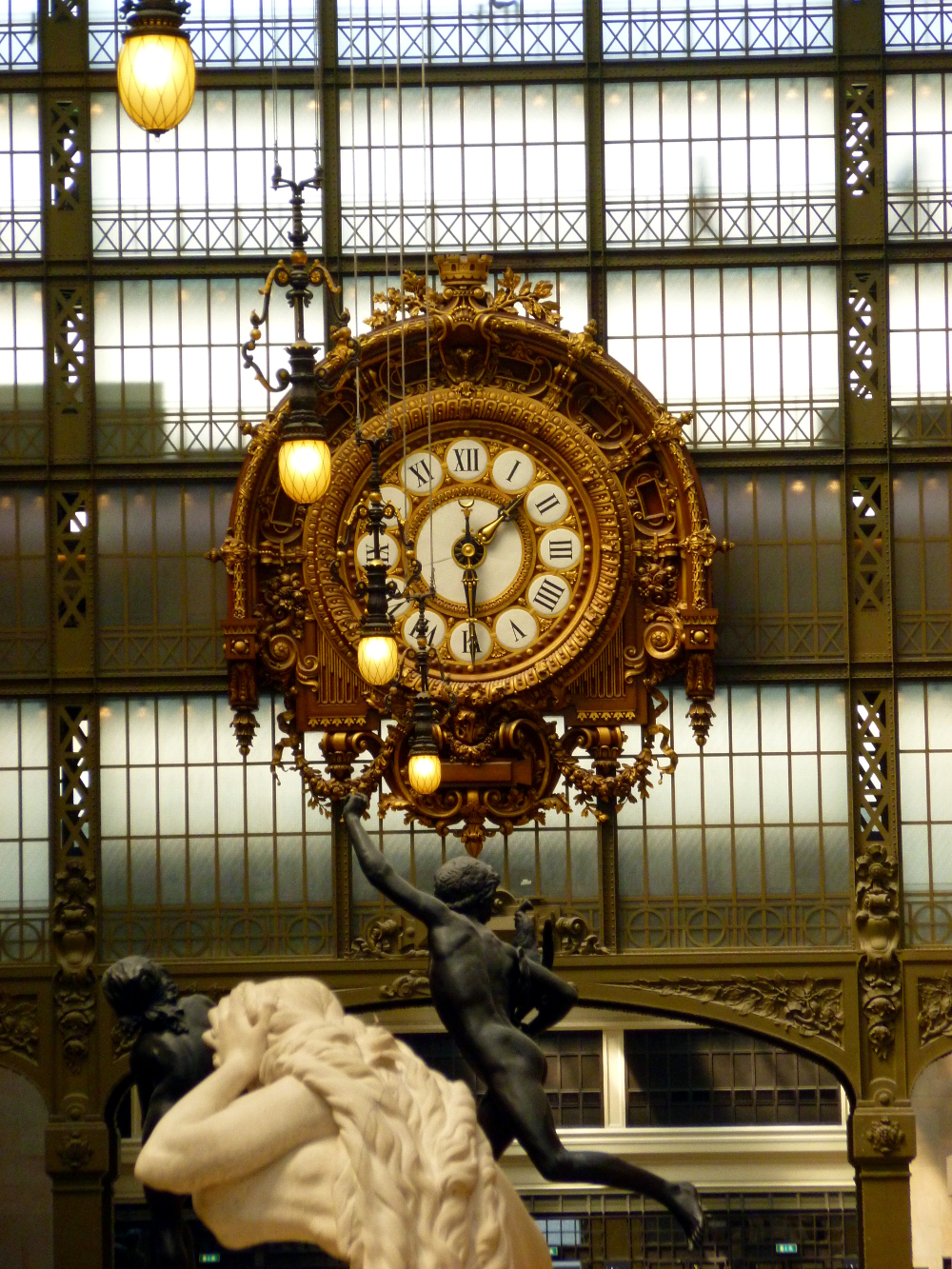
Inside the D'Orsay Museum, a converted train station.
Inside the D’Orsay Museum, a converted train station.
The clock inside the D'Orsay Museum, preserved from its days as a train station.
The clock inside the D’Orsay Museum, preserved from its days as a train station.

I found more Bonnard and learned more about his artistic context.

With the Nabis, artists of like mind pronounced themselves a school of artists, creating beautiful works of art and advancing the art of painting.

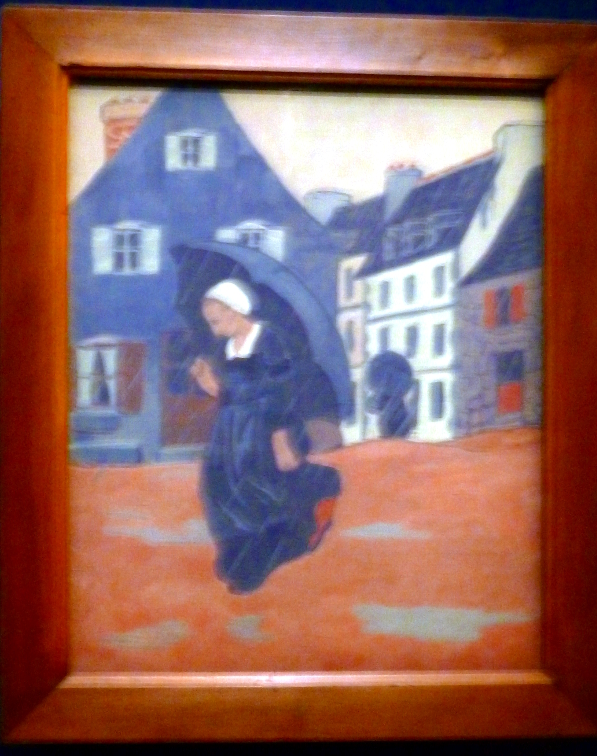
The following description is on the wall at the gallery entry, next to The Downpour.

The Nabis

The term “Nabi” first appeared in a letter by Paul Sérusier. Derived from the Hebrew word “navi,” meaning “prophet,” it refers to a group of artists who regarded themselves as the messengers of a new art form based on an interpretation of Gauguin’s ideas.

The movement evolved over a period of some twelve years, from 1888, with Sérusier’s Talisman, to 1900, the date of the group’s final exhibition at the Bernheim-Jeune Gallery. It brought together artists as diverse as Pierre Bonnard, Maurice Denis, Henre-Gabriel Ibels, Georges Lacombe, Aristide Maillol, Paul Ranson, Jozsef Rippl-Ronai, Ker-Xavier Roussel, Paul Sérusier, Félix Vallotton and Édouard Vuillard.

There were two distinct trends within the group: artists attracted by esoteric and religious subjects, and others who subscribed to an intimate style portraying family life and domestic interiors.

Paul Serusier, The Downpour

The Nabis freed themselves from the straitjacket of faithful representation in favor of subjectivity, symbols and dreams. Influenced by Japanese prints, they adopted a synthetic stylization characterized by planes of pure color, splashes of color and sinuous lines. They worked in a number of different formats, from small pictures to large scale decorations.

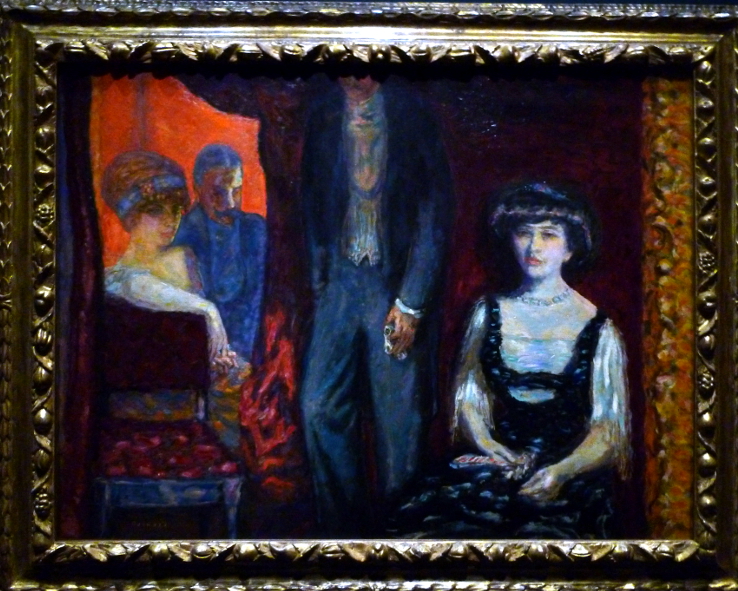
Bonnard

Travel theme: Sculpture

CORRECTION made 6/30/13, added the photo of the bust. (3rd photo.)

This is for Lesley Carter’s travel theme.

Paris sculptures:

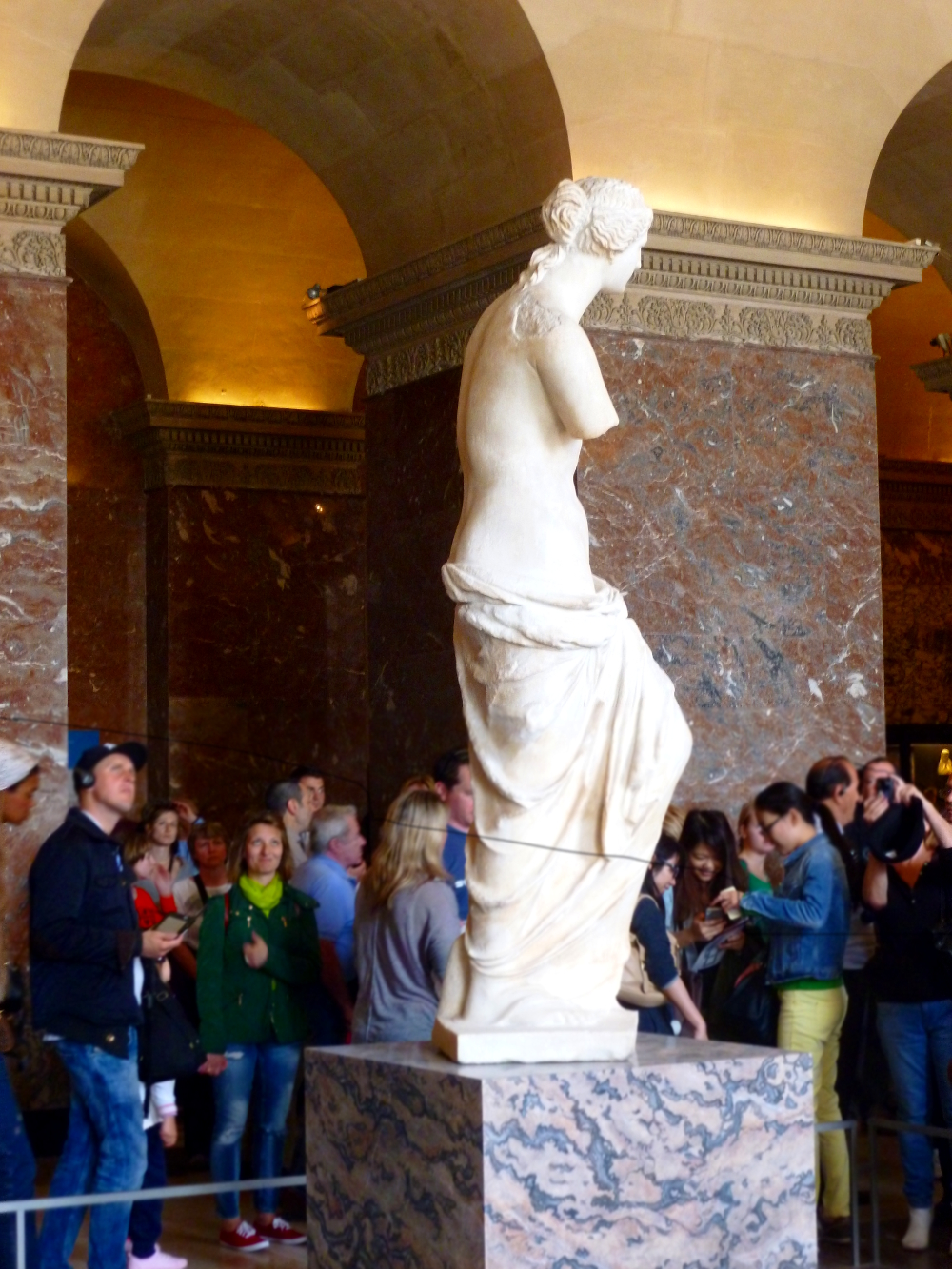
Venus de Milo
Venus de Milo
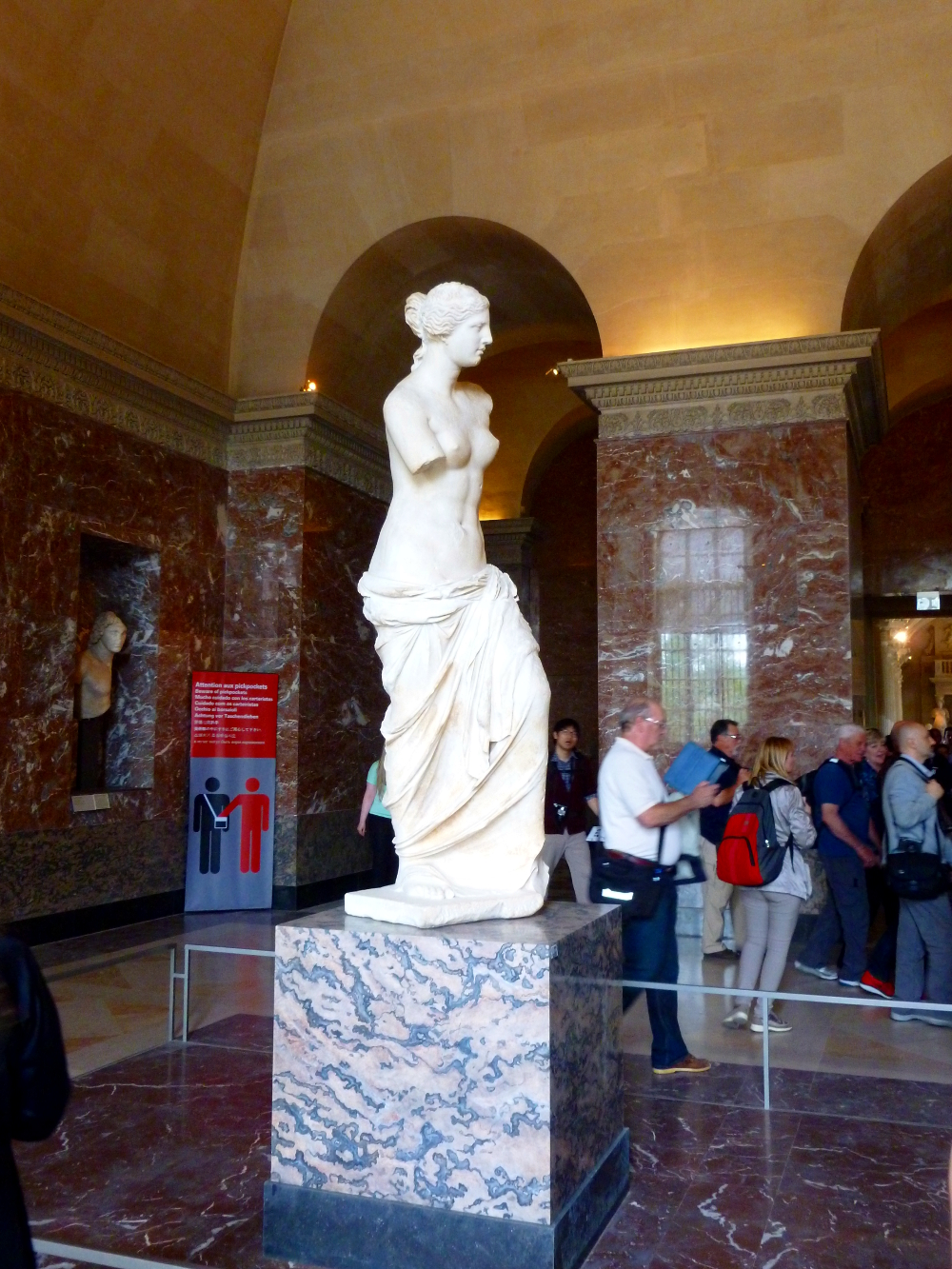
Venus de Milo 2
Venus de Milo

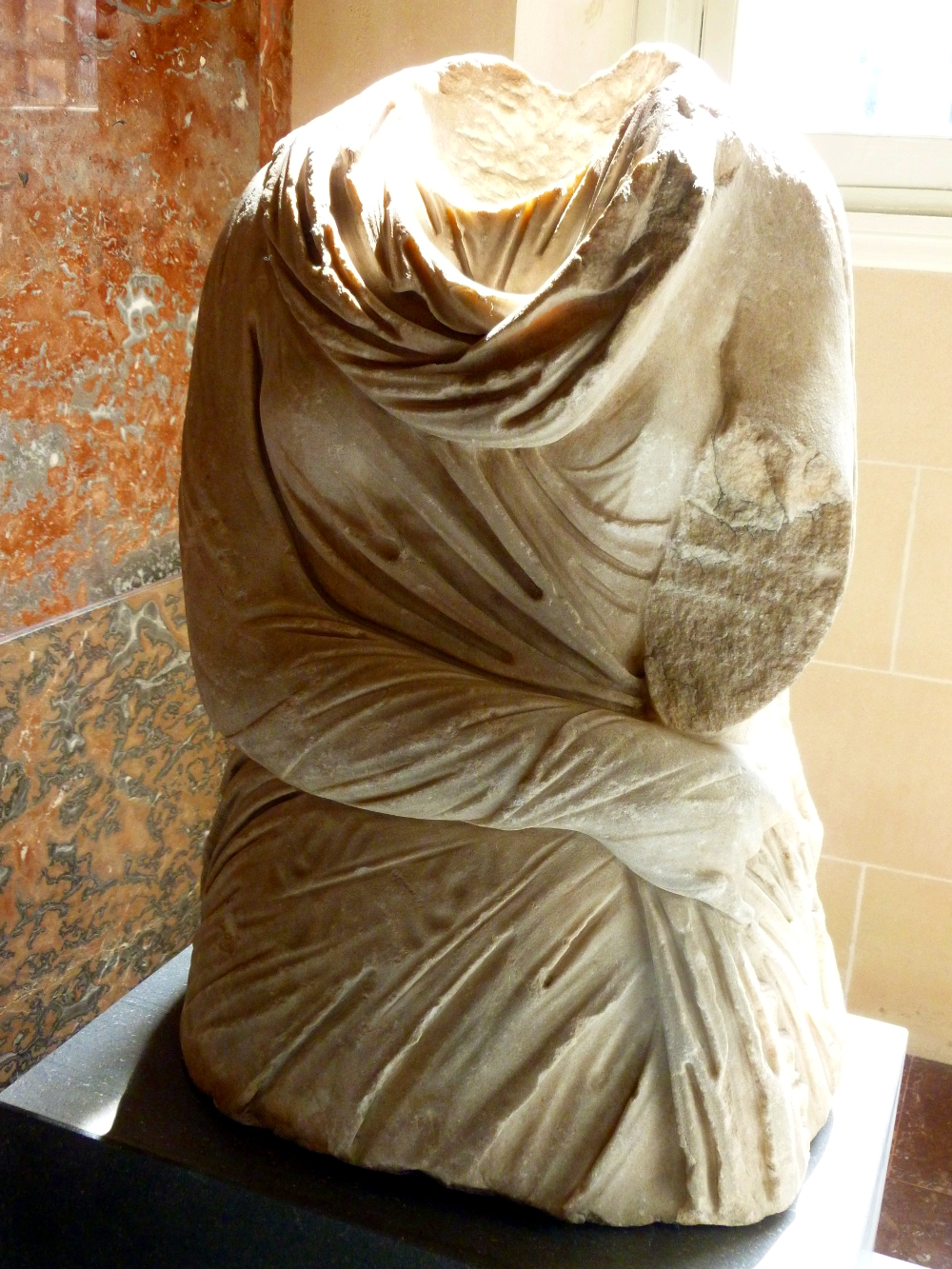
This draped bust, displayed near the Venus de Milo, was sculpted around the same time (first century BC). The bust was adapted to a lower block that was carved apart, and which included the pelvis and sculptured legs. (I think… relying on Google translation.)

Bust at the time of Venus de Milo

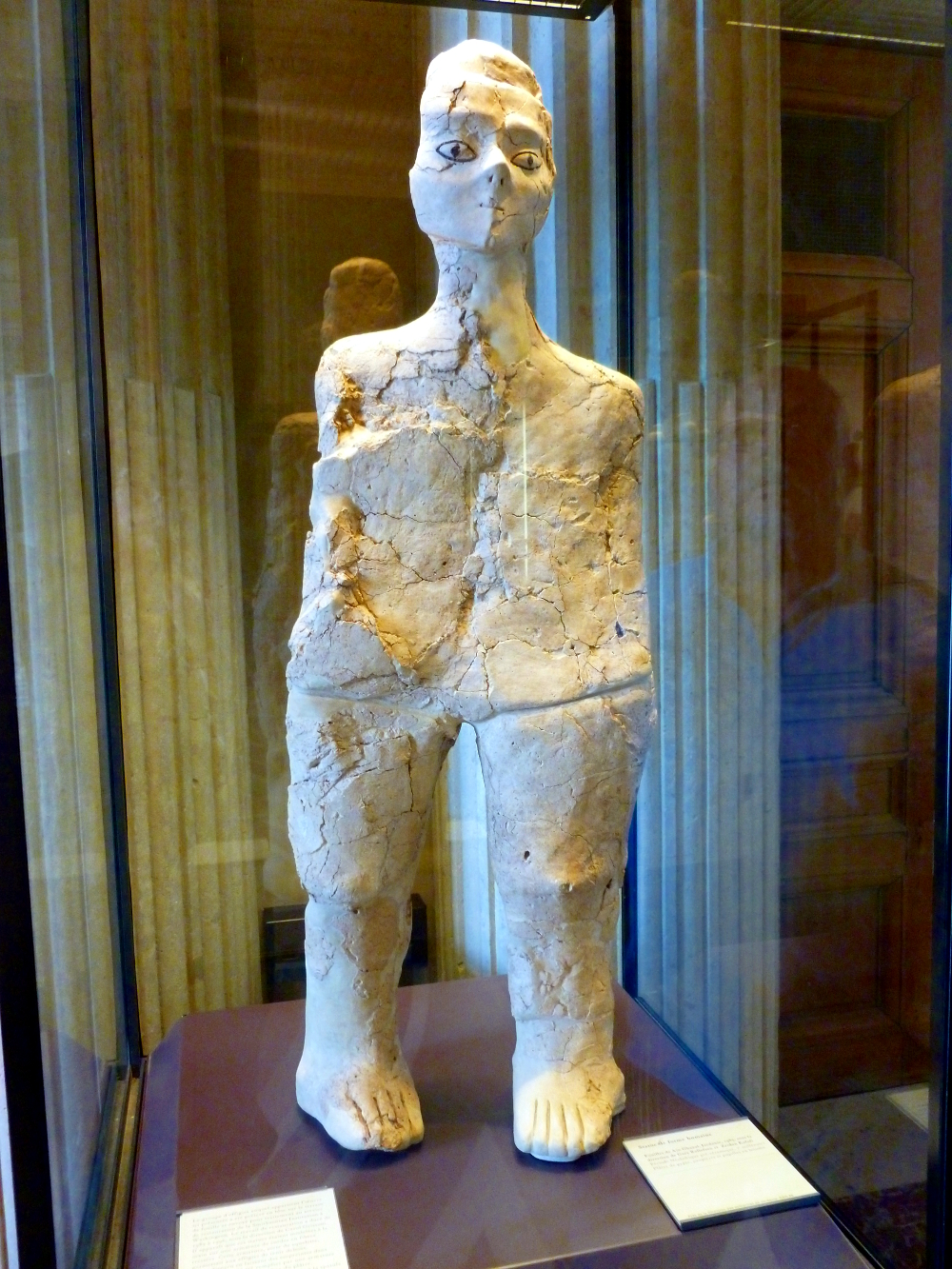
This next one is amazing. Here is what the info sheet said (emphasis mine):

Discovered at Ain Ghazal during the joint Jordanian-American archaeological excavations carried out in 1985 and subsequently restored in Washington at the Smithsonian Institution Conservation Analytical Laboratory from 1985 to 1996, the statue has been loaned to the Louvre for a period of 30 years. At 9,000 years old, this is the oldest work presented at the Louvre.

Ain Ghazal (the “gazelles’ spring“) was founded in the eighth millennium BC and prospered for 2,000 years.

The statue belongs to what is known as the pre-Pottery Neolithic Period, a Neolithic culture which existed during the seventh millennium BC throughout the whole Fertile Crescent. Structures dating from this period were produced using plaster obtained through the calcification of the local gypsum, with the aid of primitive pyrotechnics.

New practices emerge from new ways of thinking: skulls from certain bodies — possibly those of local leaders — were preserved separately and modelled with an outer layer of plaster or clay, which seems to suggest the existence of some form of ancestor worship. Almost 30 plaster statues, including this one, were discovered in shallow ditches at Ain Ghazal. These take the form of standing figures or busts, which can be either single or double headed.

All of these effigies were designed to stand upright vertically. They were buried in small groups, on several occasions.

We do not know their meaning, with their purpose probably being an imaginary or ritualistic one, although we can assume that they were intended to encourage the cohesion of the community.

The Ain Ghazal statue is presented at the Louvre thanks to an agreement with the Department of Antiquities of Jordan. this is the first time that a work belonging to a Middle Eastern country, which retains ownership of the item, has been exhibited along with the Louvre’s permanent collections. In Exchange, the French Museums Department and the Museum of the Louvre have contributed to the restoration and preservation of a monument in Jordan, a limestone and painted stucco sanctuary built during the second century BC and replaced by the Roman temple, which can be seen there today.

Ain Ghazal