Note: All tree closeups I owe to sethsnap.com for teaching me to see “tree art.” http://sethsnap.com/2013/02/16/tree-art-of-halls-creek/.







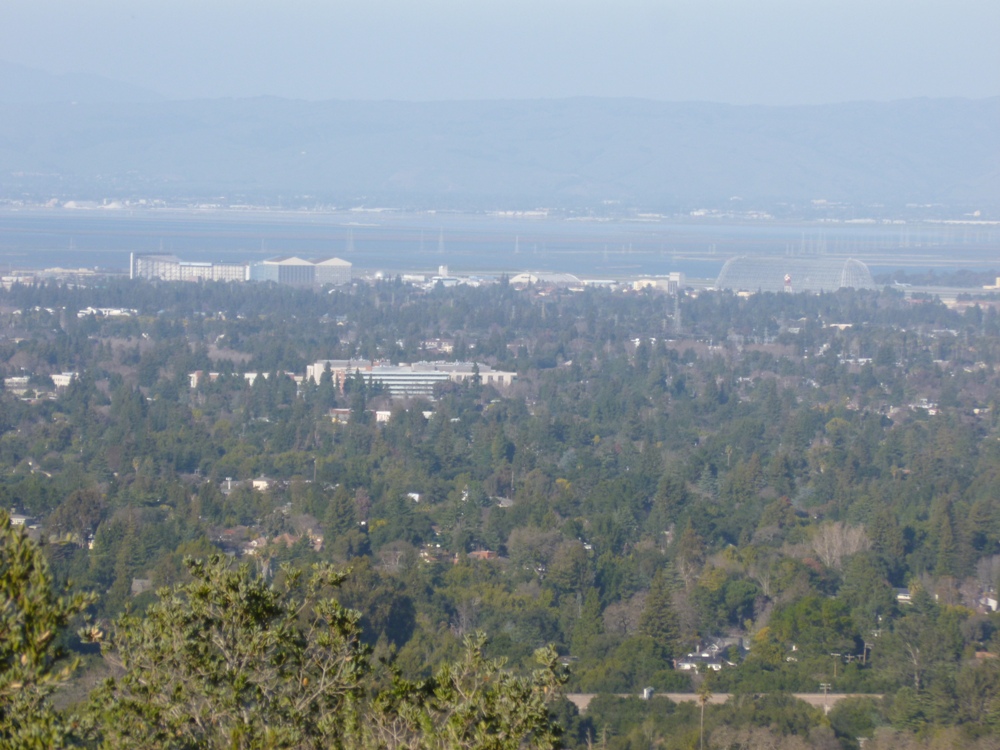
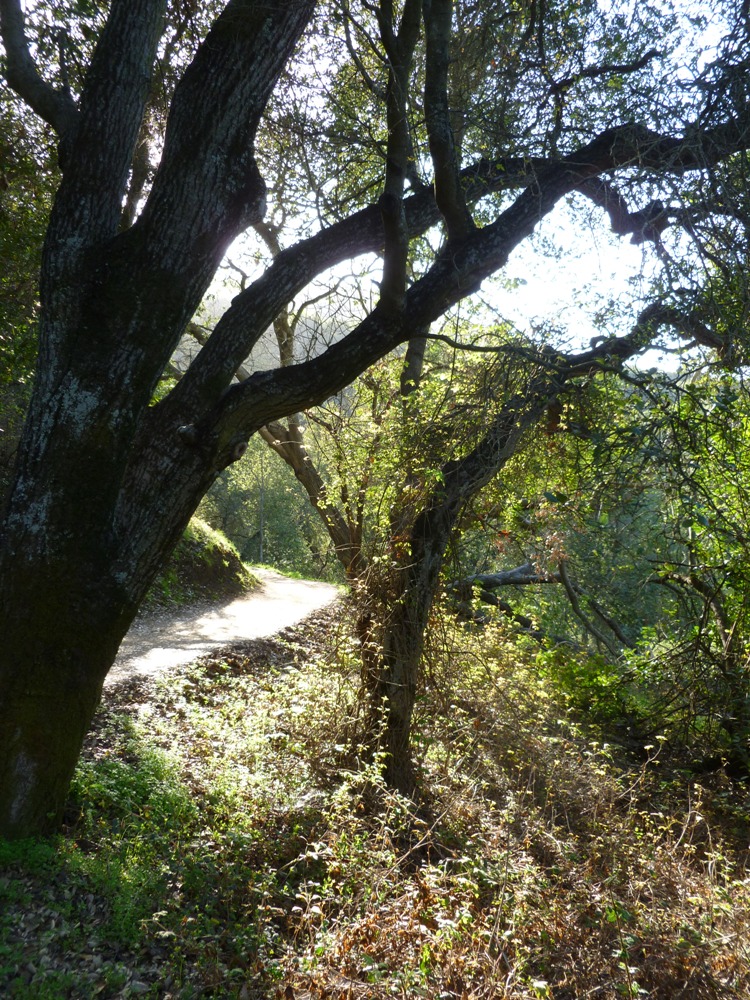
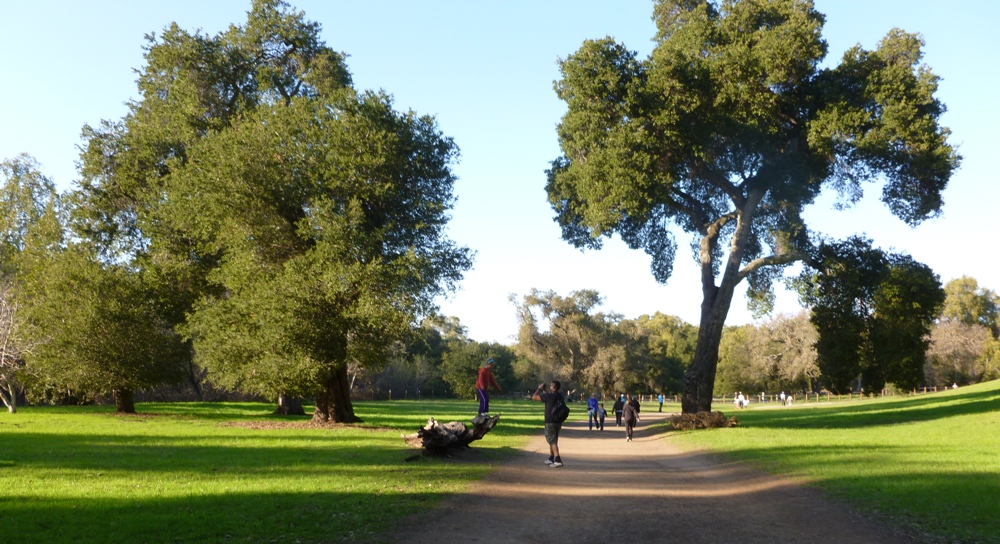

Note: All tree closeups I owe to sethsnap.com for teaching me to see “tree art.” http://sethsnap.com/2013/02/16/tree-art-of-halls-creek/.
Parents wouldn’t let me ski at the age shown in feature photo (digitally restored by Leanne Cole, http://www.leannecole.com.au/).
Made to wait until age 5. But then came in first place!

At 7, came in 4th, despite trying harder.

Note: This blog post has links to books intended for audiences aged 18 years or older. It also has suggestive book cover photos.
Anais Nin and Colette were this author’s big thrill in her early 20s. Plucking Colette off a bookcase in the basement of the famous City Lights Bookstore (http://www.citylights.com/) in San Francisco, flipping through the pages, wondering how authors dared to write like that!
Erotic romance differs from Erotica. Erotica doesn’t necessarily have a happy ending. Erotic romance does. And a complete story line.
Marie Tuhart is a great introduction to this sub-genre. Her work is also awesome for readers who are already fans of this area of literature. These books are quite popular, meeting with very positive reviews.
Recommended reading order:
In Plain Sight
http://www.wilderroses.com/index.php?main_page=product_info&cPath=87&products_id=755

Quick Silver Ranch: Roped & Ready
http://www.wilderroses.com/index.php?main_page=product_info&cPath=88&products_id=811

Quick Silver Ranch: Saddle Up
http://www.wilderroses.com/index.php?main_page=product_info&cPath=87&products_id=831

His For the Weekend
http://www.wilderroses.com/index.php?main_page=product_info&cPath=87&products_id=867

Hooked Up At The Wedding
http://sybariteseductions.com/anthologies/hooked-up-at-the-wedding/

Hooked Up The Game Plan
http://sybariteseductions.com/anthologies/hooked-up-the-game-plan/

Author website:
On the way to the New York Museum of Modern Art, walking through the breezeway of a modern office building:

Then… the MOMA:
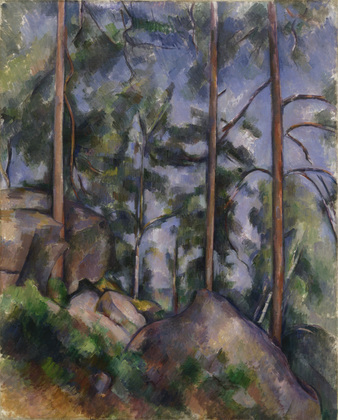
Cezanne. He made the air in the background look moist and the pine needles sparkle with subtle light.
Flashback to a spot and a photo in Alpine Meadows, California:

Recognize Munch across the gallery.
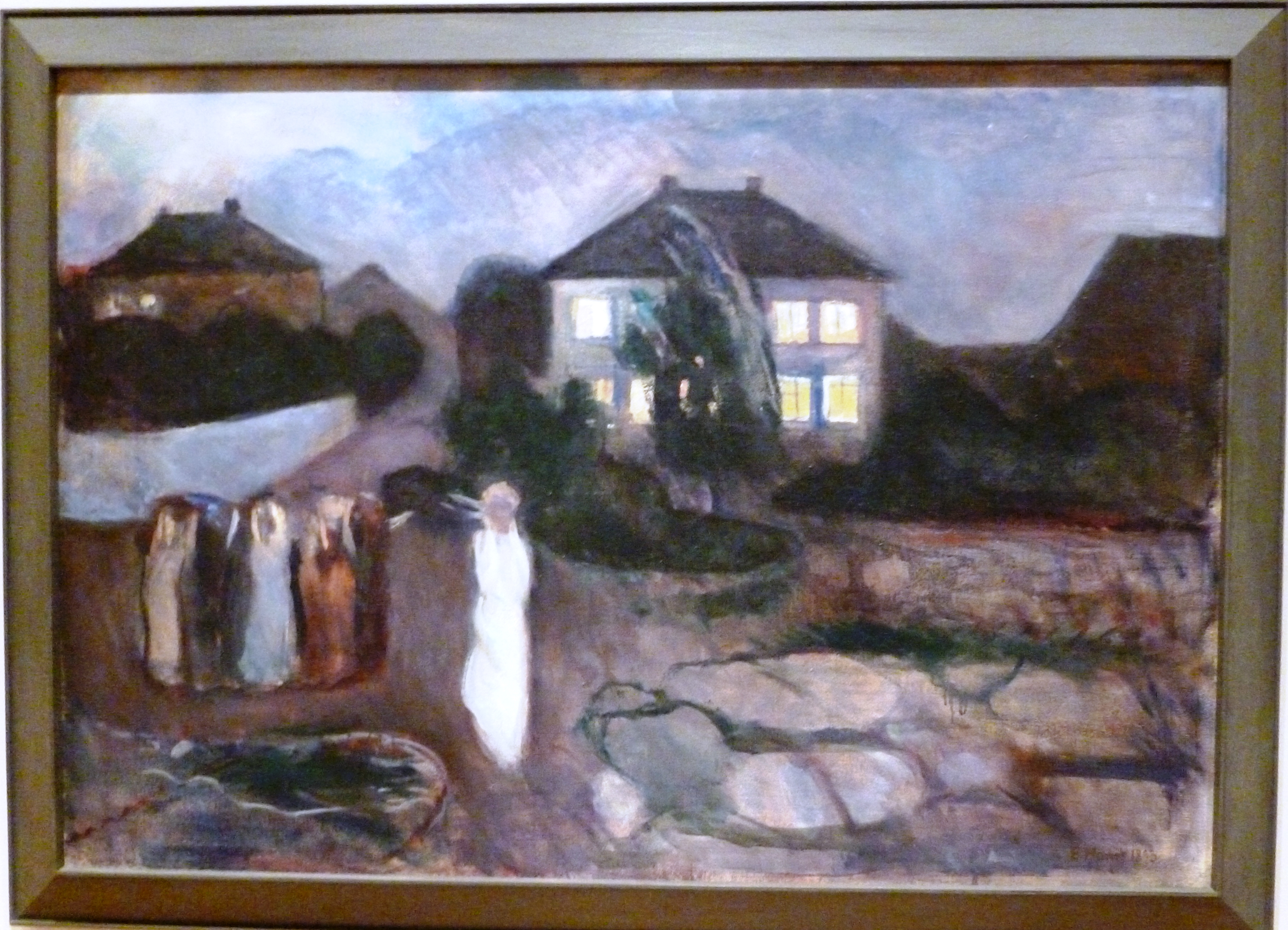
It’s incredibly difficult to paint leaves with the randomness of nature. The best thing about trying things out as a total amateur is the appreciation it gives you for the masters:

Watching others captivated by the same painting adds to the enjoyment.

A Pierre Bonnard, a favorite painter, he never had just a plain old wall. Look at the complexity.

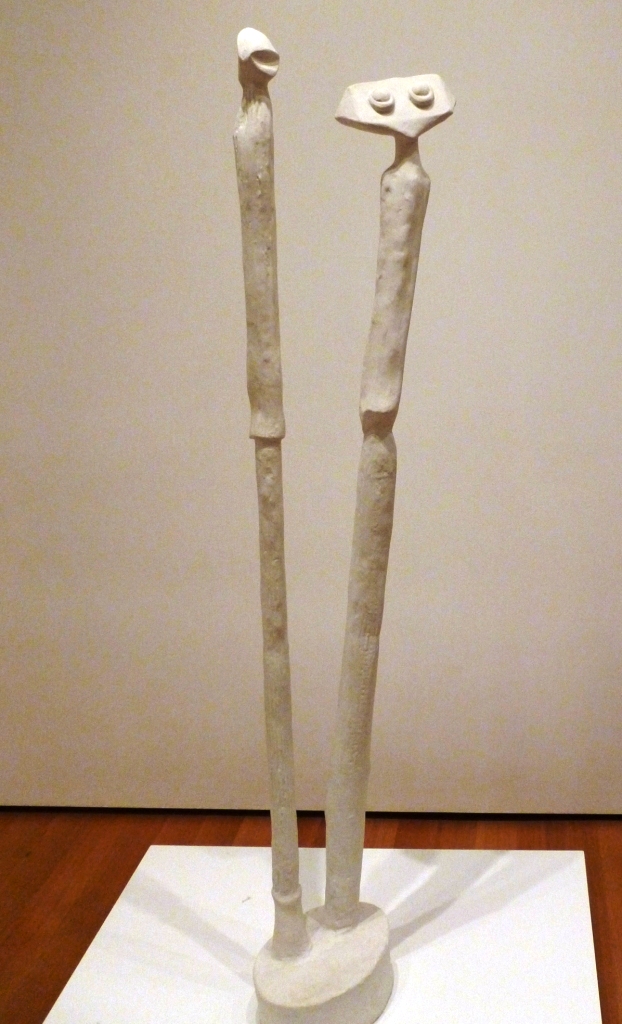
In the final gallery there is this fun, whimsical sculpture:
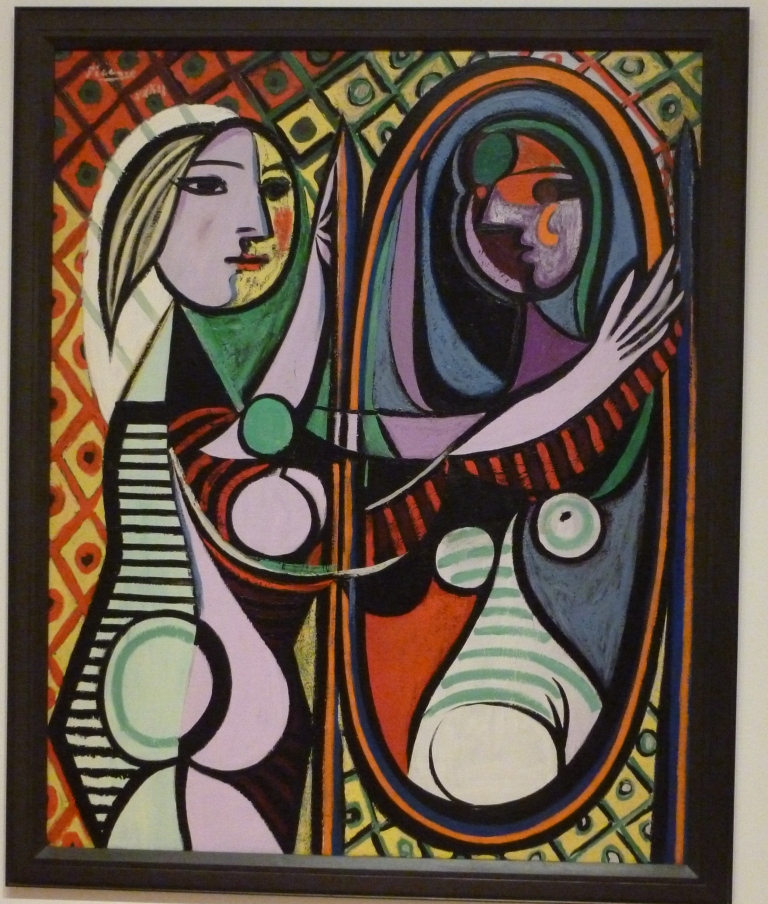
Wow, a favorite Picasso!
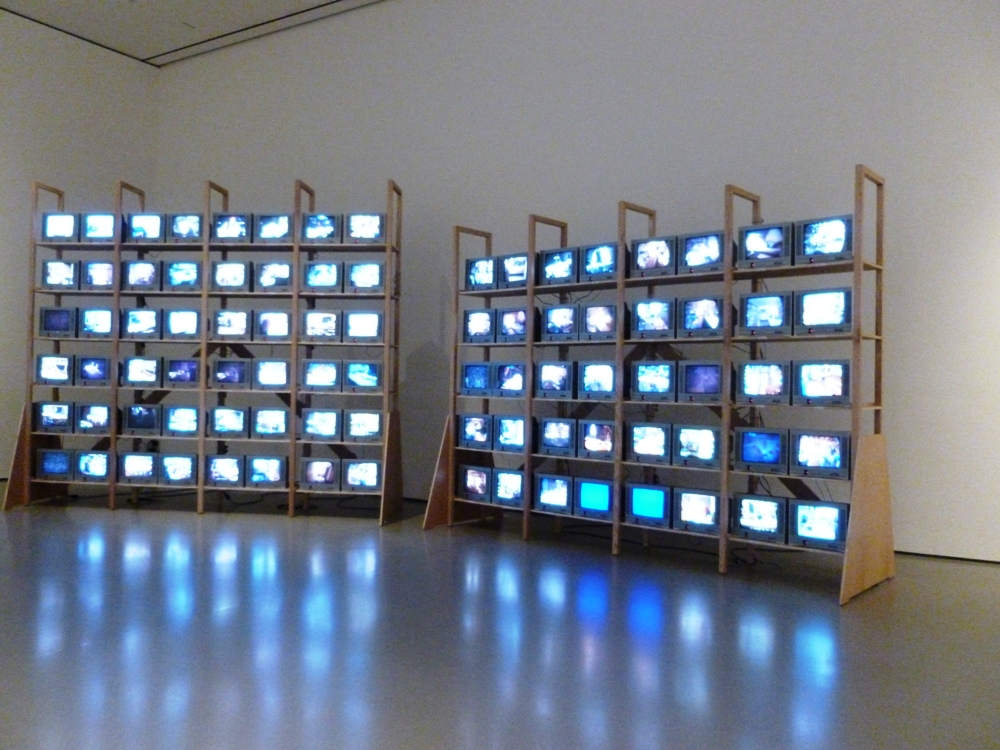
This display of videos shows every minute of the artist’s last year of life, showing the mundane and lonely nature of his existence (according to the description on the wall).
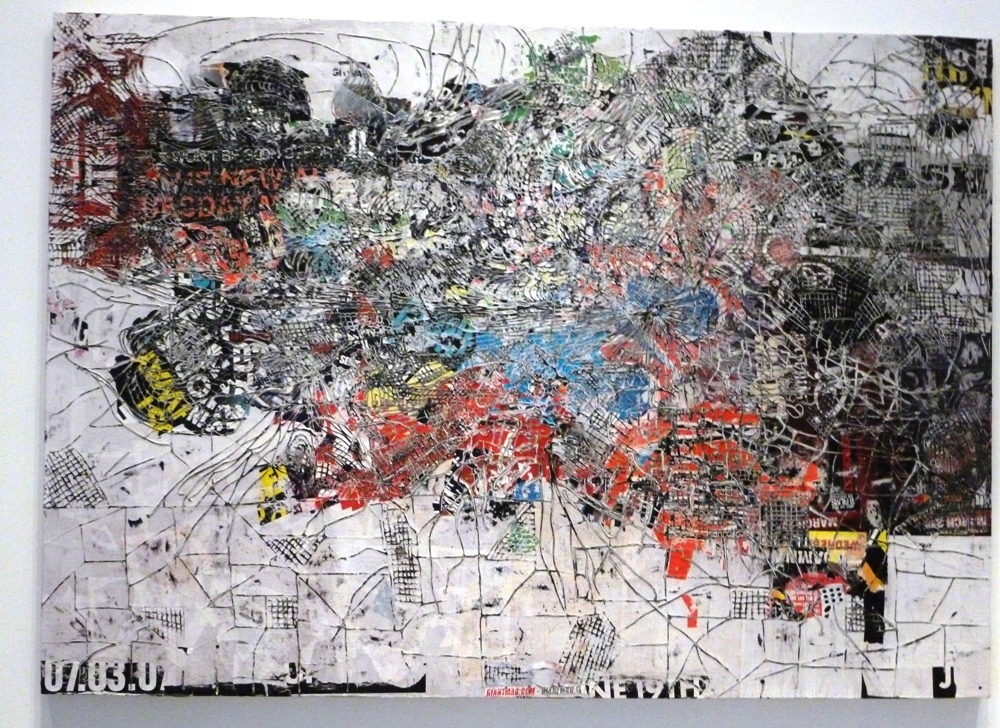
In the same gallery, hangs this beautiful, interesting piece:
City center, note archway for cars to pass through.
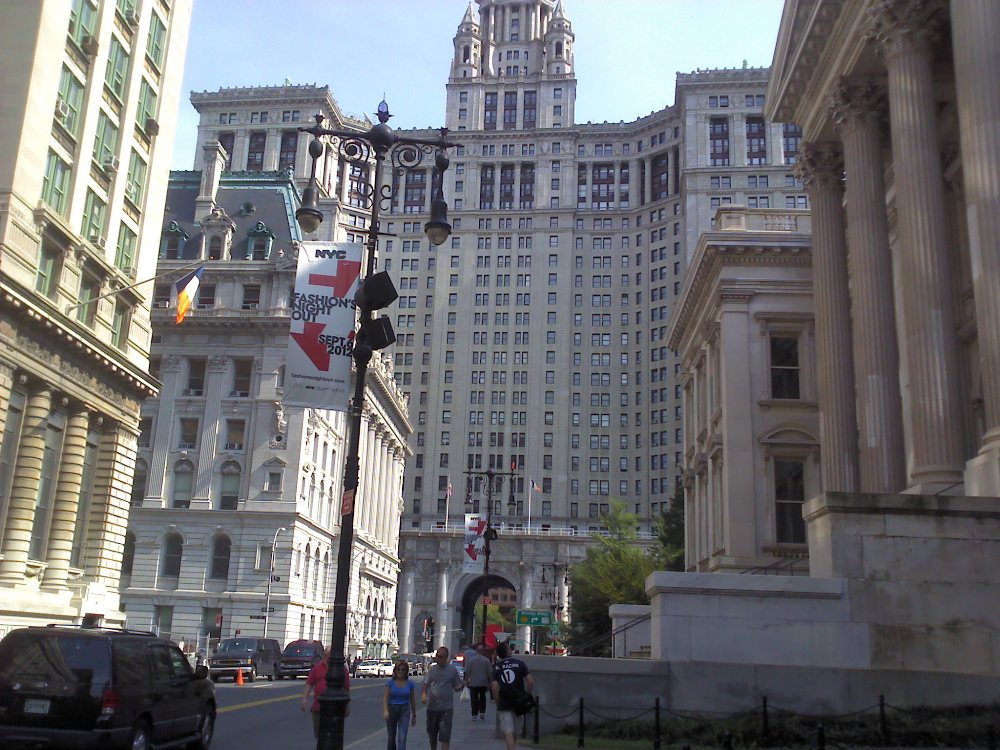
On the steps of City Hall:

World Trade Center from Brooklyn Bridge.

Empire State Building (tallest building by my right shoulder) from Brooklyn Bridge.

Statue of Liberty (tiny line by my right elbow) from Brooklyn Heights.

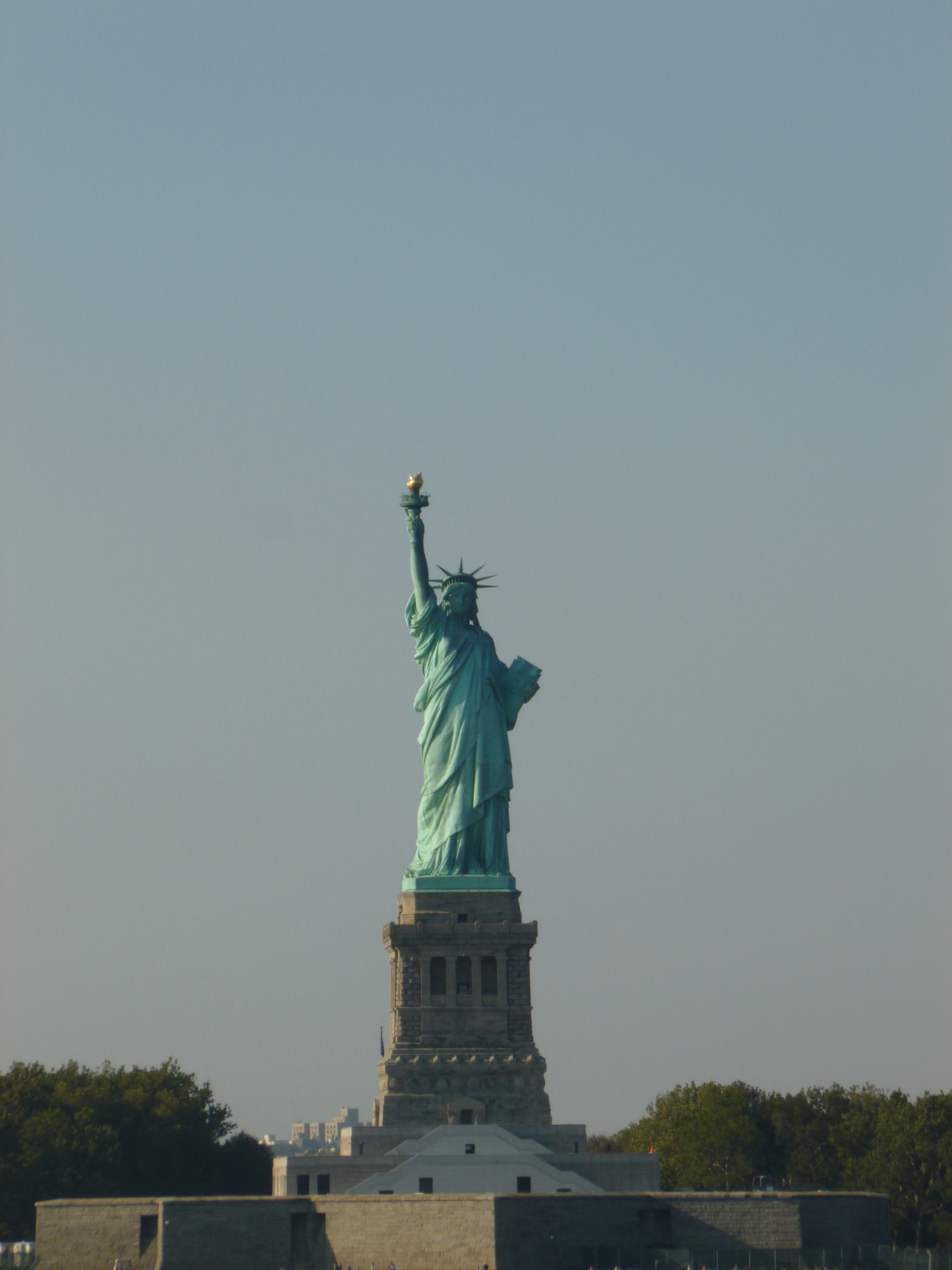
Statue of Liberty from the Staten Island Ferry (which is free):


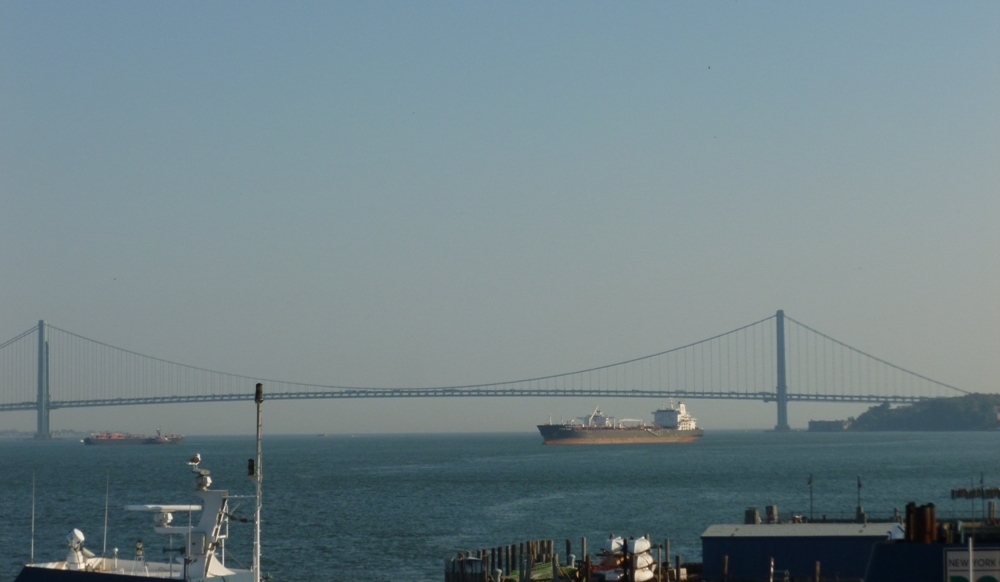
Verrazano Bridge, glimpsing the ocean beyond the harbor.
The old ferry building,
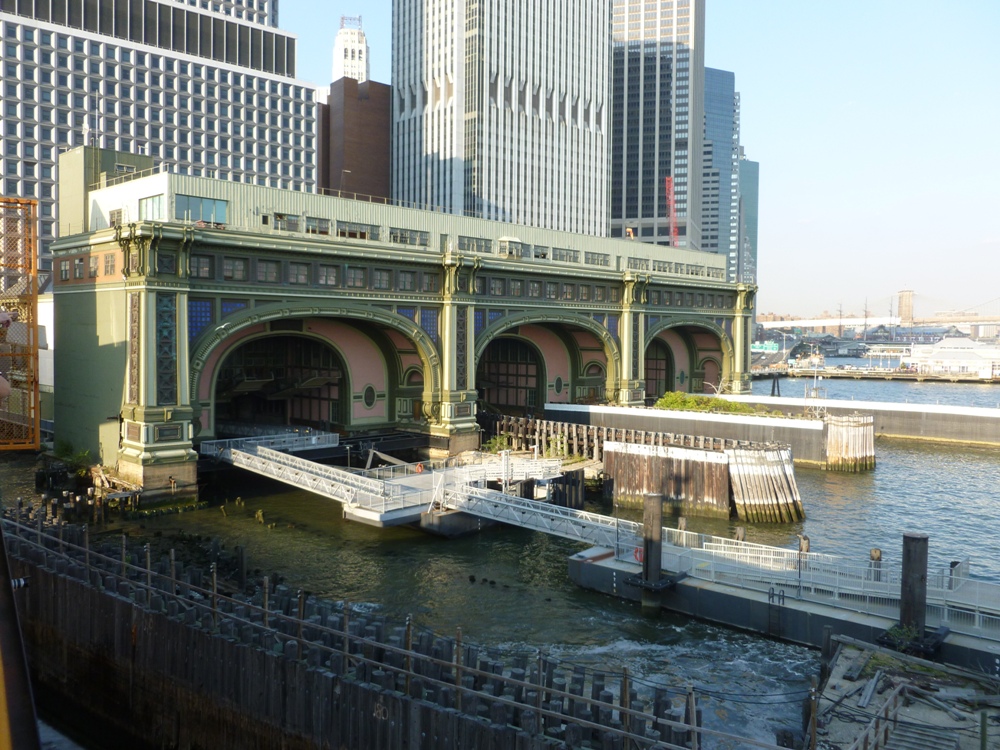
now in disuse.
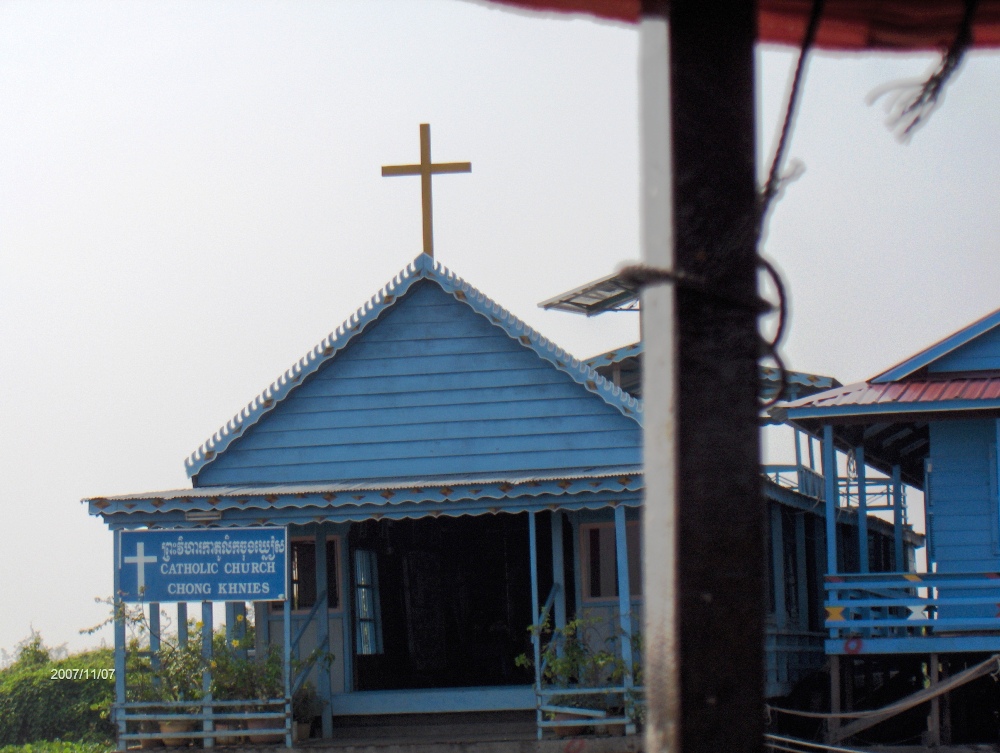
People live in floating villages on this great lake,


fish,

go to school and church,
or out to eat.

Not forced to live here, people come and go with the rise and fall of the lake.
Deep point of view (POV) reflects life as we actually experience it, I think.
Deep POV was the last big hurdle for me before being able to write what I consider to be effective stories. (Whether other people consider them effective remains to be seen, but hope is on the horizon.) It took me years to get deep POV. I still struggle with it.
I recognize deep POV excellence in others. Brenda Novak is extremely good at it. In studying her and thinking about this craft issue this morning, going back over yesterday’s pages to get back into the story, and inevitably starting editing, I find myself mostly fixing non-deep-POV issues. On a micro level.
I think there are a few levels to deep POV. One is the avoidance of distancing words like “feel,” “think.” But even “look.” “He looked at the thing.” Deep POV just describes the thing.
Similarly, as a writer who had to make absolutely every possible mistake known to fiction writing, never learning anything the easy way like from a teacher or book of which I have many, I can say one of the things I struggled with in my early days and still do, is the idea that I have to describe the events of a novel sequentially.
He gets in the car, he gets out of the car, he walks across the driveway, he opens the door, he closes the door, he goes inside, he sits down, and finally he gets to have his thought.
When in reality what happens is, he doesn’t even think about all of those transitions. Who really thinks about what they’re actually doing while driving? This is how it is, sometimes unfortunately, like when somebody almost ran into us head-on in a parking lot the other day. Only leaning on the horn continuously for several seconds snapped the driver back to attention in time to prevent an accident.
One goes through the motions of life, even those among us who aspire to be in the moment, lost in thought.
Begin the telling with the character in the thought, not in all the transitions through space of getting him into the scene where he will have the thought. This is what I’m learning.
On a philosophical level, I assert by being in deep POV, we’re actually reflecting more accurately the human experience. We live a psychological life.
Enough shoptalk. Back to the novel. Thanks for visiting.
Drive 5 – 20 minutes outside the city (depending on where you start) and climb.
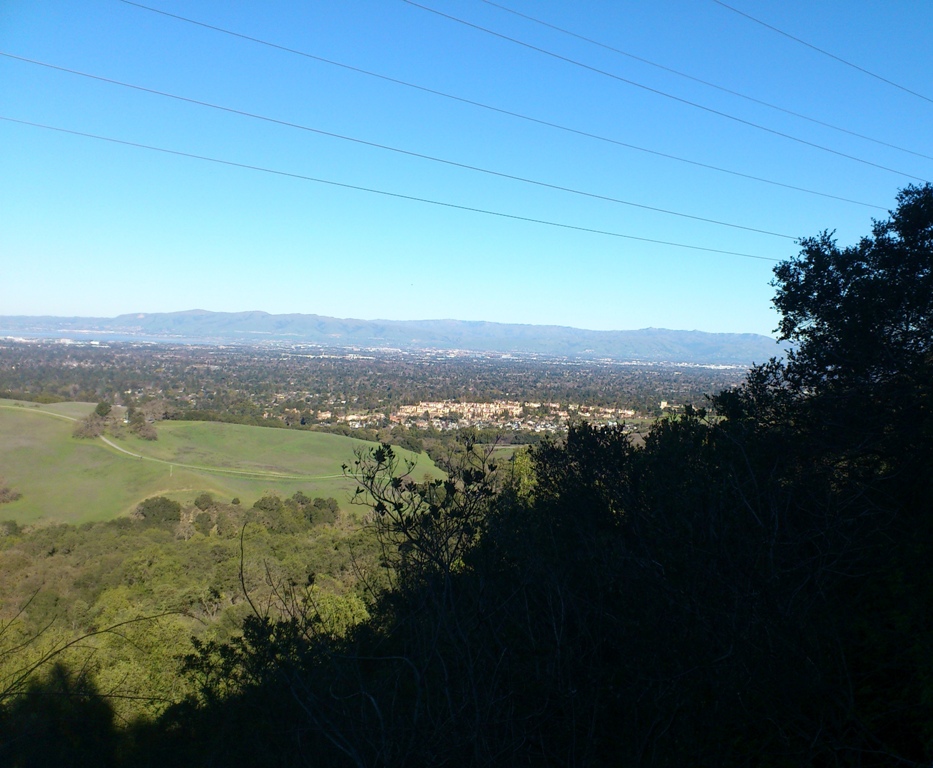
Watch the birds soar (no luck with phone camera, sorry, but imagine…)
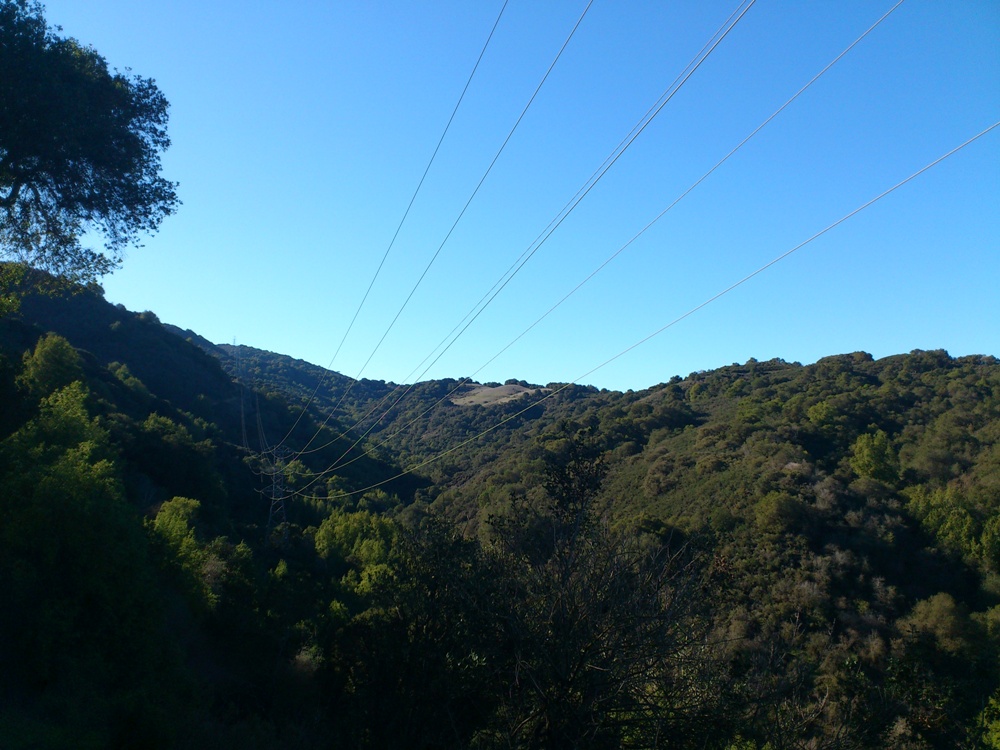
Portrait of the artist trying to use Android software to catch eagles in flight:

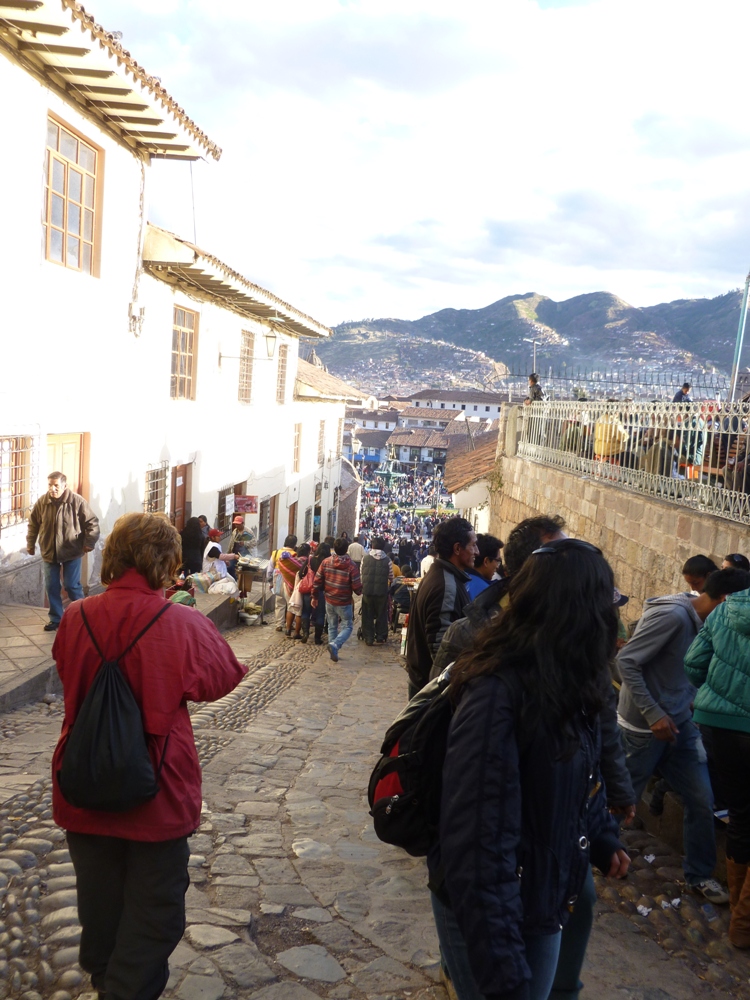
An afternoon off from the tour and a chance to see the locals in a bustling side street during a festival. There’s one tourist in the shot; the rest are locals.
Today’s post was inspired by this (superior) post:
Take the Highlights of the Museum tour at the Metropolitan Museum of Art. It’s free (with admission, which is free also, sometimes).
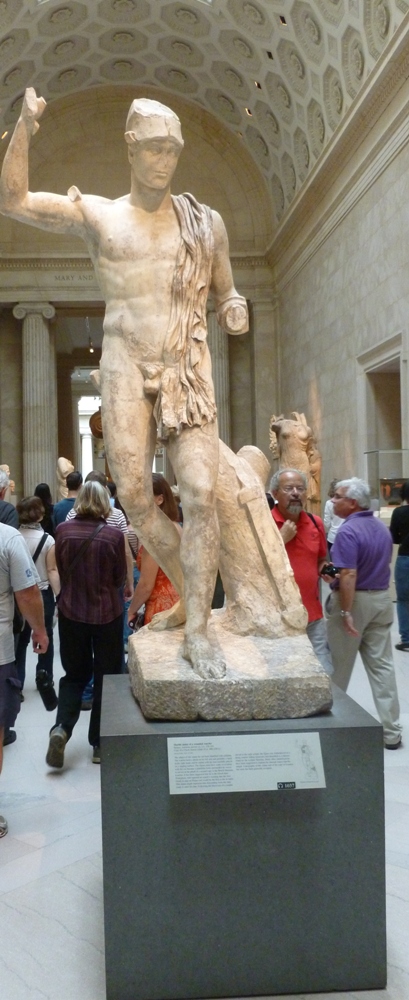
Begin with the Greco Roman area, the basis of Western culture, early Greek sculpture. Observe symmetry and, with one foot forward, the beginnings of motion in sculpture. Note the hands held stiffly by the side.
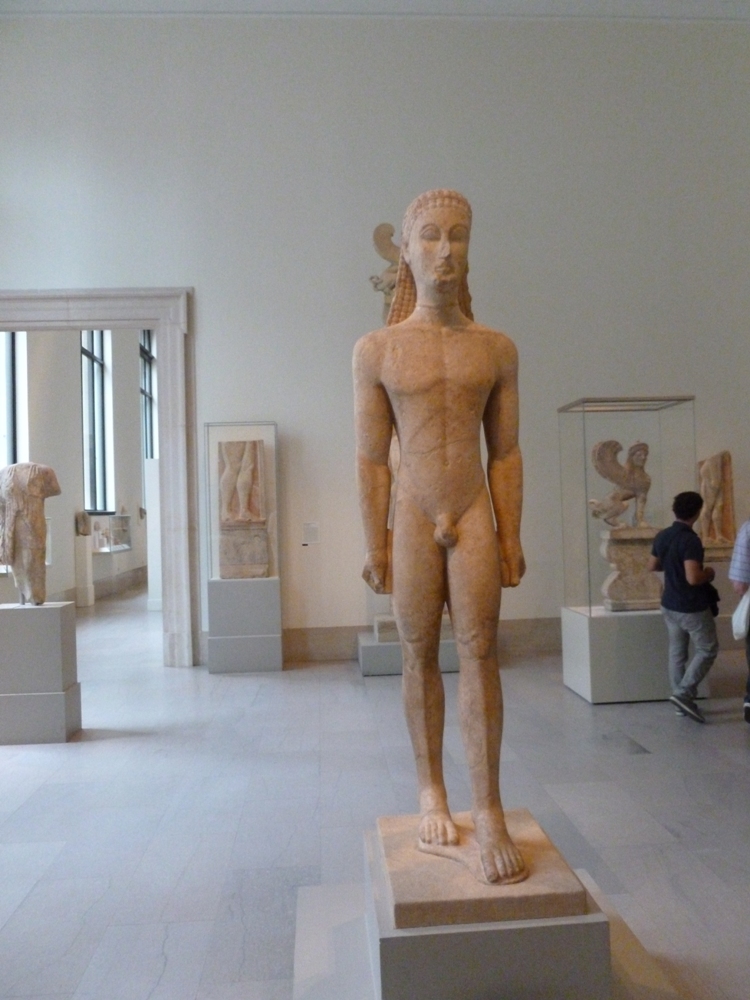
100 years later, this Greek statue in the heroic pose was created. Note musculature and movement.
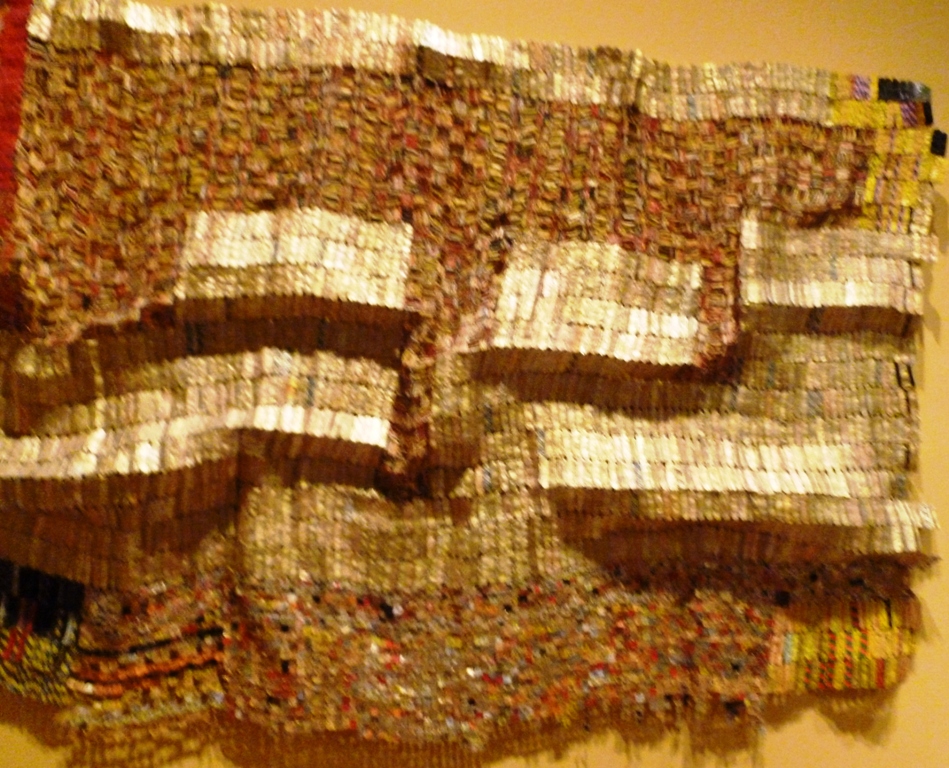
See this contemporary artist from Ghana who composes sculptures from found items, in this case bottle caps and labels from liquor bottles. The artist believes art, like life, is always changing, so he does not provide instruction on how the piece should be hung, leaving it to the curators to arrange the display.
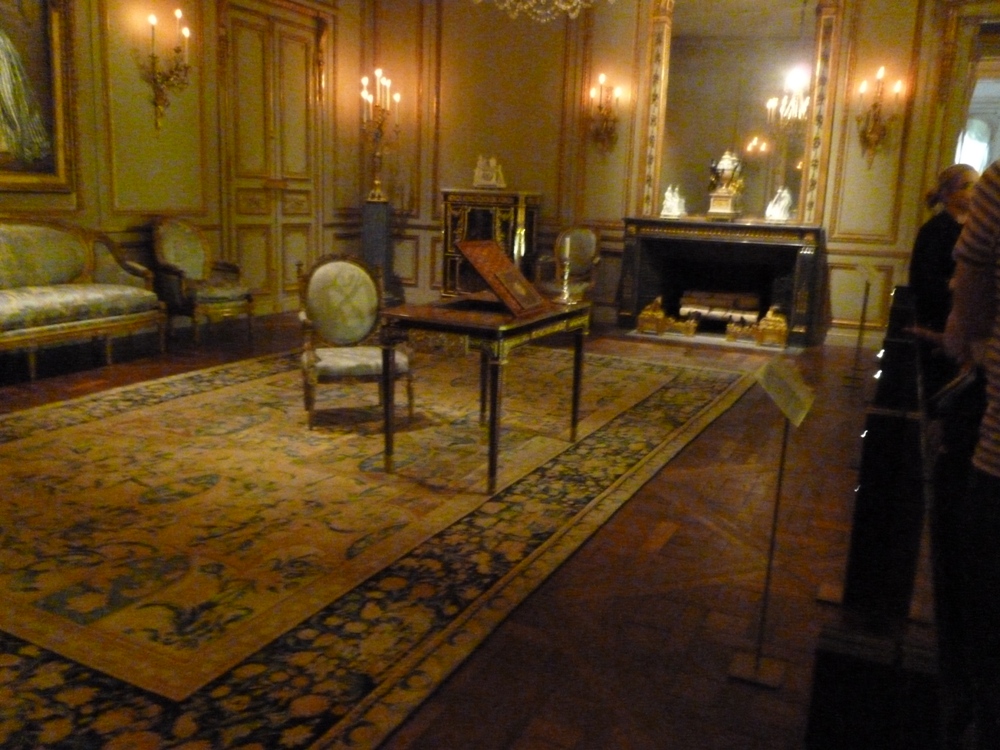
See a reconstruction of Marie Antoinette’s room where she lived during her confinement. Artists made things for her during this period and, according to her requirements, imprinted the letters “MA” on any furniture they created for her. The desk shows the beginning of multi-purpose furniture, a new idea at the time.
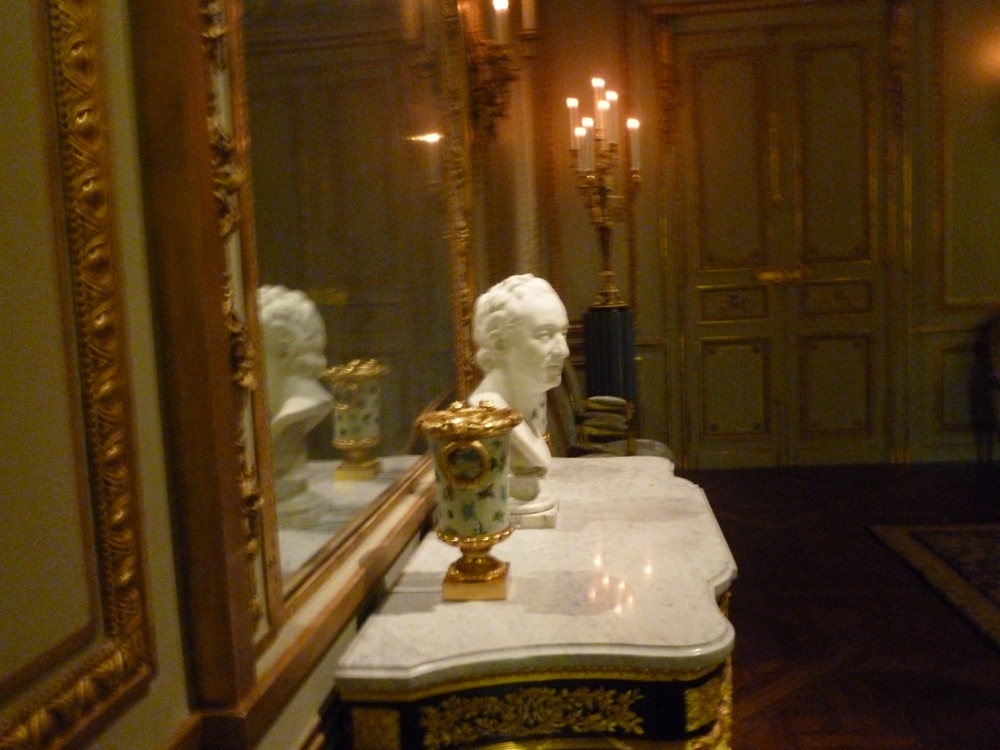
The bust of Diderot, a contemporary, one of the philosopher-creators of the Enlightenment era and the creator of the first encyclopedia, stands on a side table in the room.
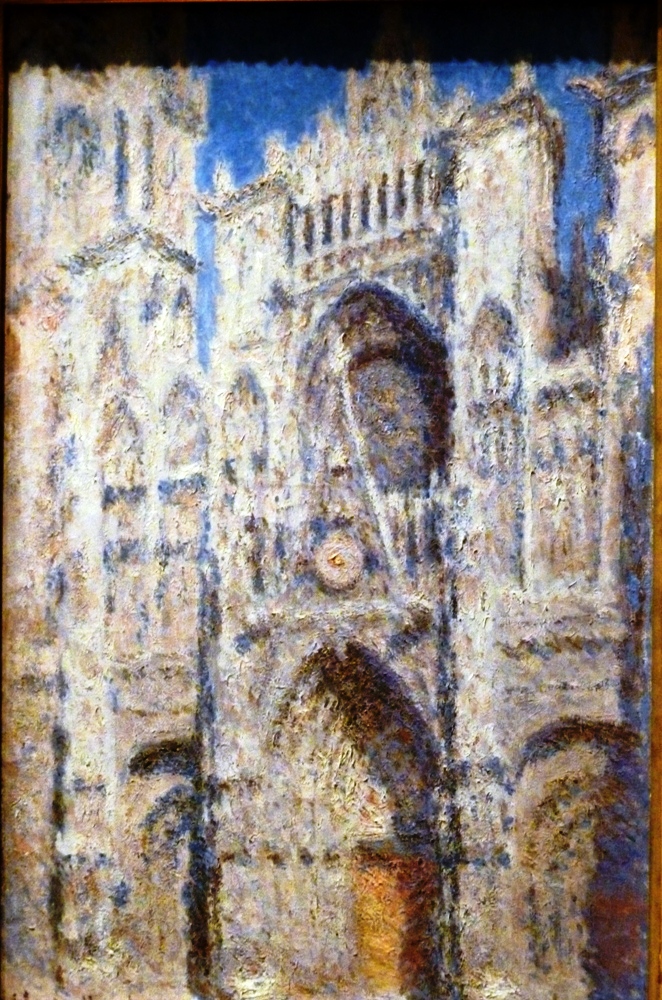
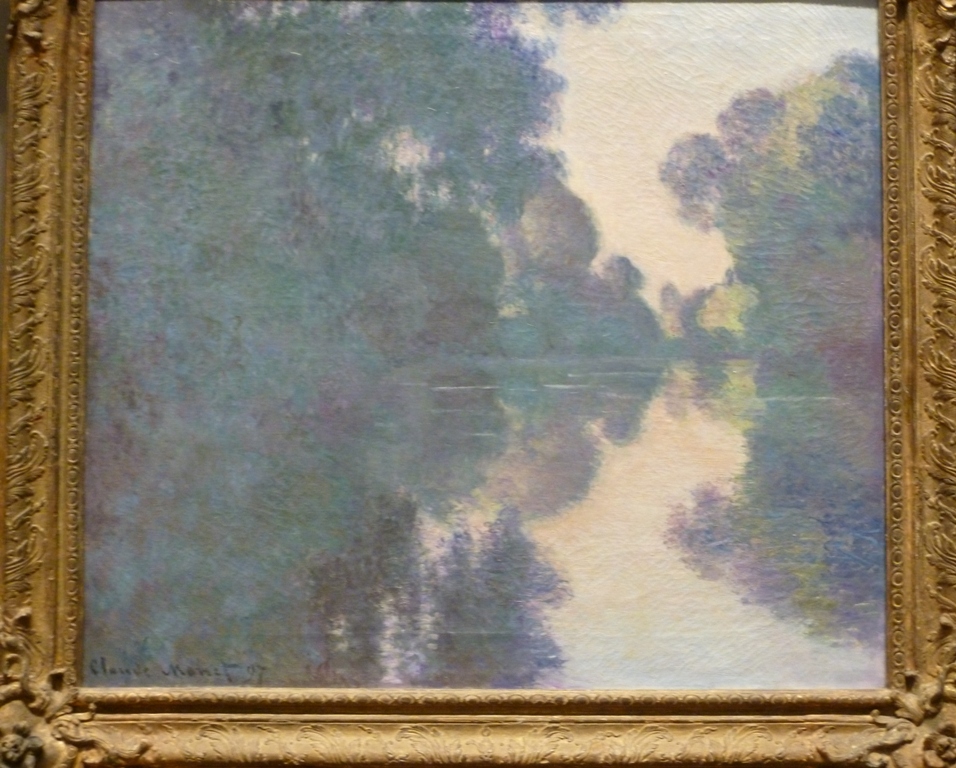
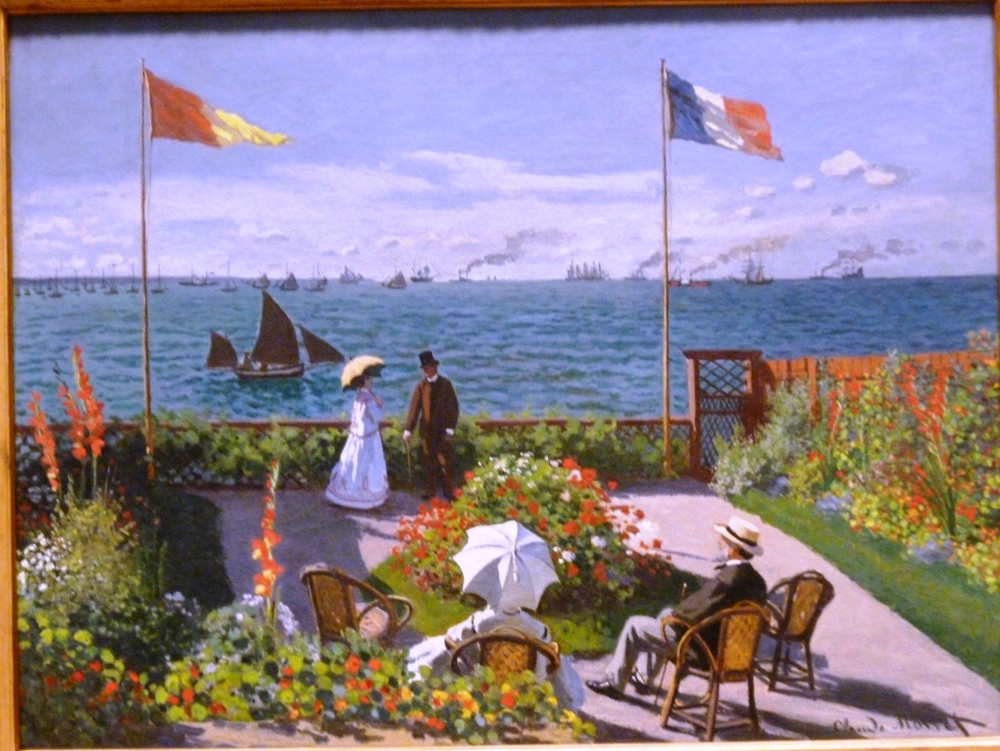
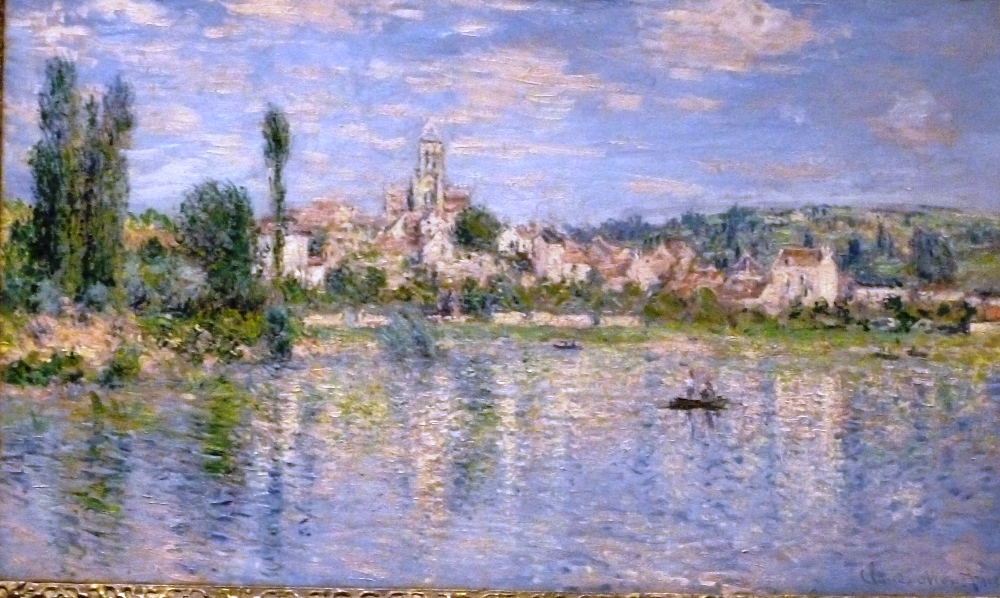
Next a corner of Impressionists containing four works of Claude Monet, who said, “Light changes even stone.”
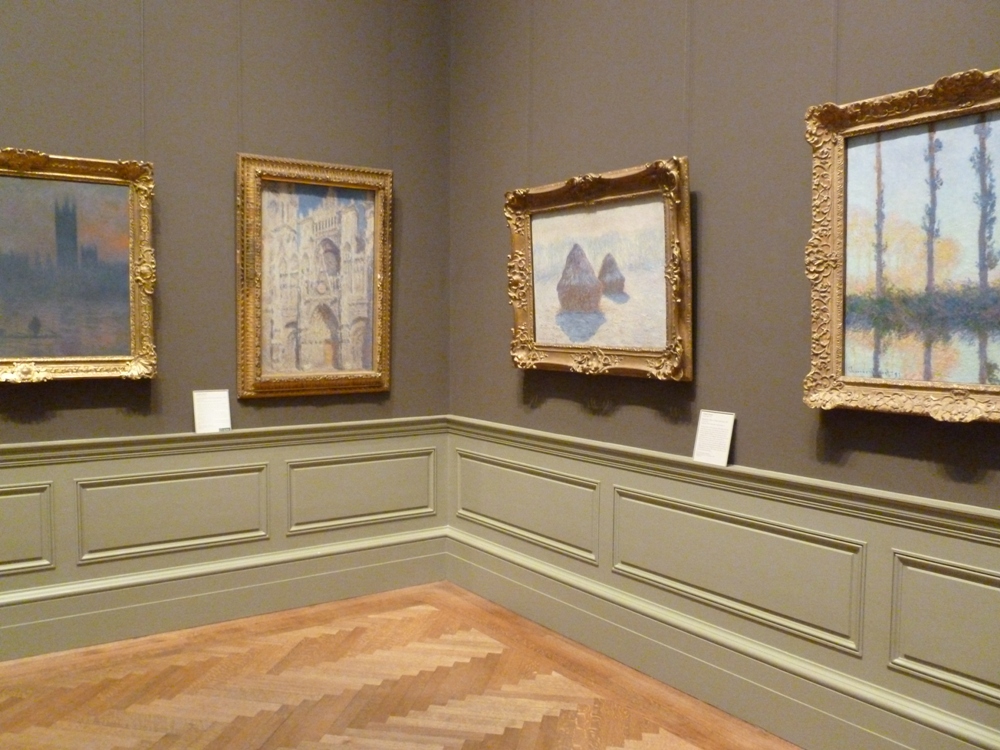
Monet worked on the same subject, painting it repeatedly in different lights to explore this idea of light and mood. In these paintings, he also used complimentary colors, blue and gold, to help create a soothing effect. He spent three years on this motif, renting an apartment in a drapery store located across the street from Parliament, so he could render the subject in varying light. He used impasto, a style of layering on paint.


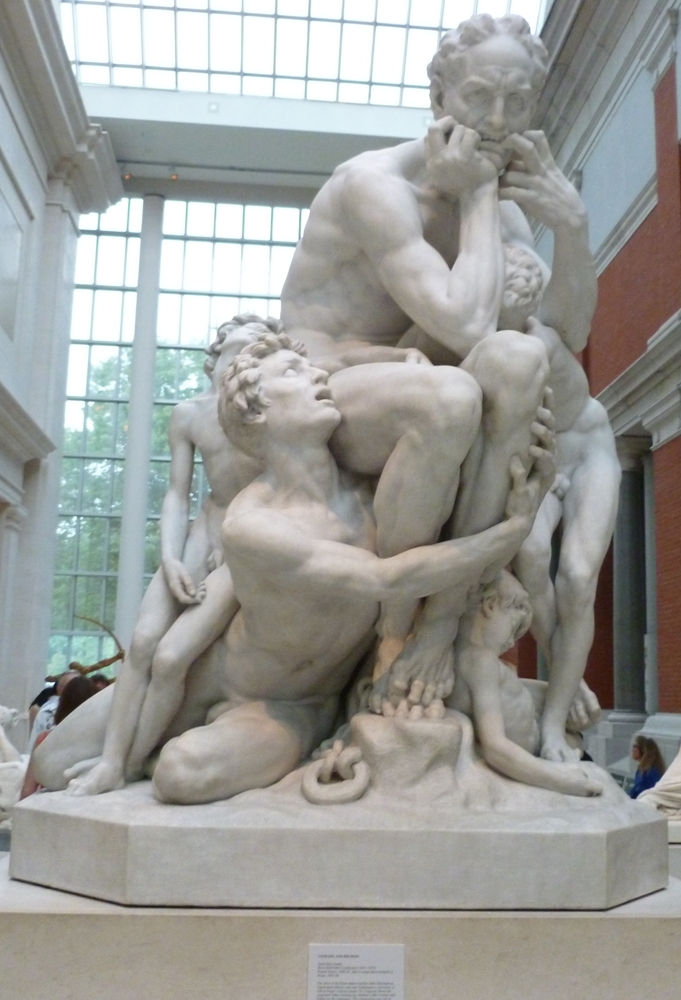
During this period, sculpture employed studied composition, as shown in this piece, which displays a highly orchestrated, triangular arrangement, with smaller figures below and the main figure being the largest in the middle.
Then Rodin shocked the Paris scene with this sculpture called the Burghers of Calais. Rodin revolutionized sculpture on many levels, depicting ordinary people performing heroic acts, with figures formed in equal and realistic sizes, walking rather than posing,

When Calais was under siege, these burghers offered themselves to the king as hostages to save their town.

Rodin believed that the hands and feet reveal our emotions so he made them larger. The feet are big and heavy, rooted to the ground by the burden they carried.
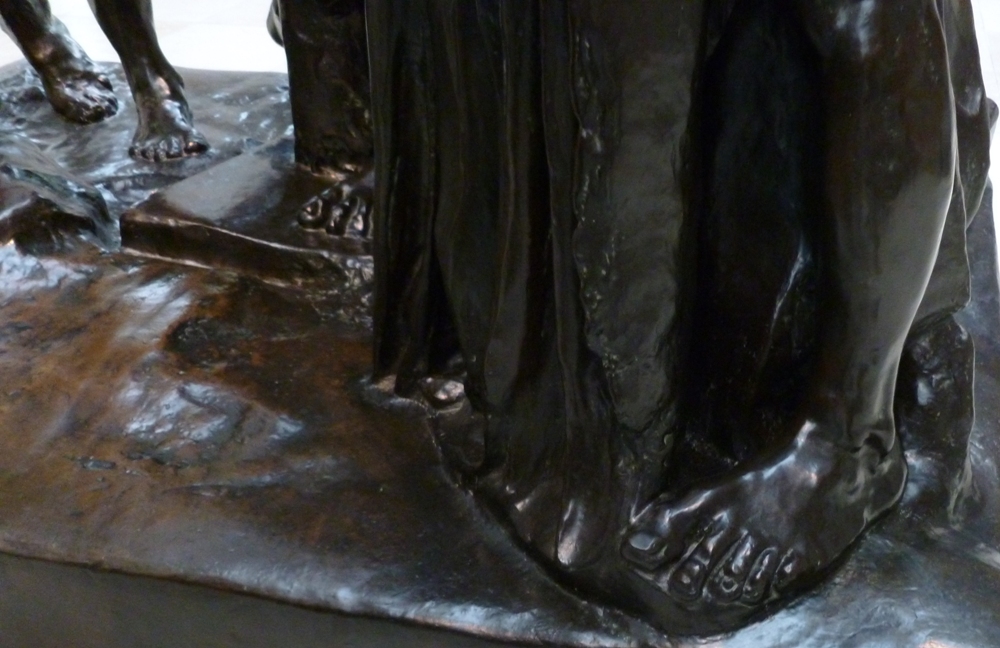
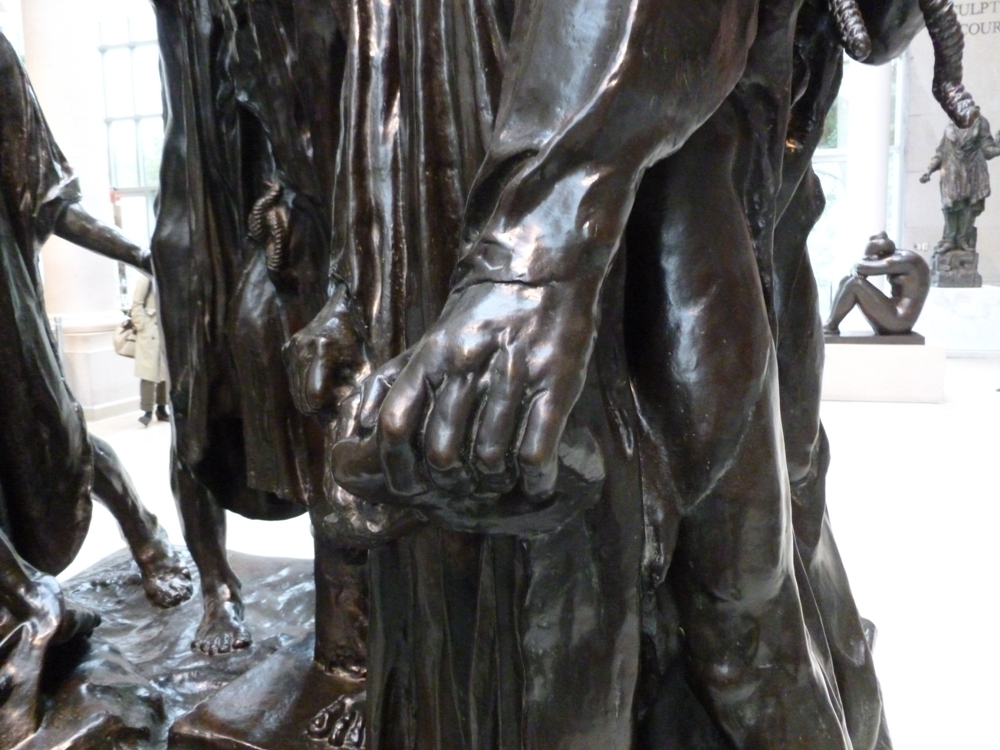
There is a happy ending to the Burghers-of-Calais story. The queen, upon hearing the story, persuaded the king to set the men free.
In the baroque period you see allegorical painting, with the different elements of the composition representing different concepts; for example the bird represents natural music and the lute represents man-made music.
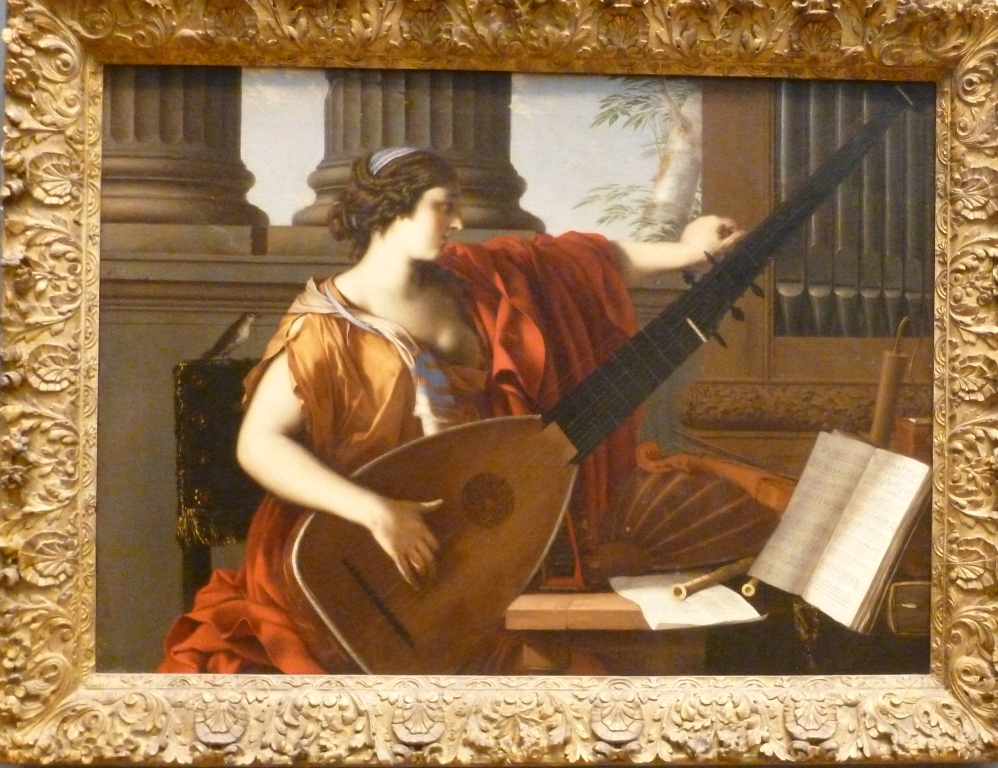
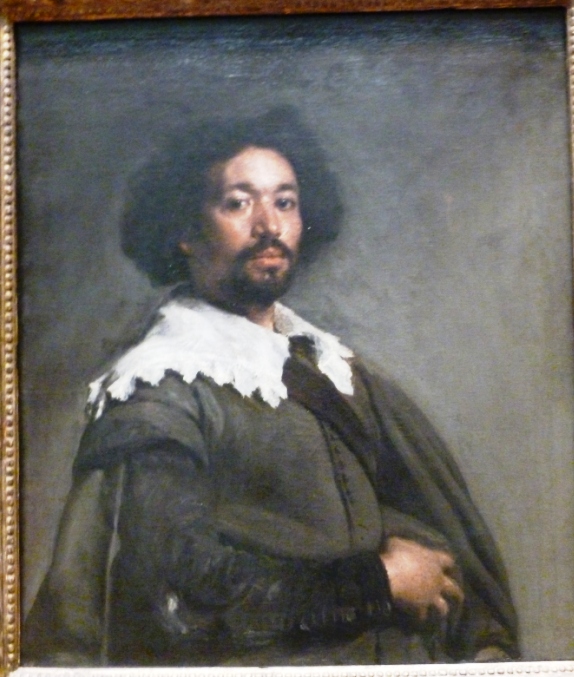
A year, later, Velasquez launched a new direction with this piece, in which he painted an ordinary man and his emotions, breaking with tradition and launching a new period. This painting depicts his slave, whom he freed shortly after doing this portrait. The slave liked working with Velasquez though, so he stayed with him as a salaried employee. The former slave was also a painter.
Next, visit the music gallery where you’ll see a lute, invented at the time of the above allegorical painting.
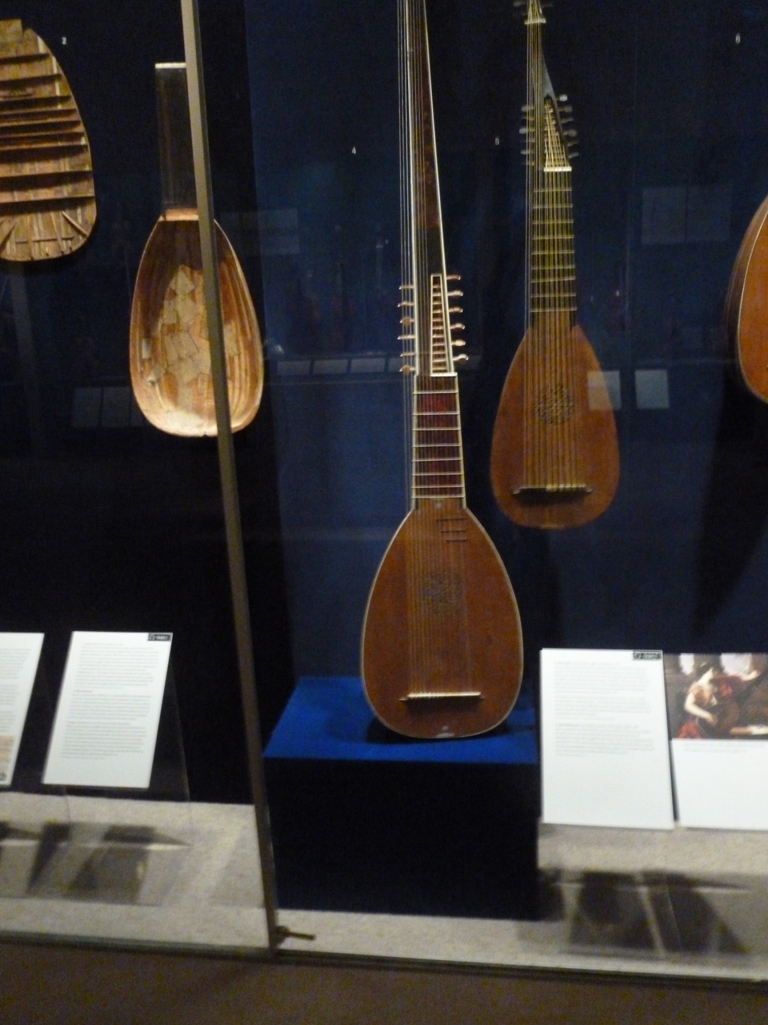
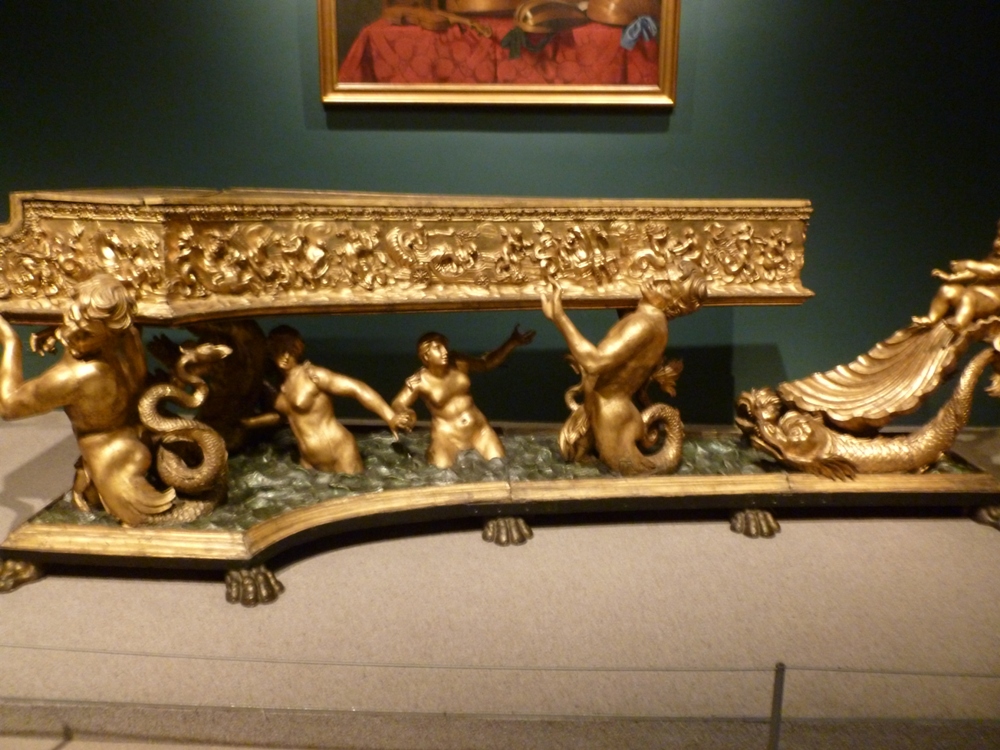
This room shows the baroque period’s leisurely pace and the abundance of the period in which the invention of new instruments blossomed. This harpsichord is decorated in real gold. The frieze and figures depict a story.
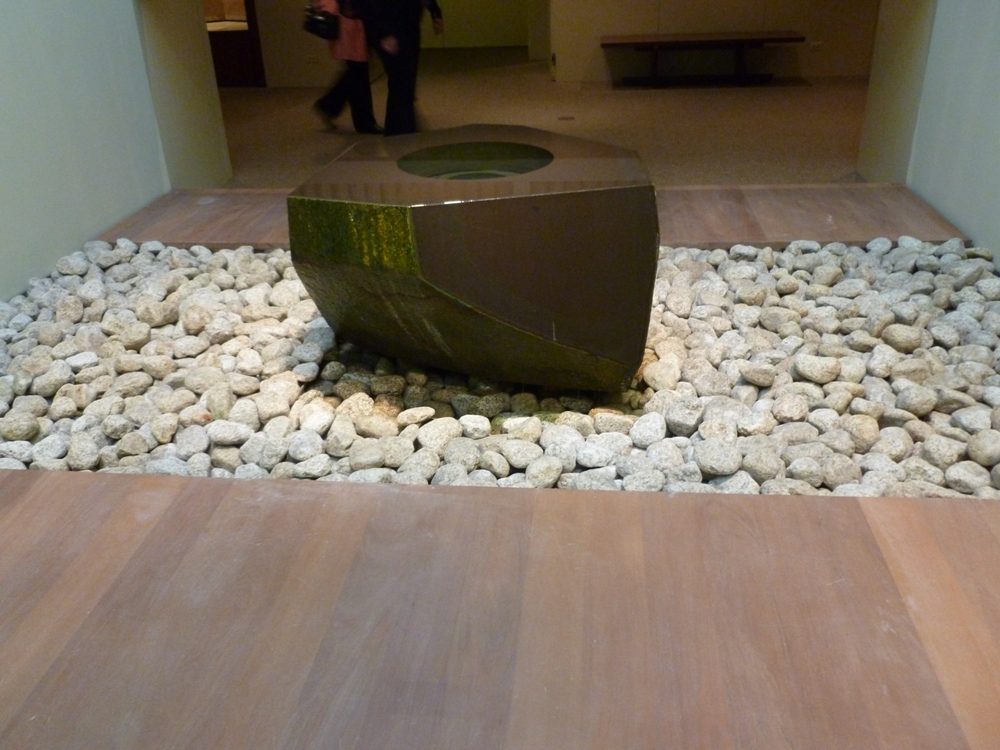
Can a room be art? Visit this room created by a Japanese artist. The water flows evenly over all sides of this stone, which is carved to be different on each side. The giant stone from the artist’s home area sits on a bed of rocks from a sacred river.
End the tour with this painting of an American woman living in Paris by an American artist. The woman was obsessed with having pale skin, taking arsenic and using lavender powder to make it more pale. (This painting is distorted by the angle from which it was shot.)
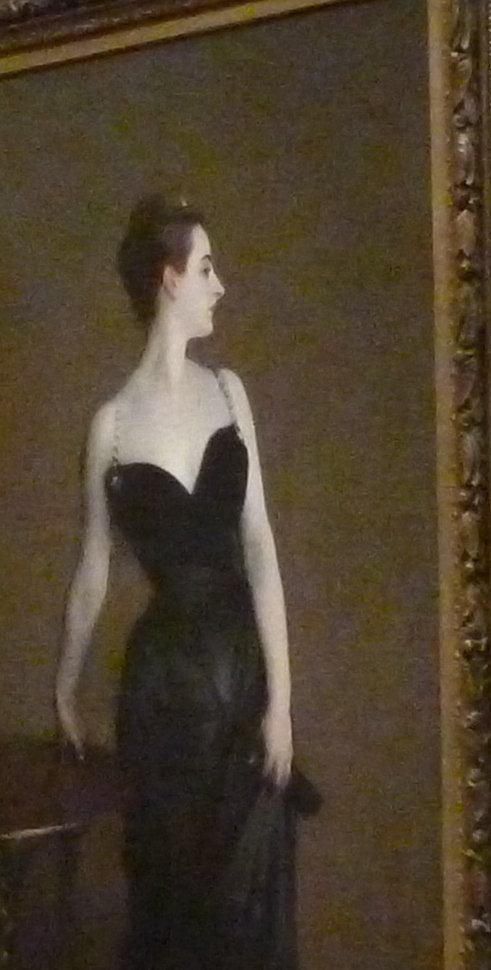
The painting created a huge scandal in Paris and nearly destroyed the artist’s career so he went back to painting people in their proper clothes.

At the end of his life, the artist donated the scandalous painting to the Metropolitan and said it was the best work he achieved in his career, and it was one of his first. Artists, pay attention, be careful about creating only things that conform to society’s mores.
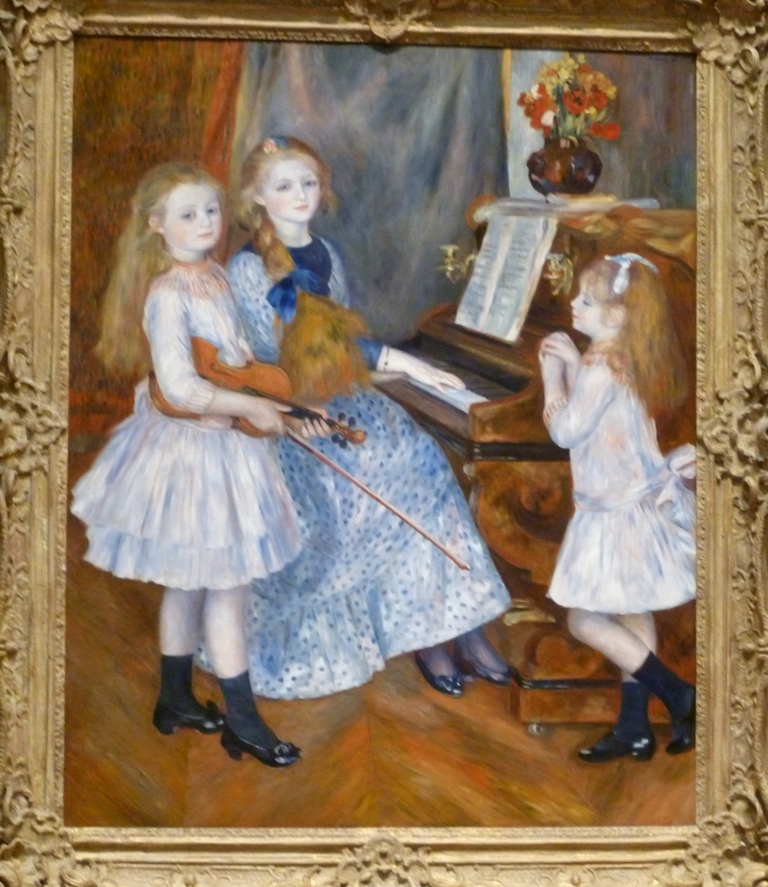
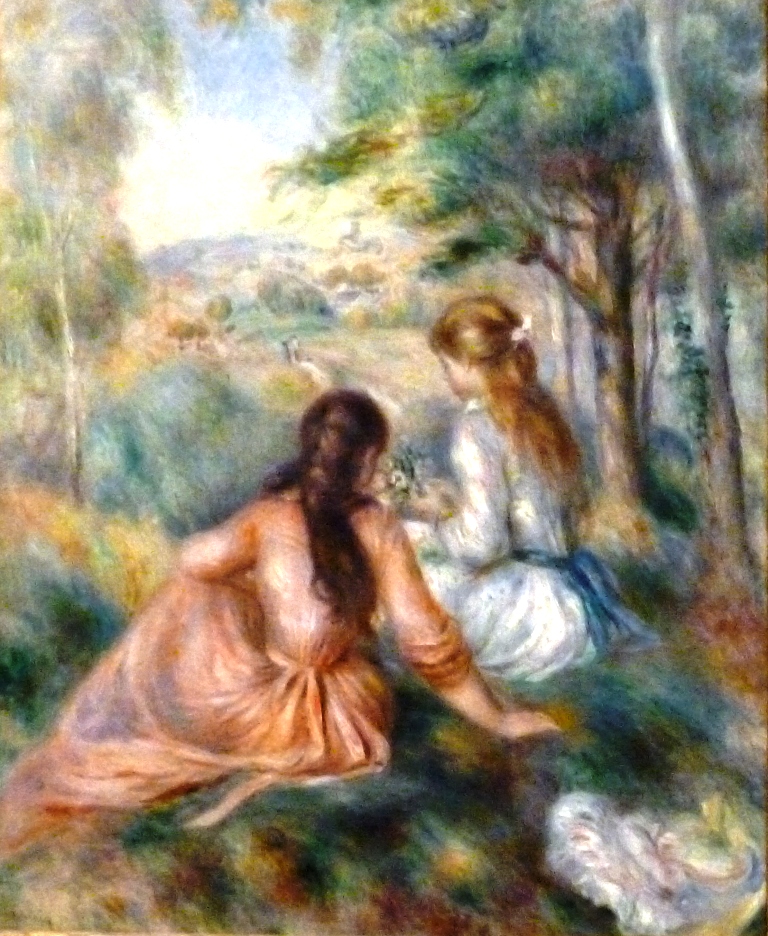
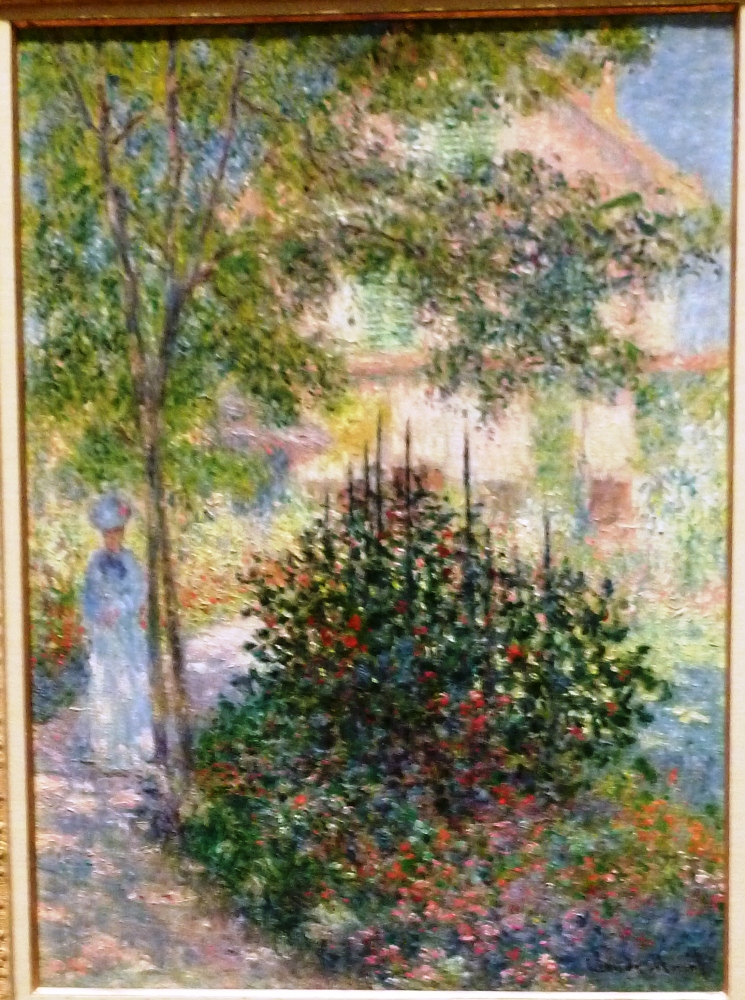
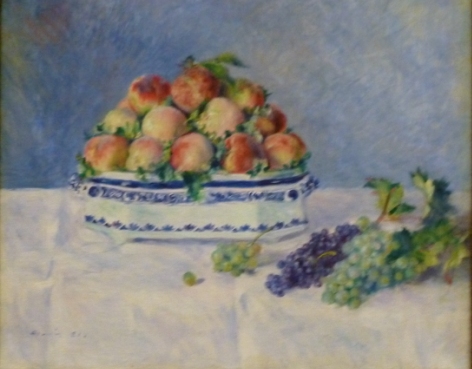
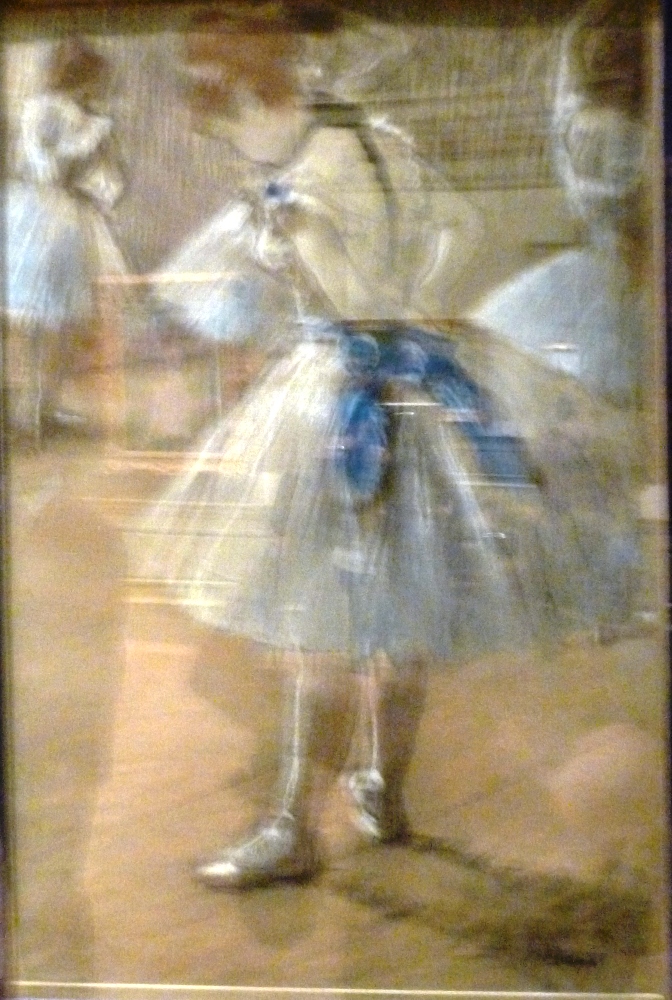
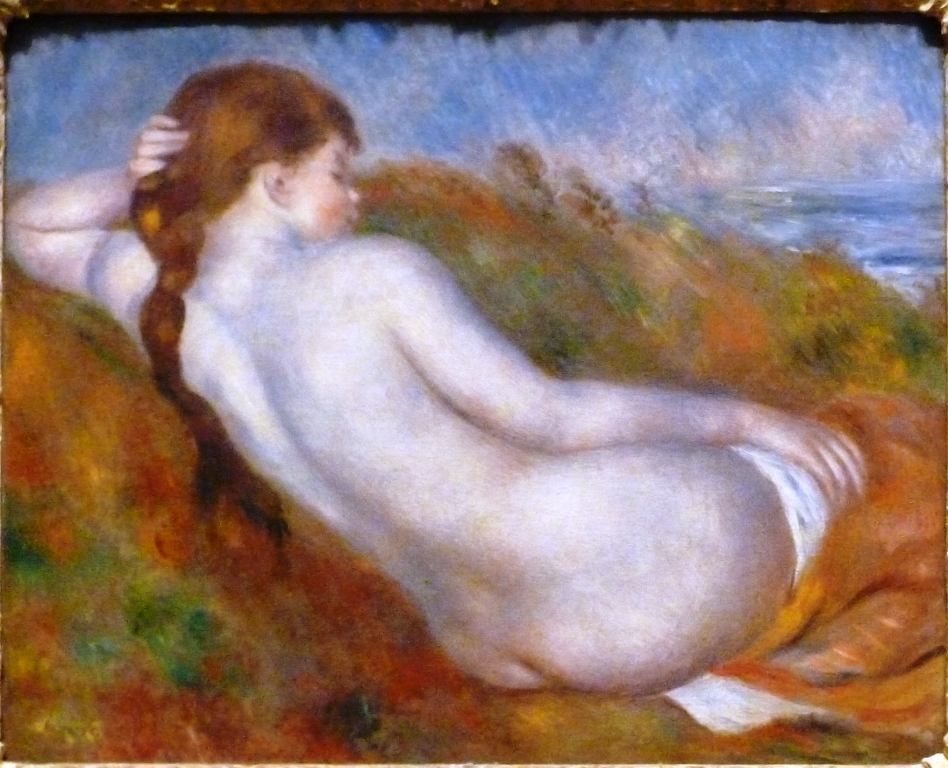
Return to the impressionist galleries to linger over a visual feast.


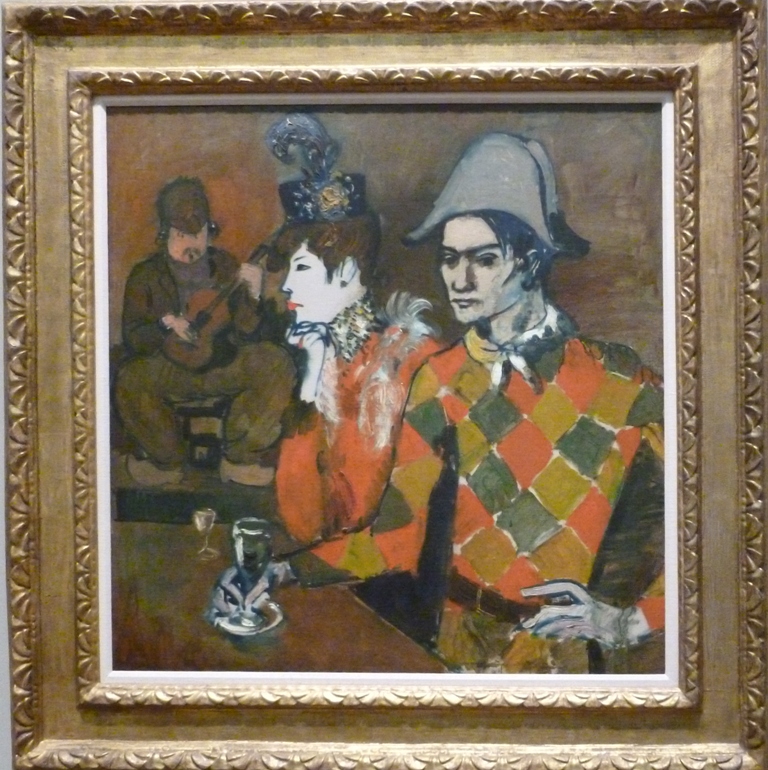
Picasso always stands out in a crowd.
Degas calls to you from across a gallery.
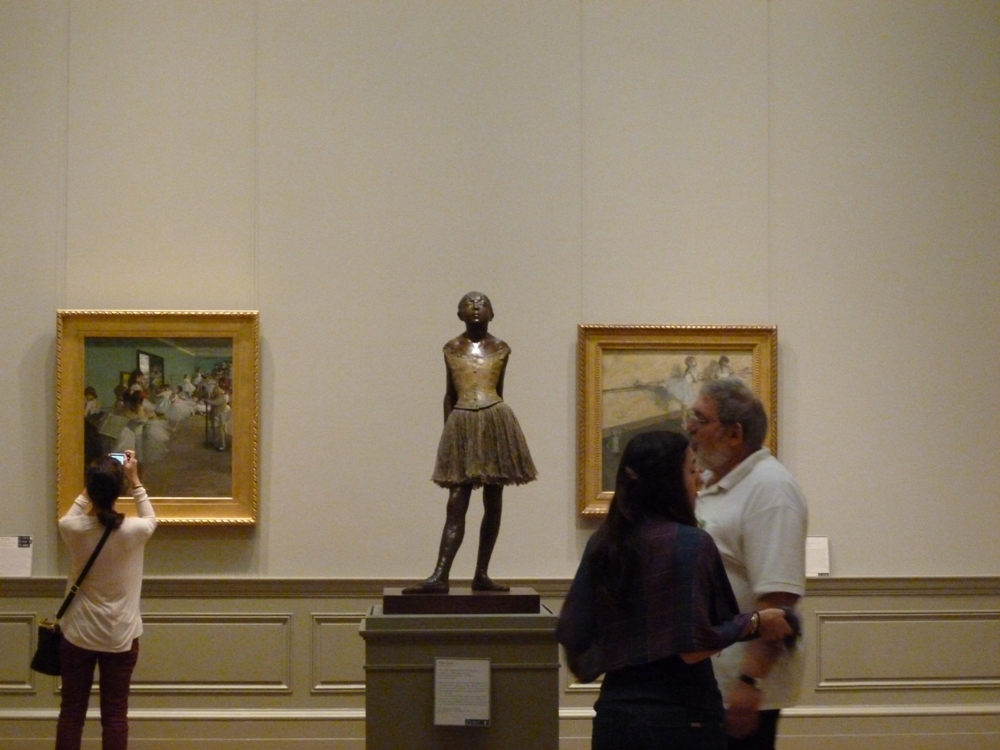
Go in for a closer look.

Thank you for visiting.
 Nicci Carrera