


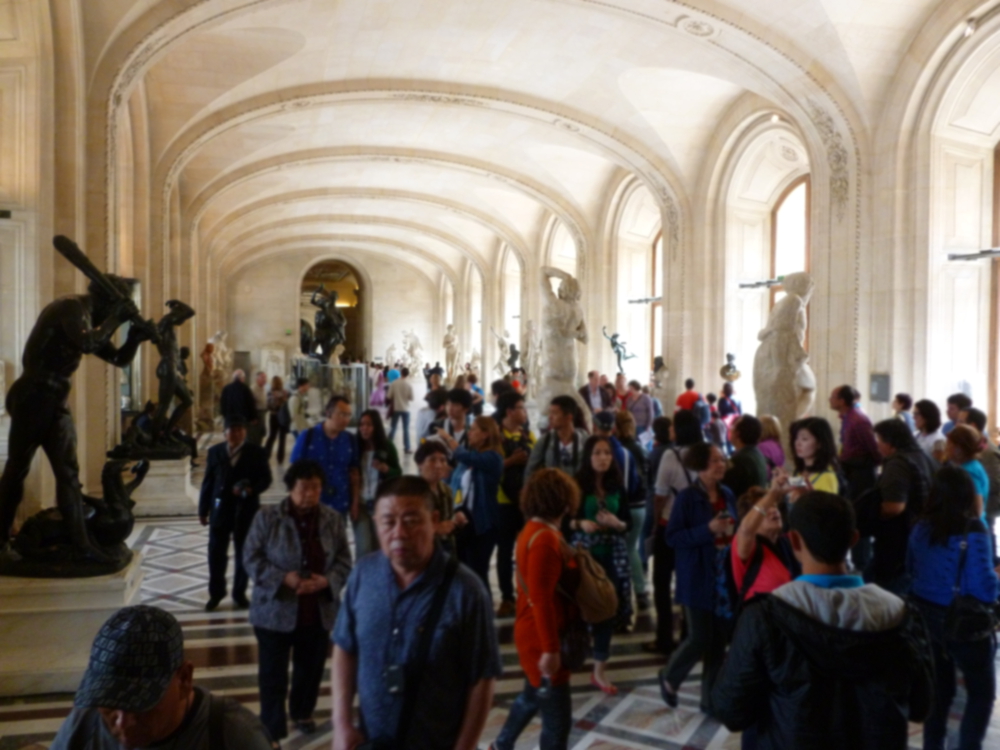
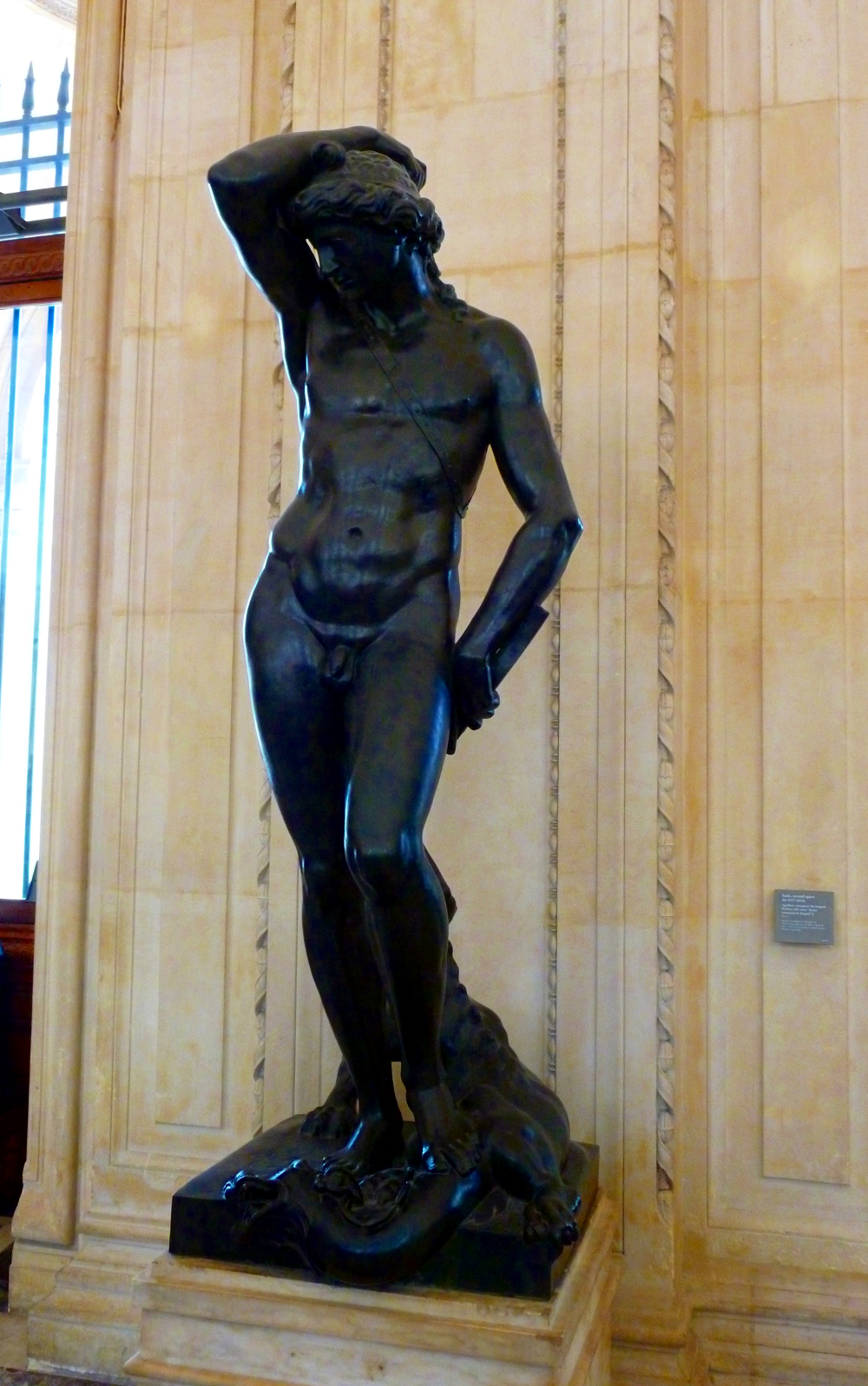
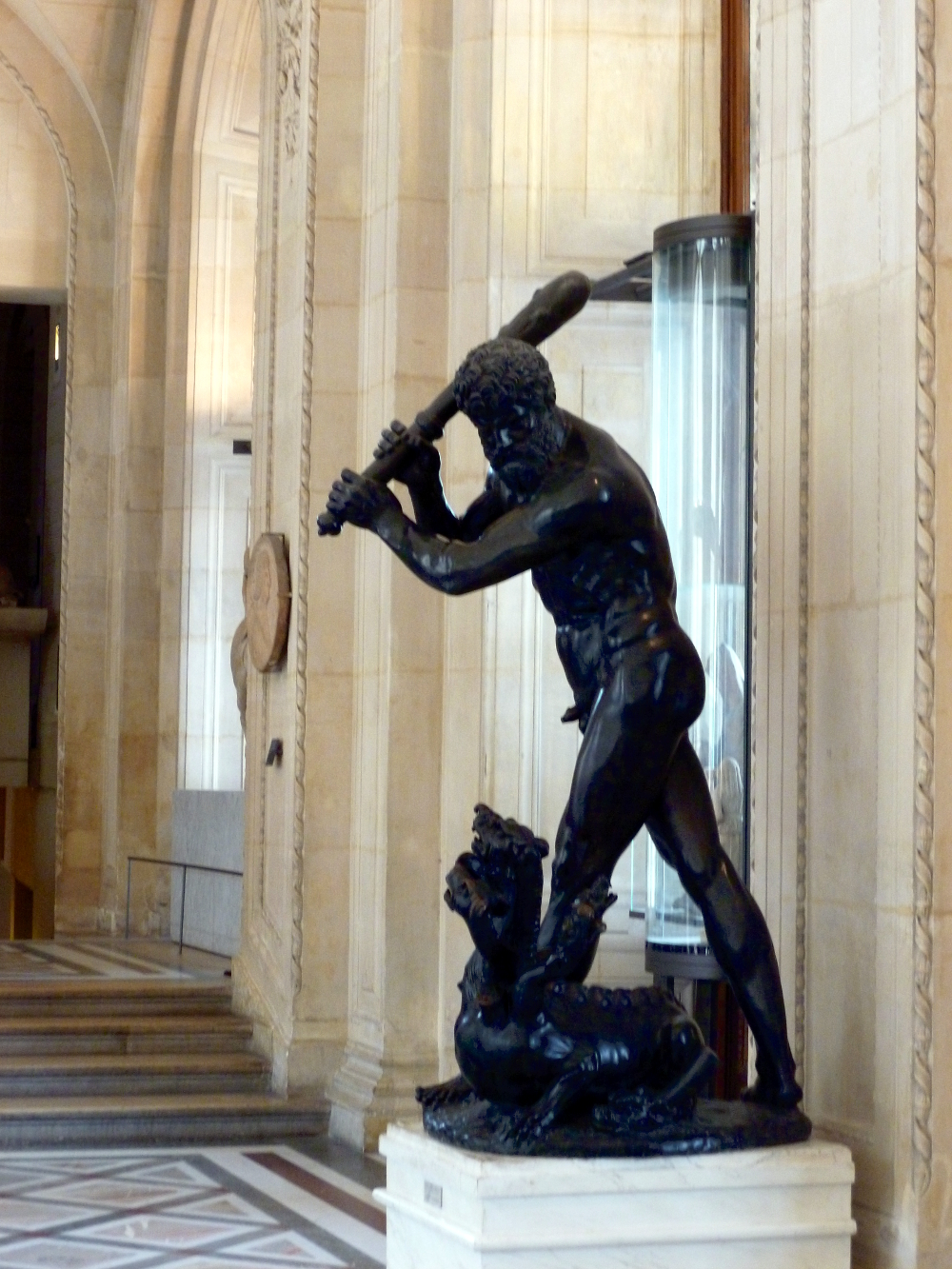
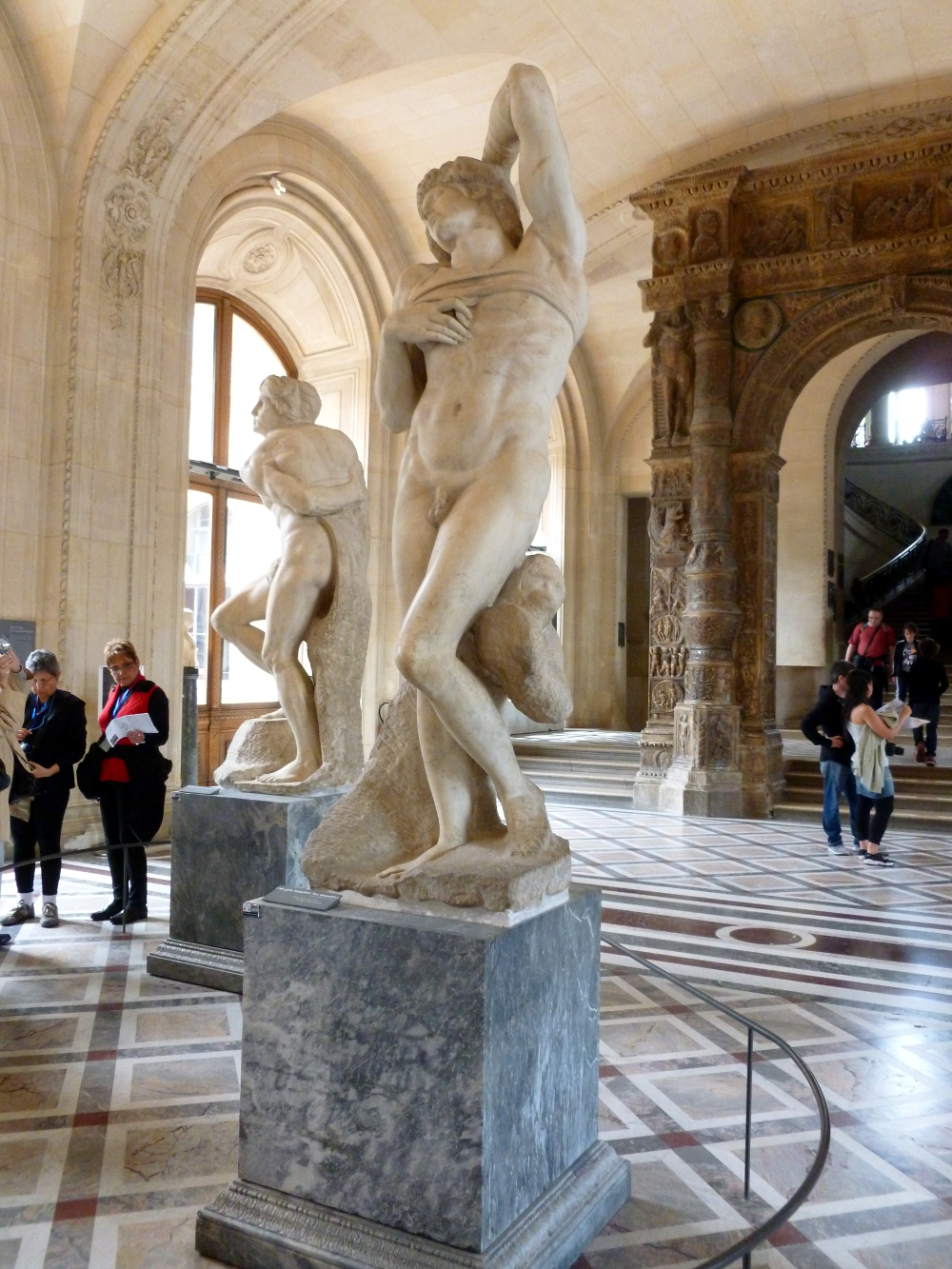
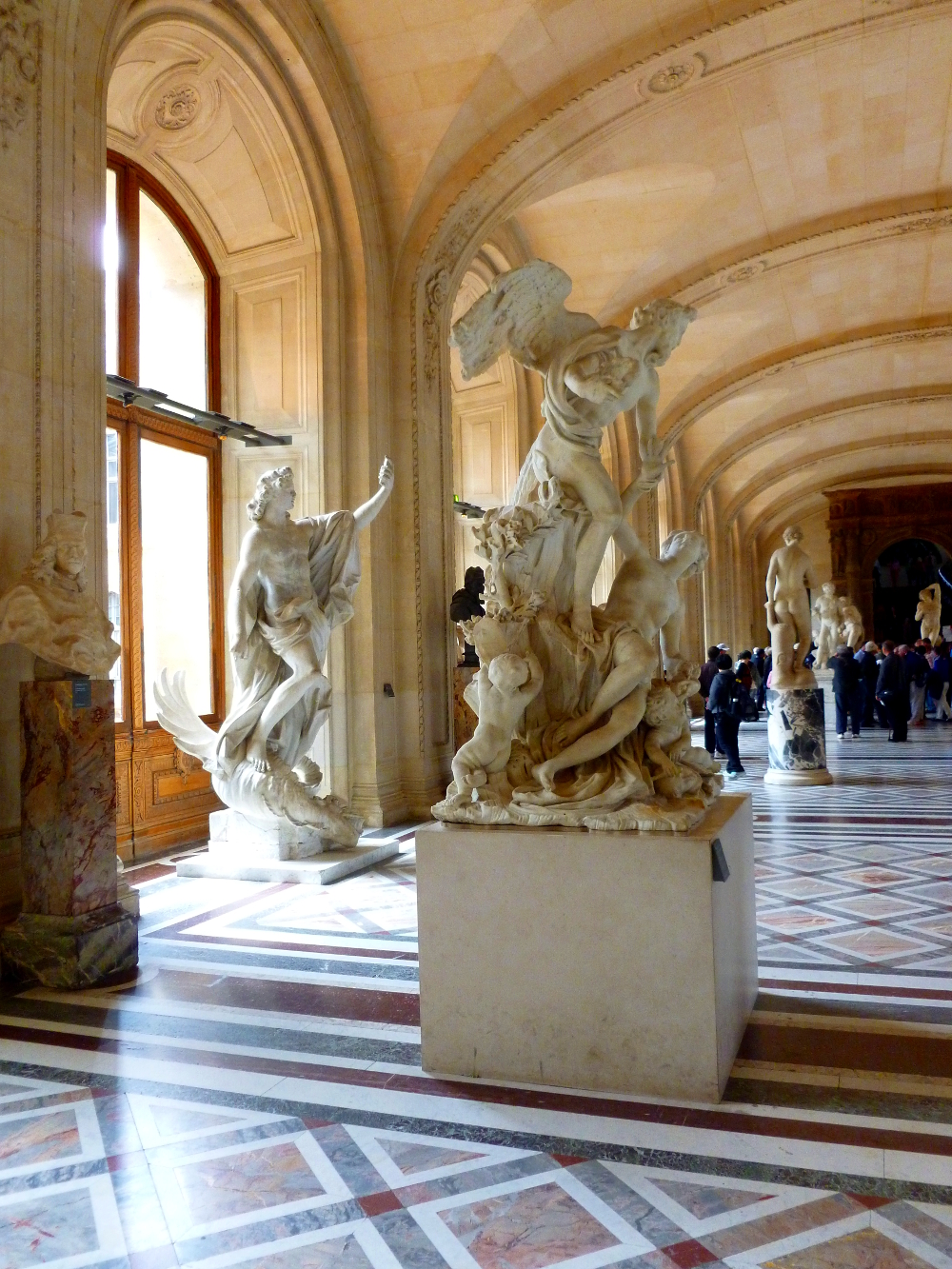
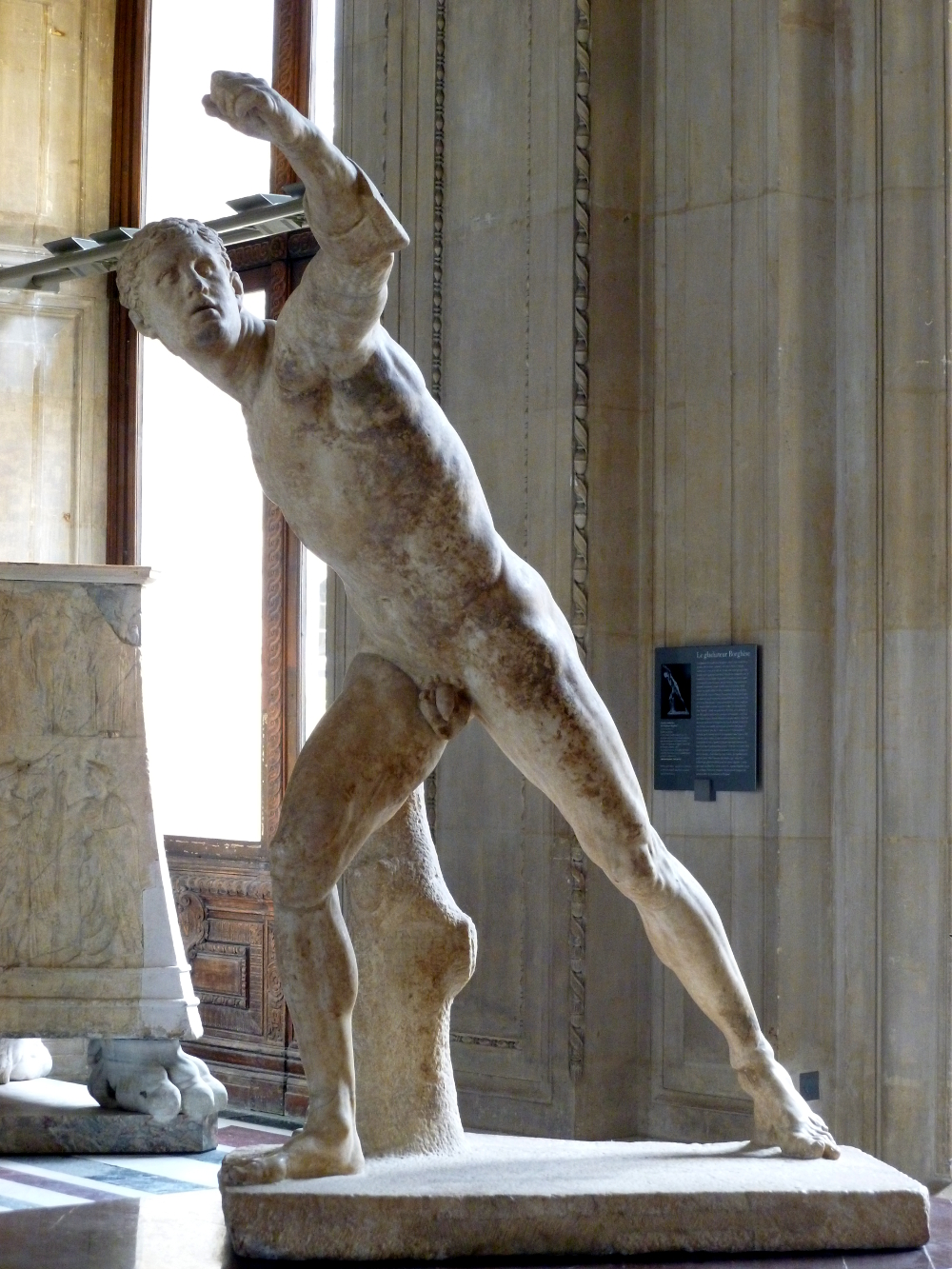
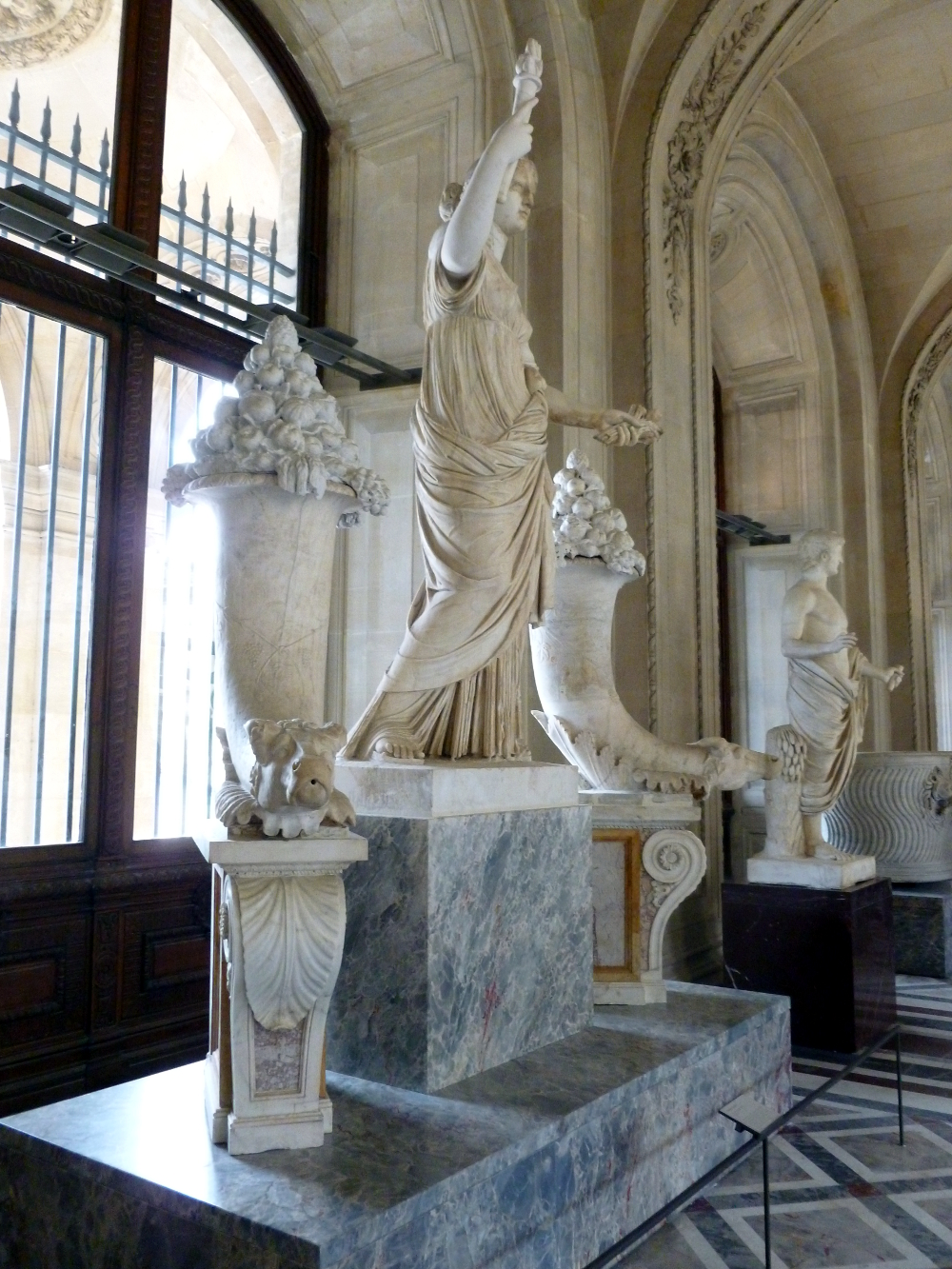
There is a lot of sculpture in the Louvre, in various historical contexts. Then there’s just “The Sculpture Room.” When you walk in, you will be struck by the airy, light-filled space, which is large enough to artfully display many classical sculptures. It is breathtaking and utterly pleasing to the senses. There it is, sculptures you’ve seen throughout your life, in books, all assembled with space enough around them for you to circle them and admire them from every angle, with light flooding in through traditional, palace windows. It is a magnificent display and deeply gratifying to walk into it, to experience the totality first, and then to linger over the descriptions, pause for photos, walk through the giant reproduction of a palace gate and look back across the room again from an elevated position.
It was crowded at first but then it cleared out a lot and you could get a less observer-cluttered feel for the room.

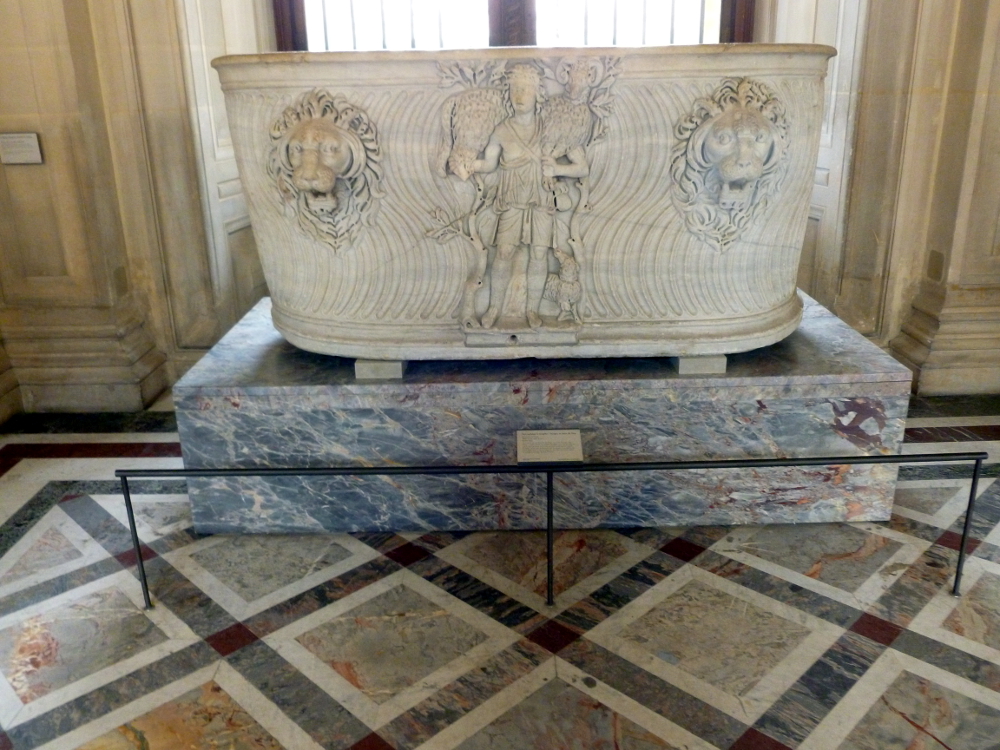
We thought this was a bathtub, but it’s a sarcophagus.
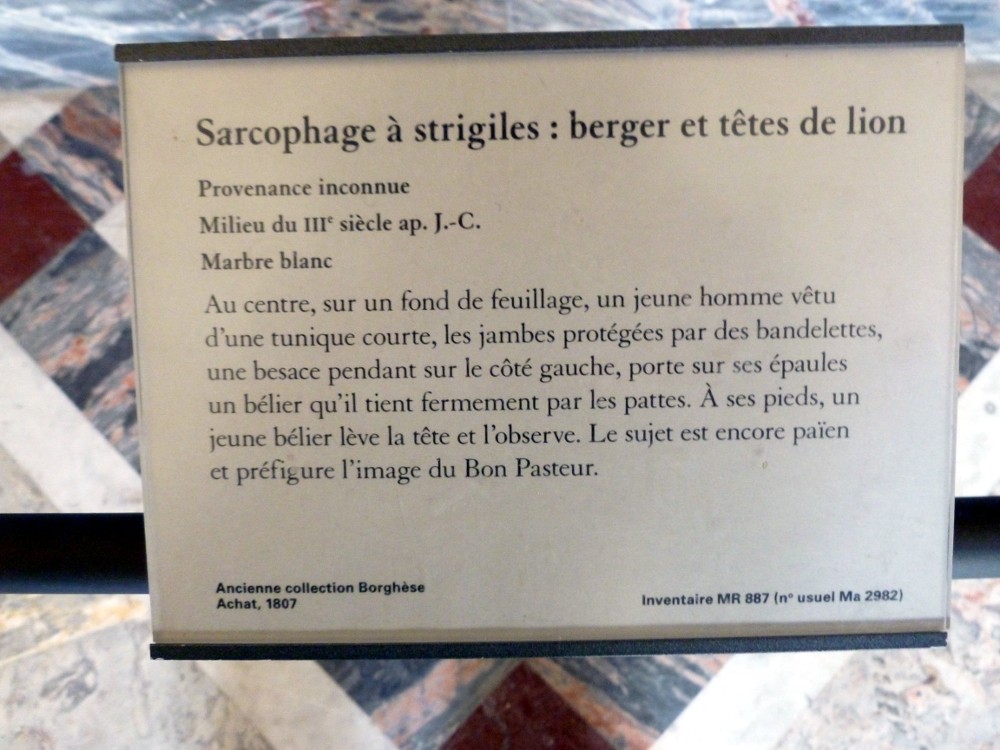
Unlike the Dutch, the French don’t translate the art descriptions into English. This says something like: Sarcophagus of something something and heads of a lion. Around 3rd Century A.D. White marble. In the center, on something, a young man something, his arms protected by something, and so on.
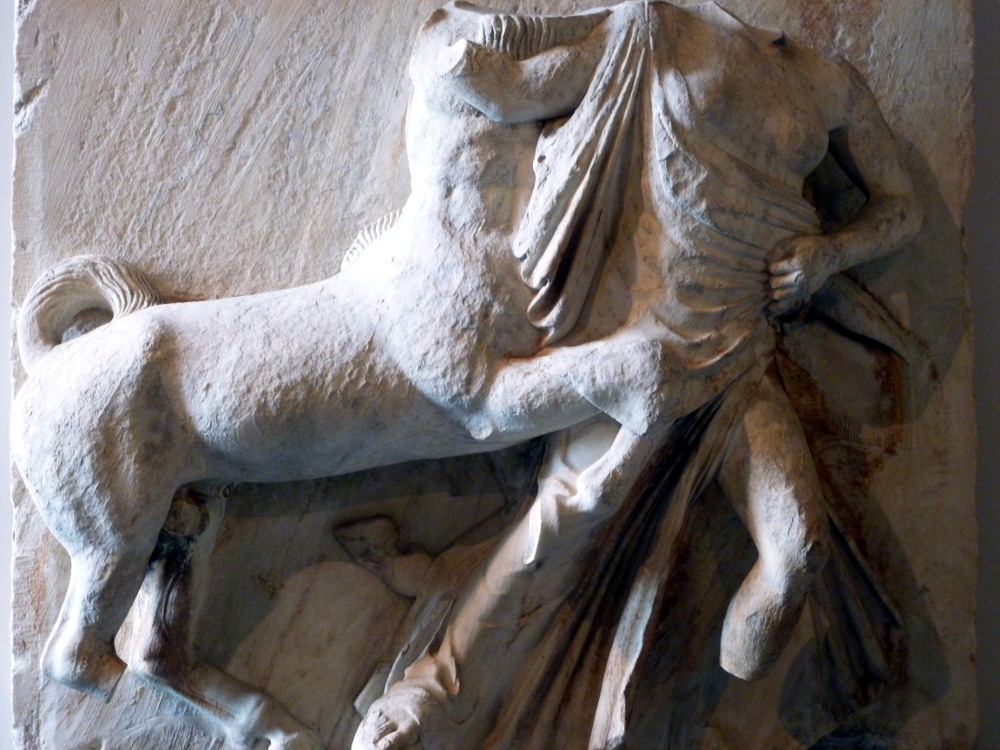
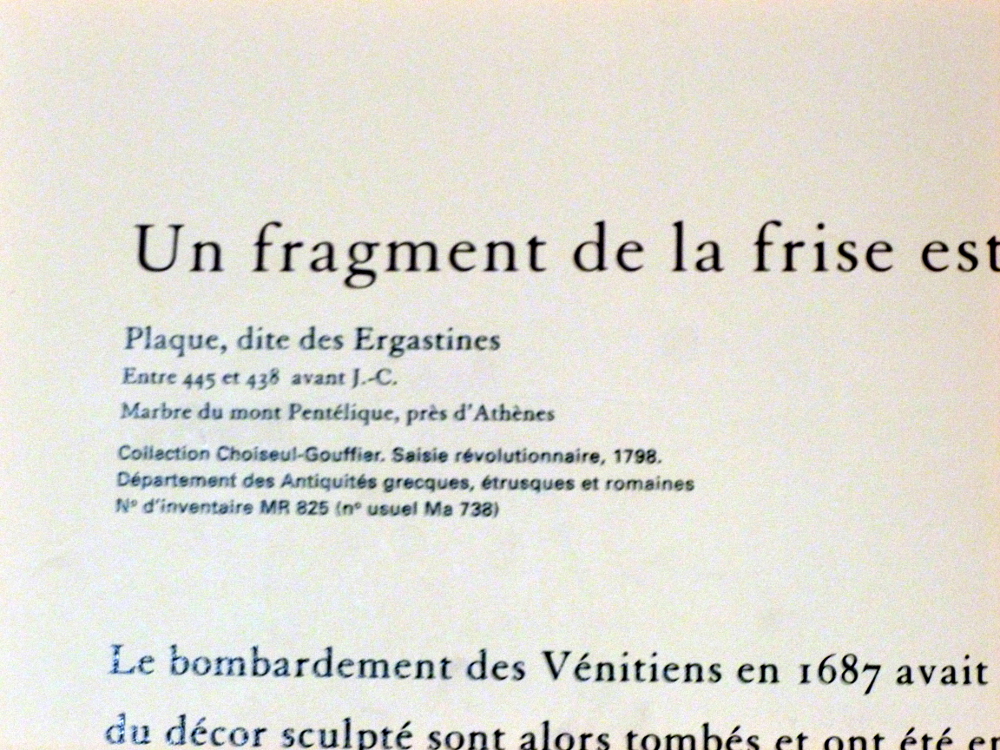
Here the translation is easy. It’s a fragment of a frieze. The depiction of powerful movement, the draping fabric, and the effect of relief against that wall of a frieze, I found beautiful. Avant means before, so this is 445 B.C. Remember The Victory of Samothrace, with its flowing gown and powerful motion, typifies Hellenistic art (300 – 100 or so, BC). I just noticed in trying to translate the sign below that this frieze shows the beginning of that artistic exploration.
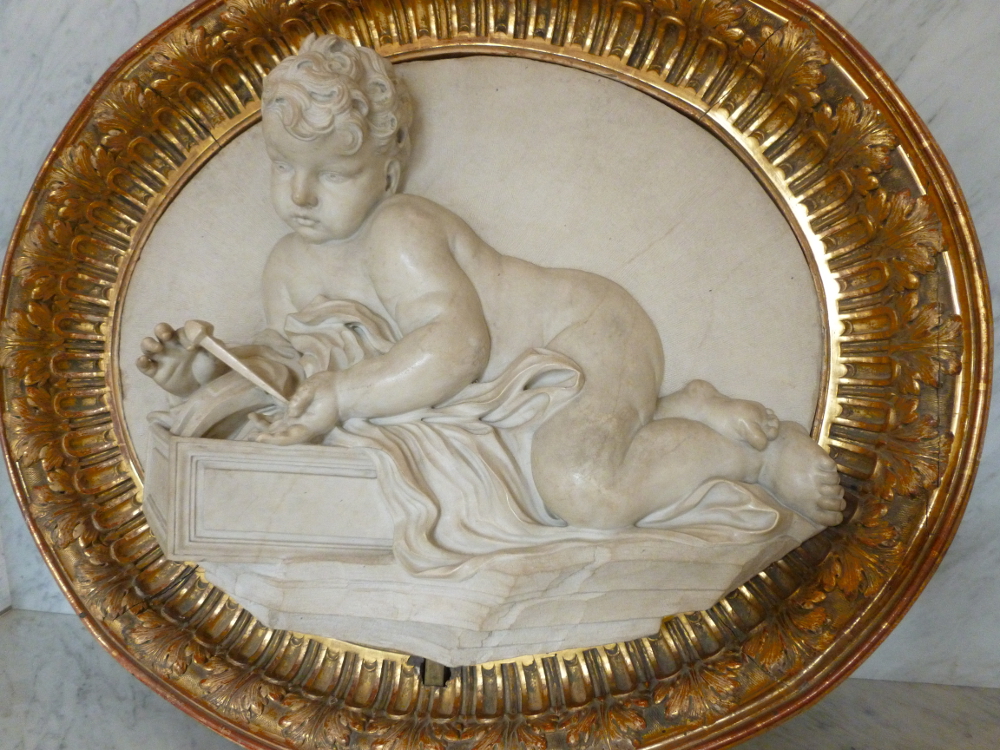
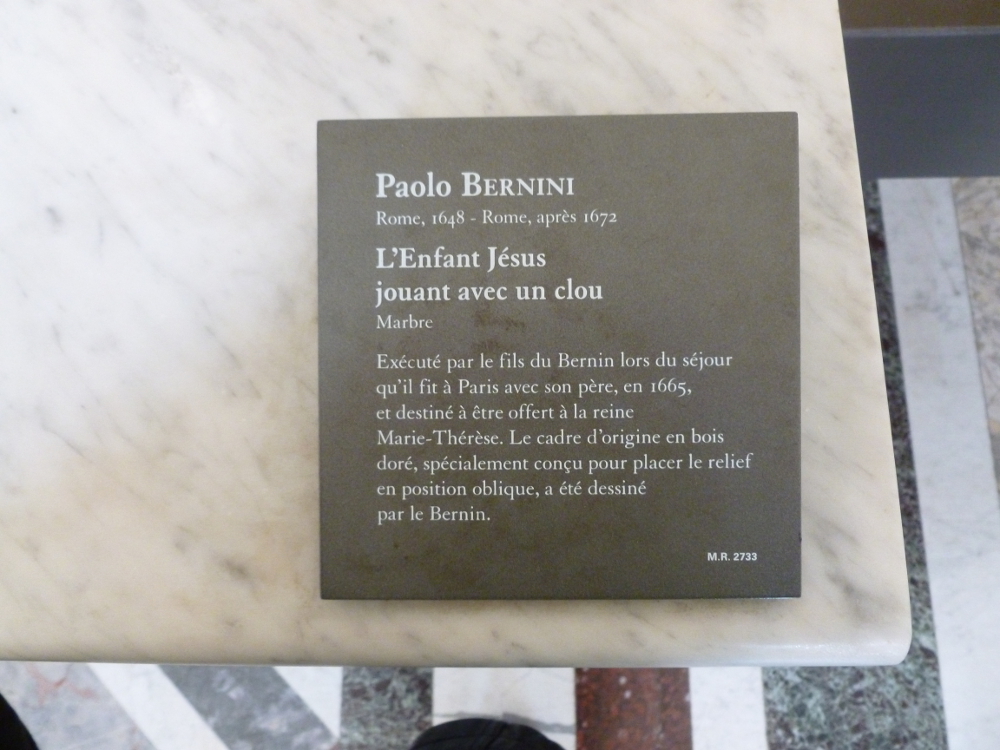
Another frieze. Looks a bit older, going by the above information. Just starting to depict fabric and movement.



The sculpture room after it has cleared out a bit.


My husband is the king of patience, putting up with the taking of 1600 photos while on vacation, an average of one every 6 minutes for 8 hours a day. He took the above photo 4 times, letting me check the result each time. True, the last photo was the last time, but one does eventually have to set a limit.


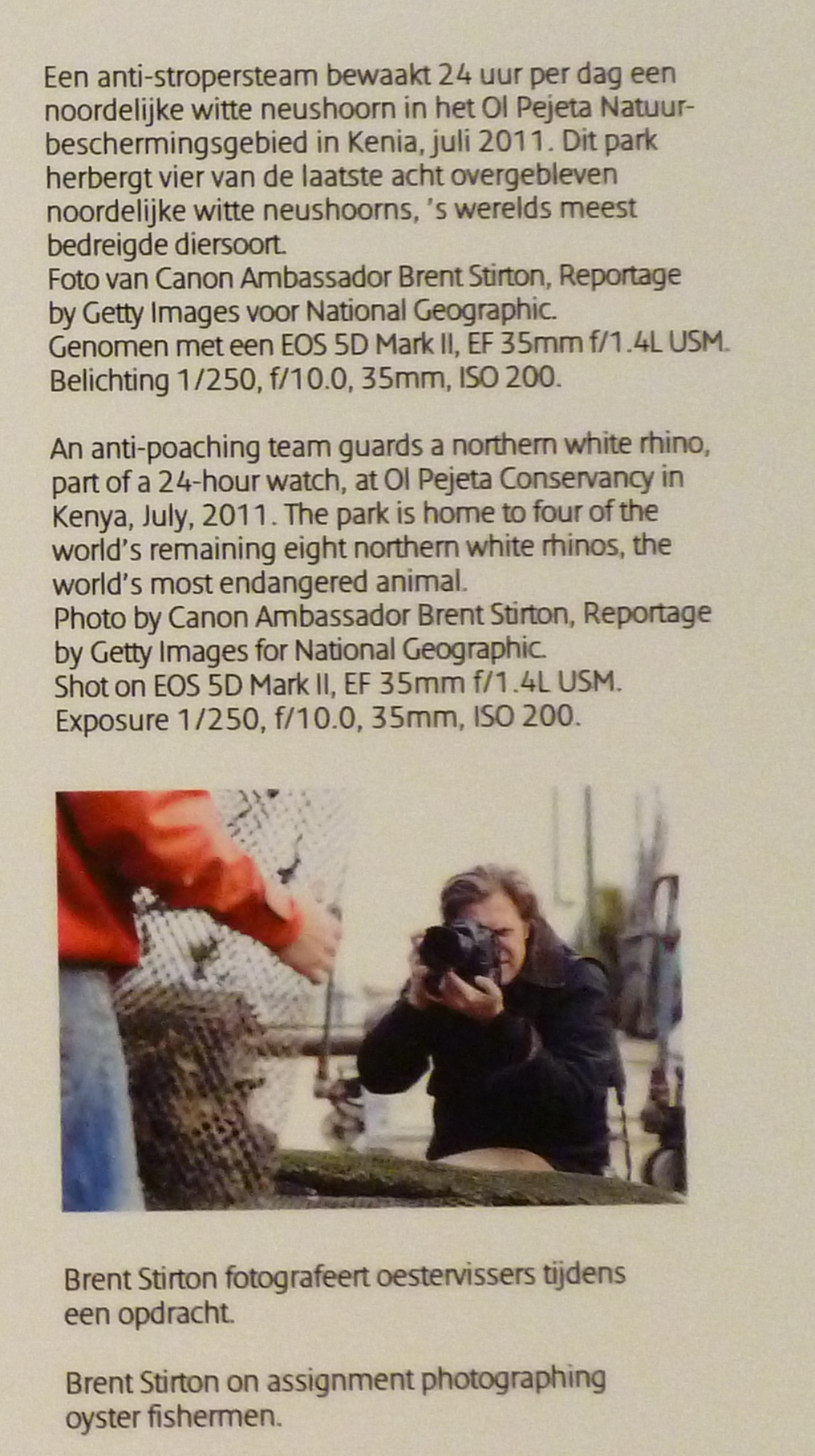
Two photos from the World Press Photo Laureates from Russia and the Soviet Union exhibit at De Oude Kerk (the Old Church) in Amsterdam, May, 2013.








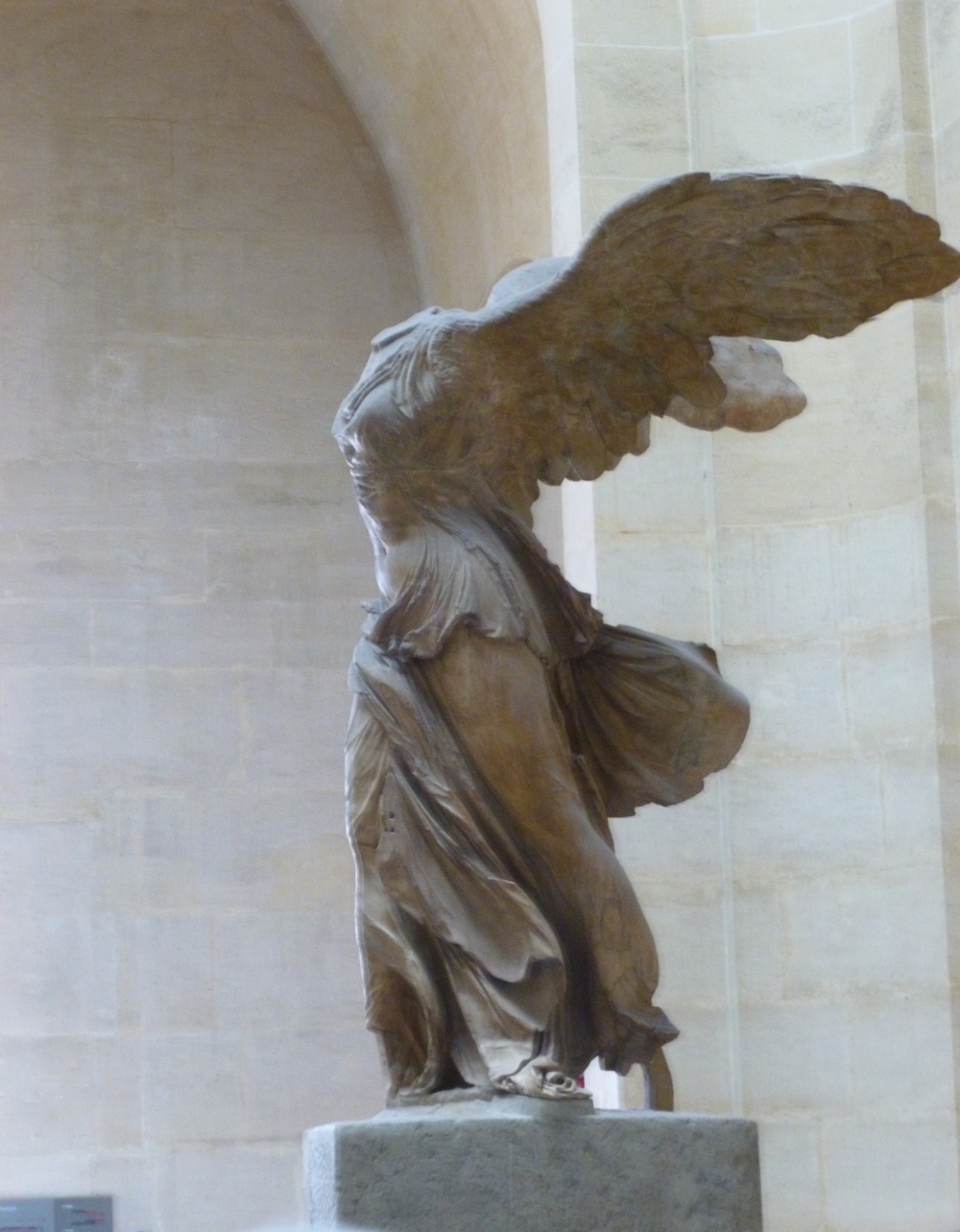
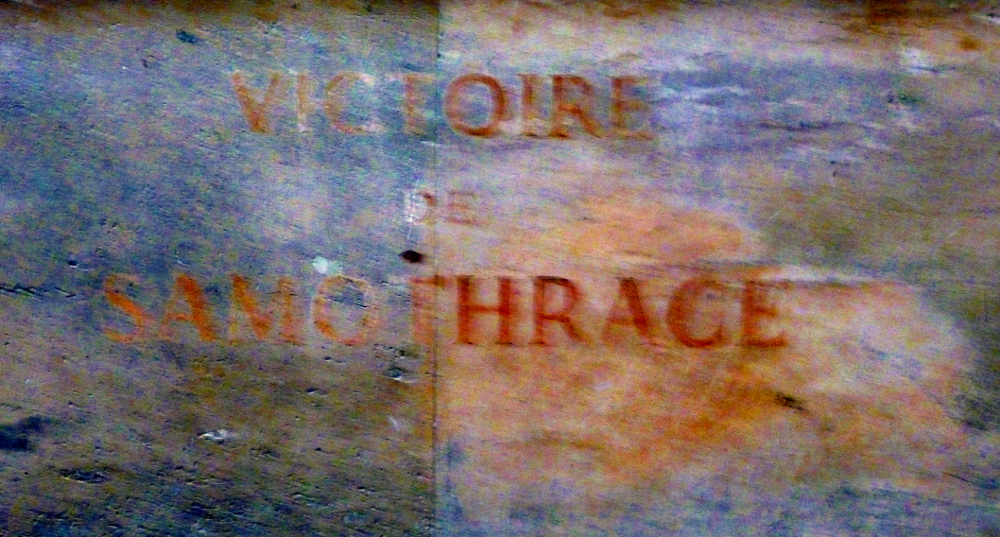
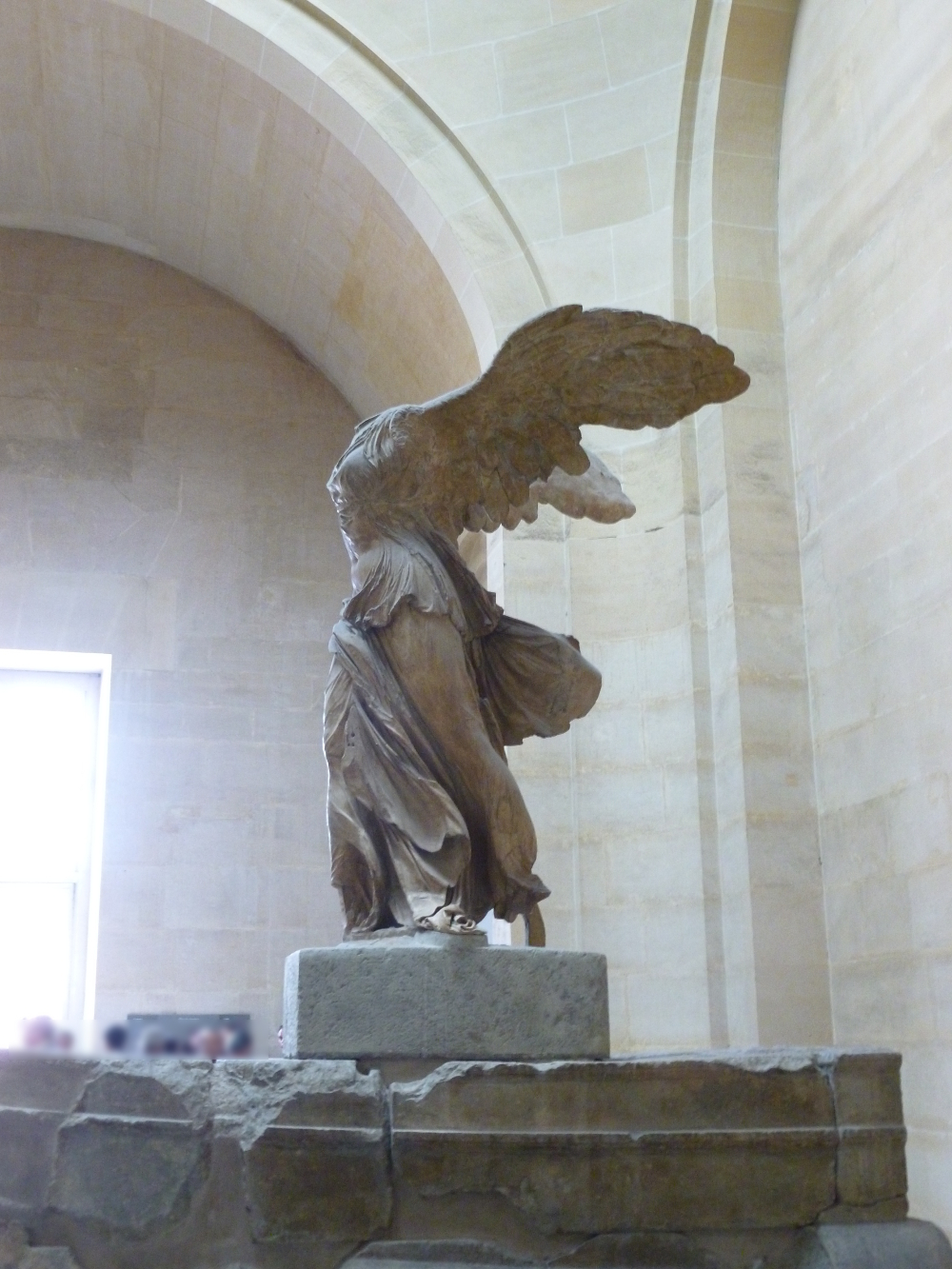
This marble sculpture of a figure depicts the goddess, Nike, on the prow of a ship. It stands on a staircase landing in the Louvre, beneath a skylight. The flowing drapery exemplifies one of the key distinguishing features of Hellenistic Art (early second century B.C. (190 – 200 B.C.)).
For email followers who don’t see the feature image in their email, here it is:


 Nicci Carrera