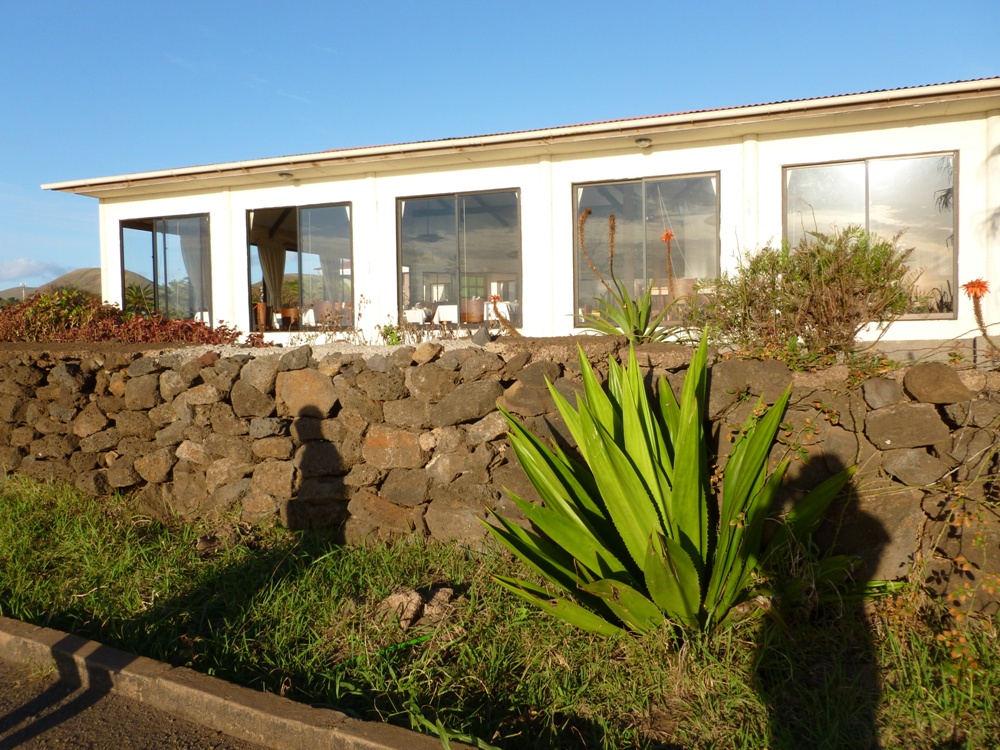
Here is the restaurant at your hotel. You will have an unobstructed view of the Pacific ocean and the sunset-pinked clouds just might write your name if you have a short one like “Nia.”
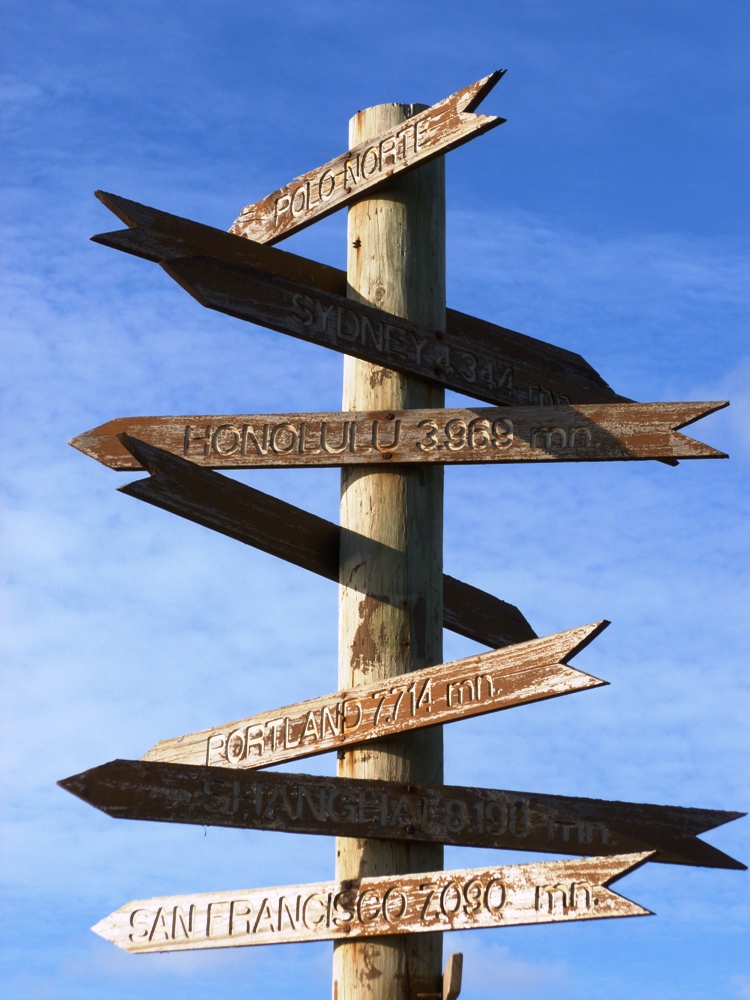
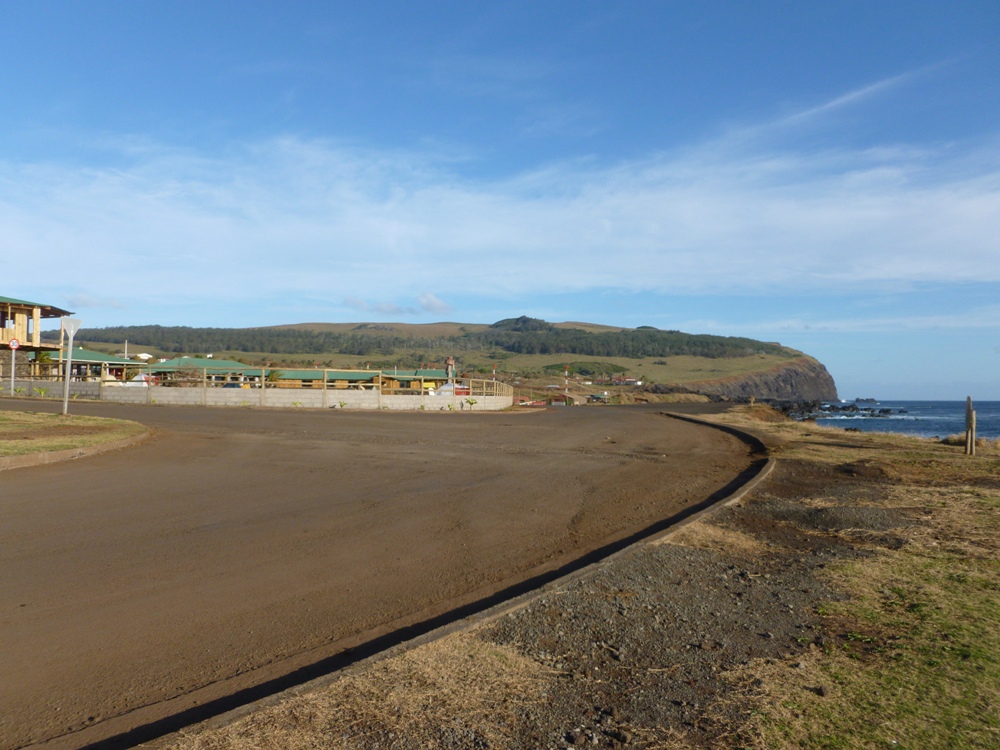
Walk a bit up the road and find directions:
Keep going:
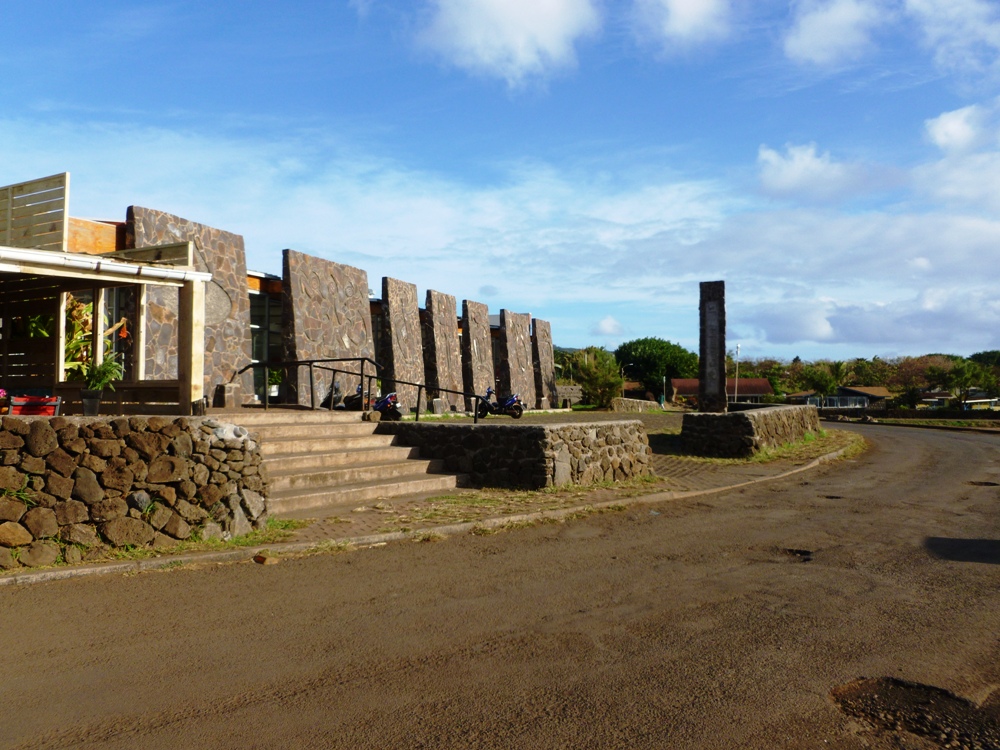
and find this:
Walk a bit in the opposite direction:
and you can bank here:
dine here:
and shop here:
This will be your guide. His name is Christian, he is half Chilean and half Rapanui. He is an historian and will tell you secrets not in the books about Easter Island:
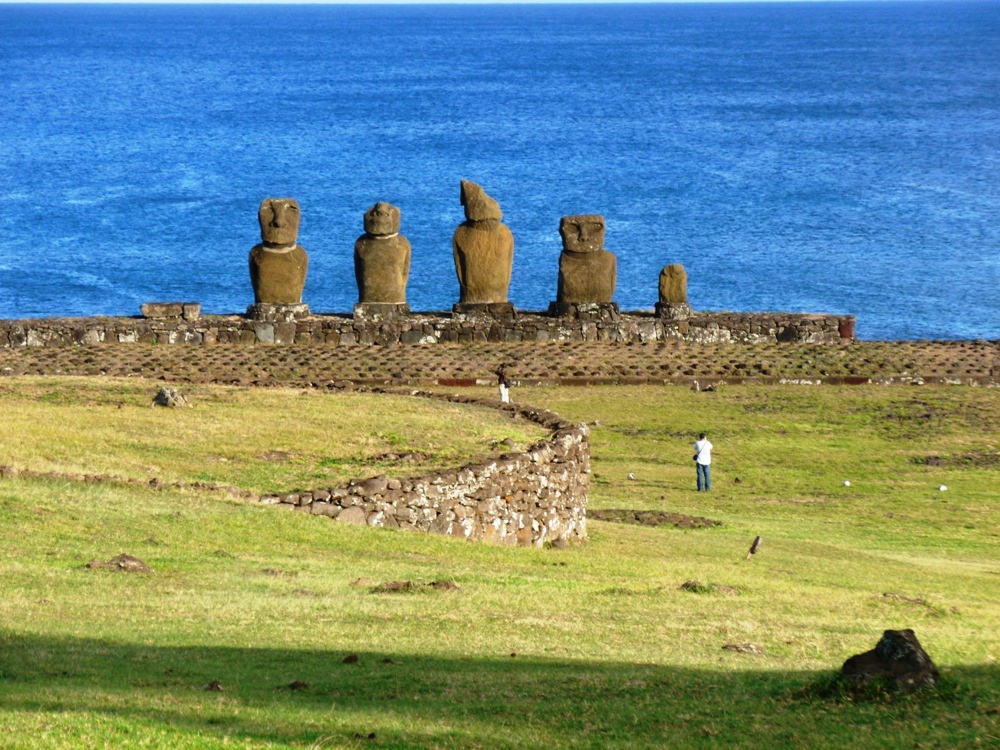
He’ll take you places like this ahu (ancient Rapanui platform that holds the moai (statues)), which is very near the hotel:
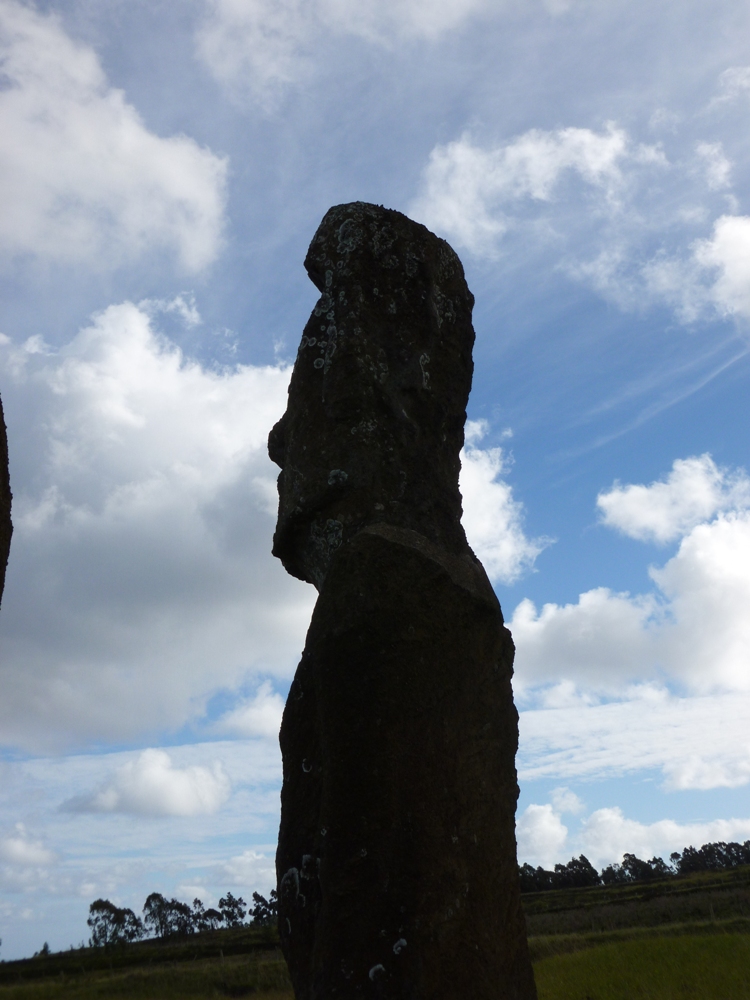
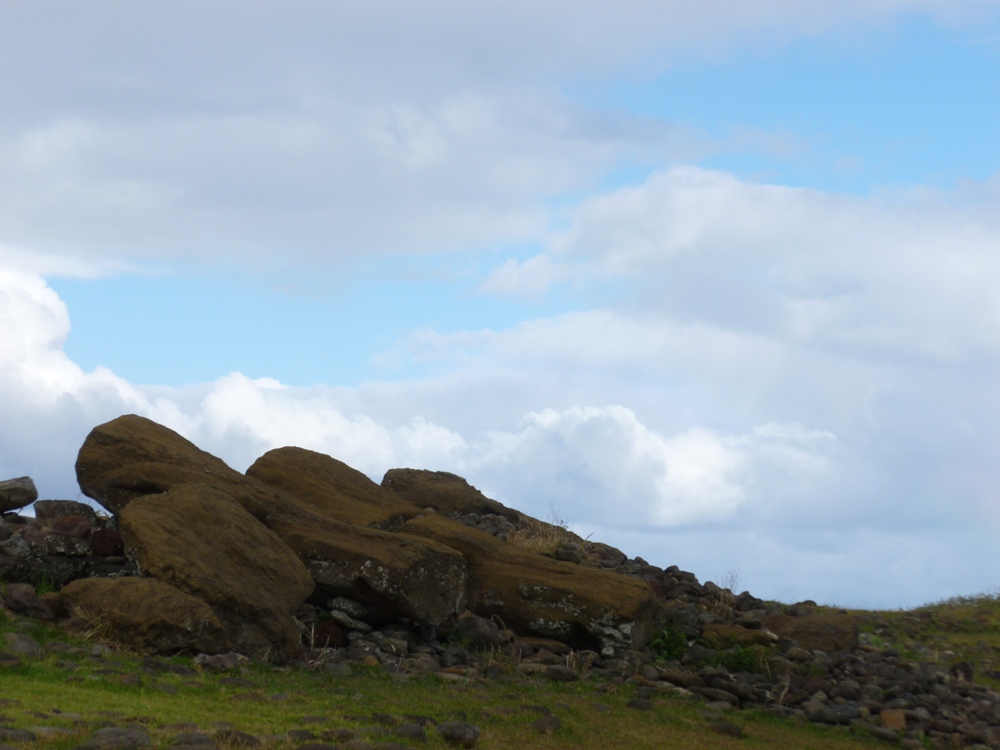
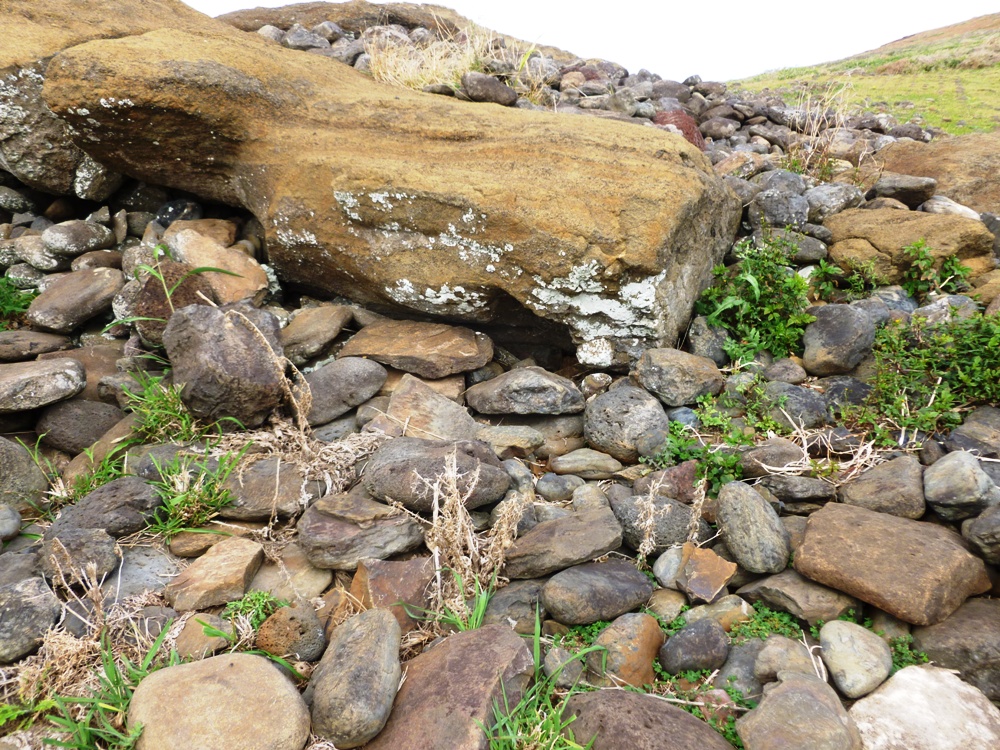
and he’ll take you to the opposite side of the island where, if you look closely, you’ll see these are more than just mossy rocks:
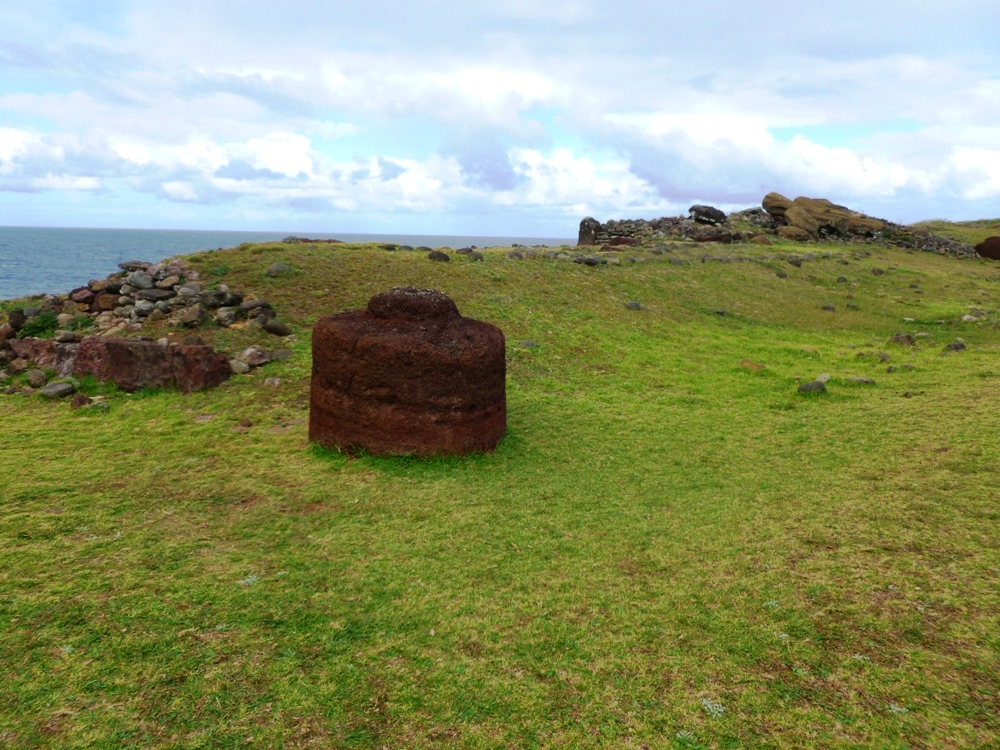
or a chunk of red lava (pukaos, topknot carved from red scoria):
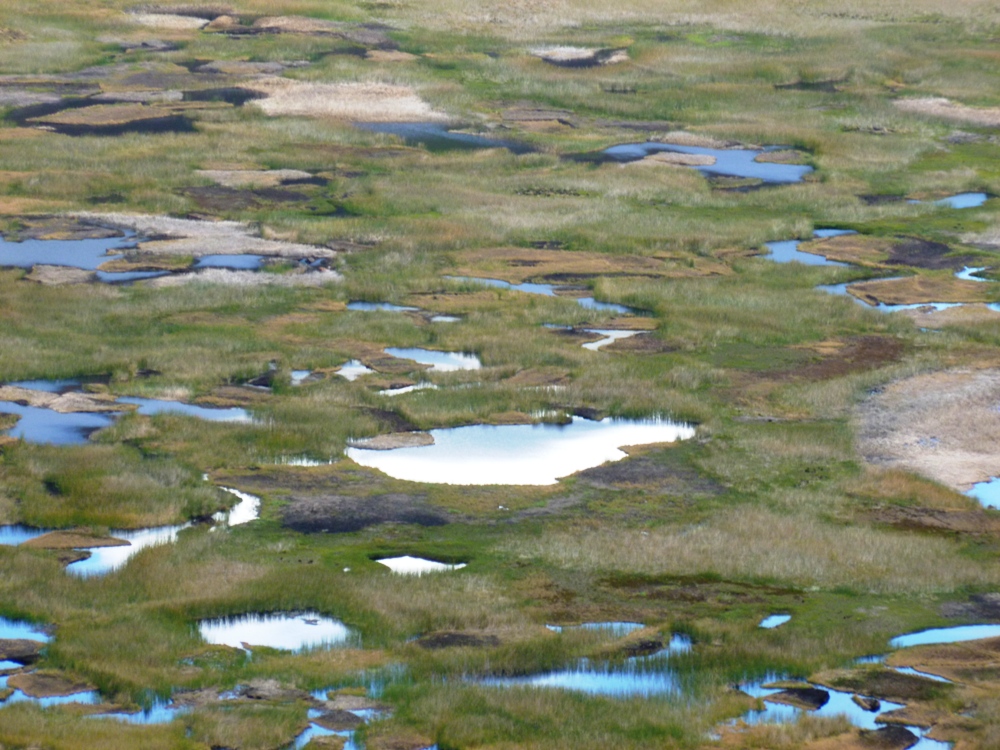
Drive to the top of a hill and see fluorescent pools in a caldera:
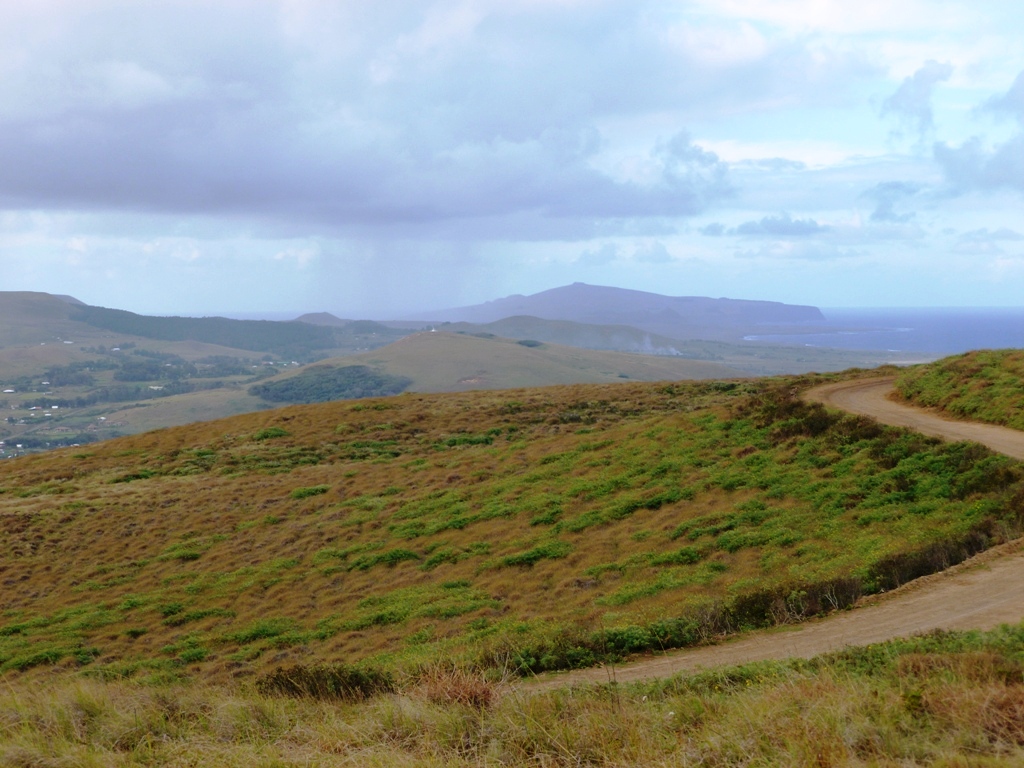
See most of the island from atop this hill:
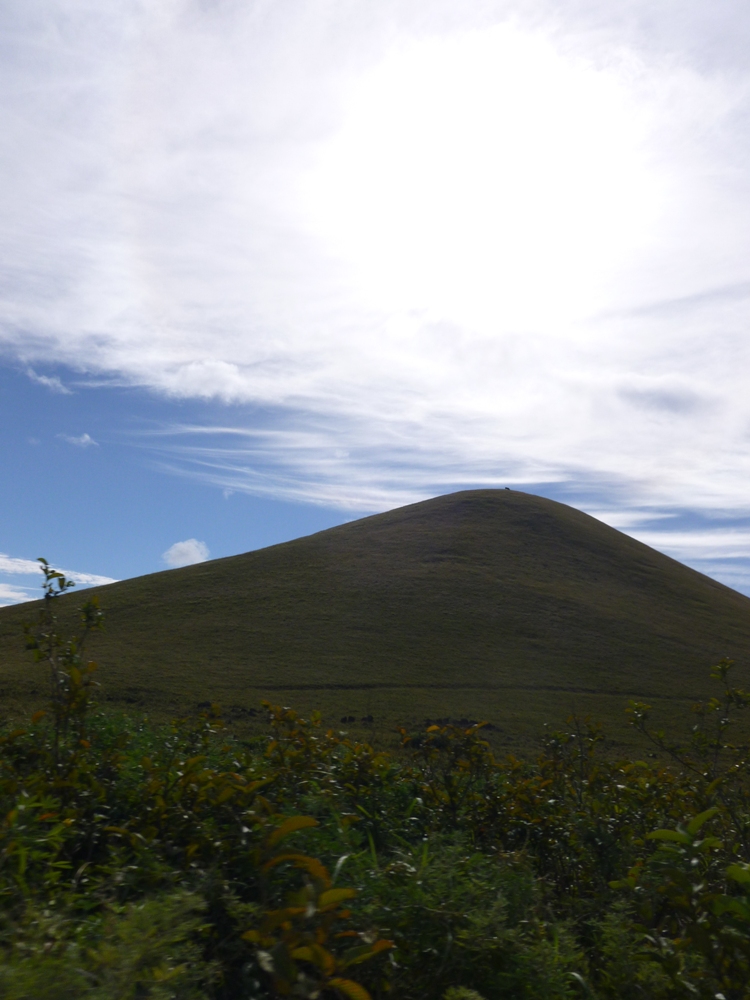
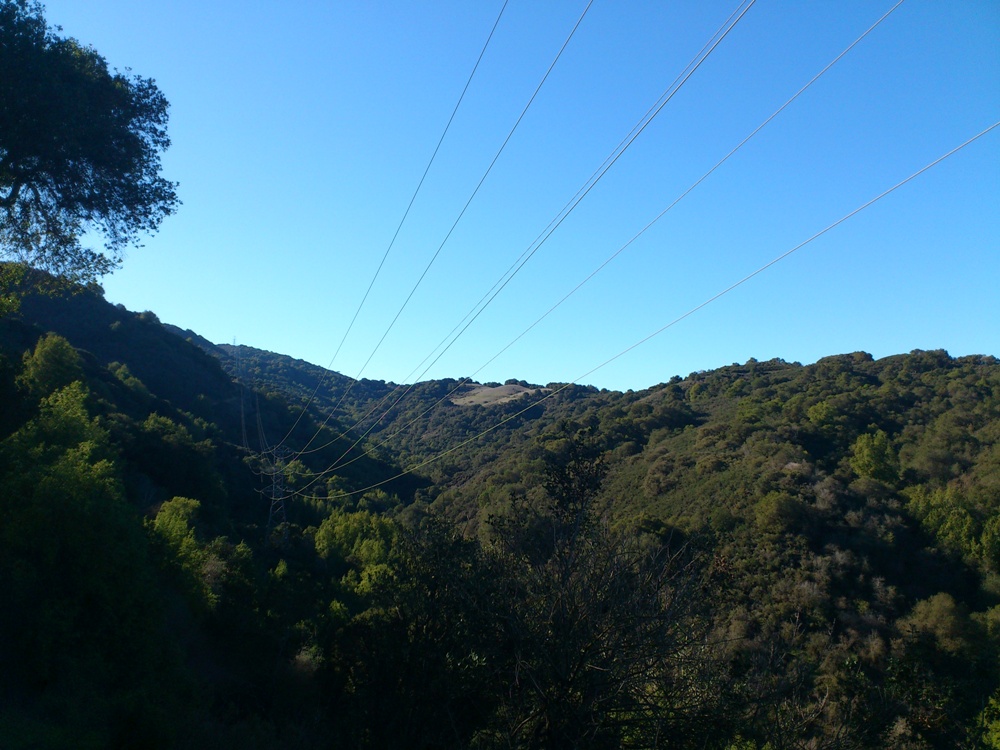
Observe this hill:
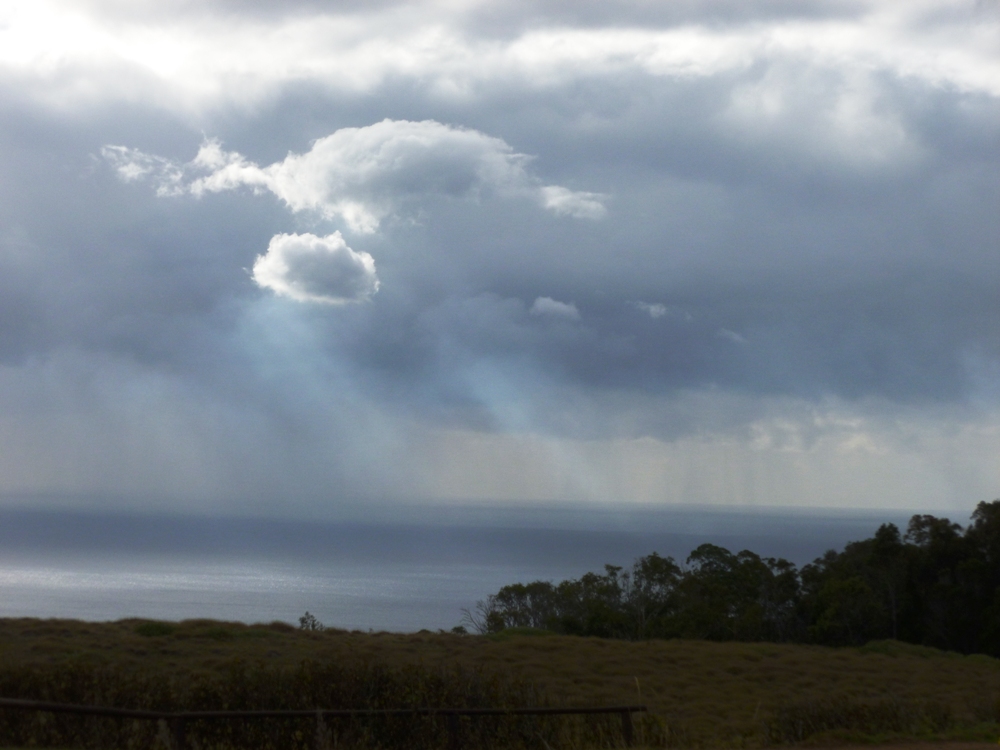
And prepare for rain. California’s spring is Easter Island’s winter:
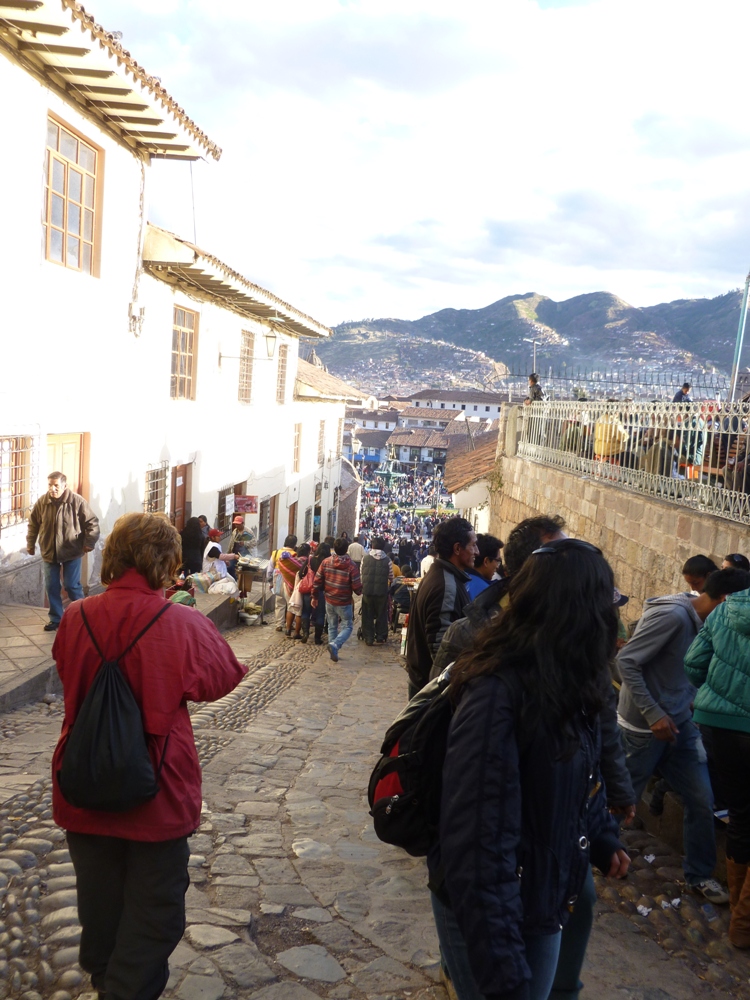
An afternoon off from the tour and a chance to see the locals in a bustling side street during a festival. There’s one tourist in the shot; the rest are locals.
Today’s post was inspired by this (superior) post:
Take the Highlights of the Museum tour at the Metropolitan Museum of Art. It’s free (with admission, which is free also, sometimes).
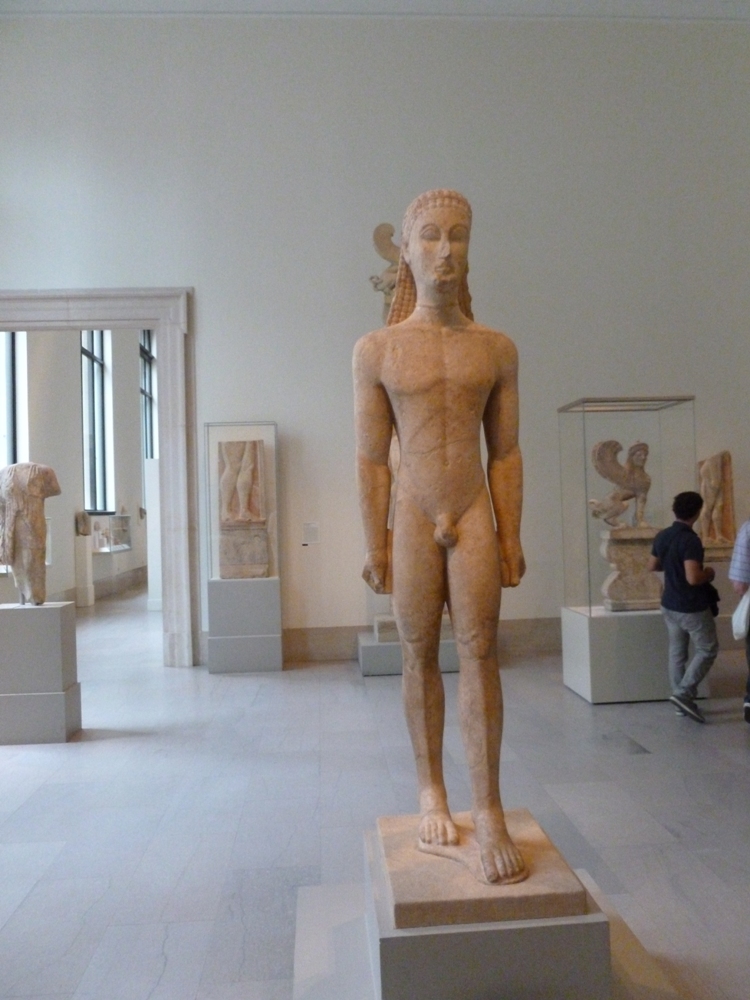
Begin with the Greco Roman area, the basis of Western culture, early Greek sculpture. Observe symmetry and, with one foot forward, the beginnings of motion in sculpture. Note the hands held stiffly by the side.
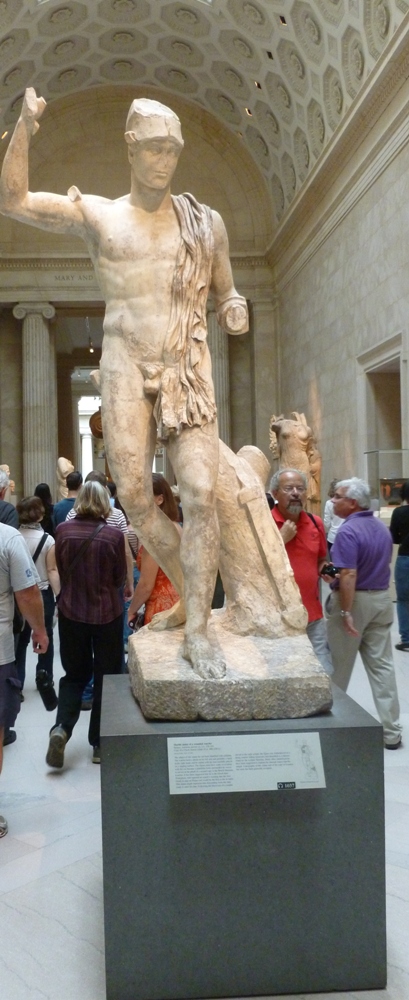
100 years later, this Greek statue in the heroic pose was created. Note musculature and movement.
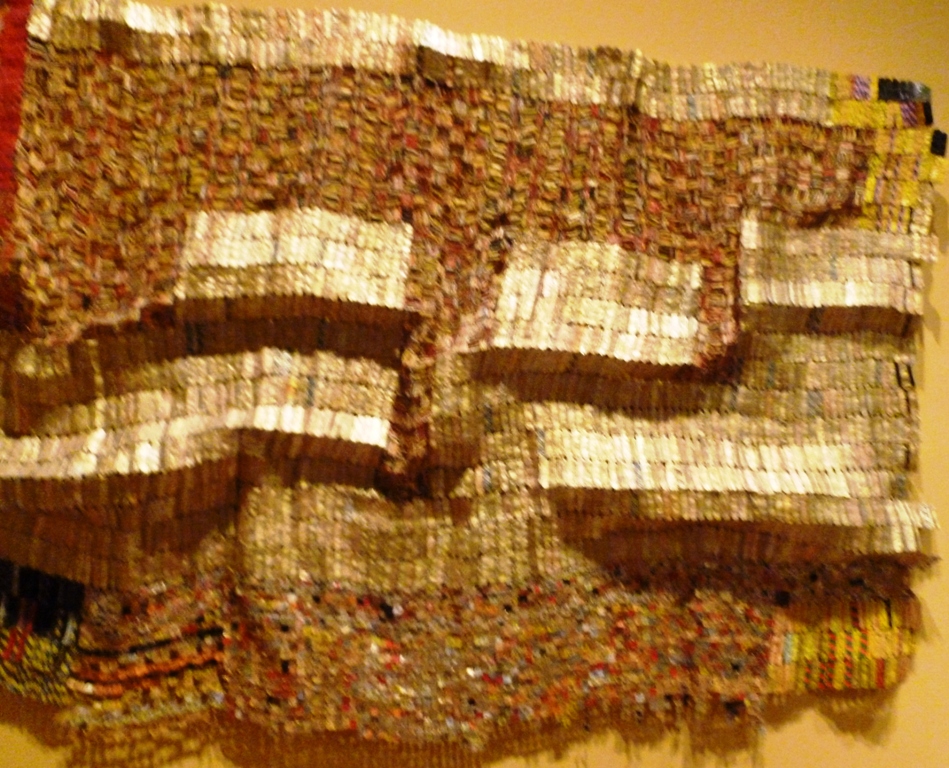
See this contemporary artist from Ghana who composes sculptures from found items, in this case bottle caps and labels from liquor bottles. The artist believes art, like life, is always changing, so he does not provide instruction on how the piece should be hung, leaving it to the curators to arrange the display.
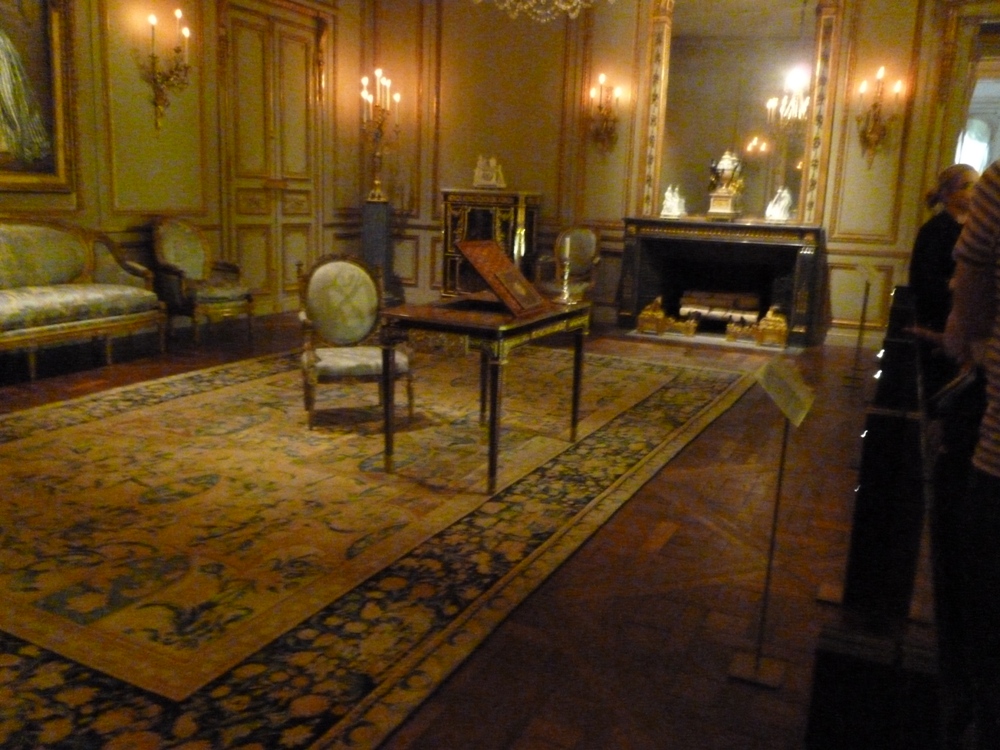
See a reconstruction of Marie Antoinette’s room where she lived during her confinement. Artists made things for her during this period and, according to her requirements, imprinted the letters “MA” on any furniture they created for her. The desk shows the beginning of multi-purpose furniture, a new idea at the time.
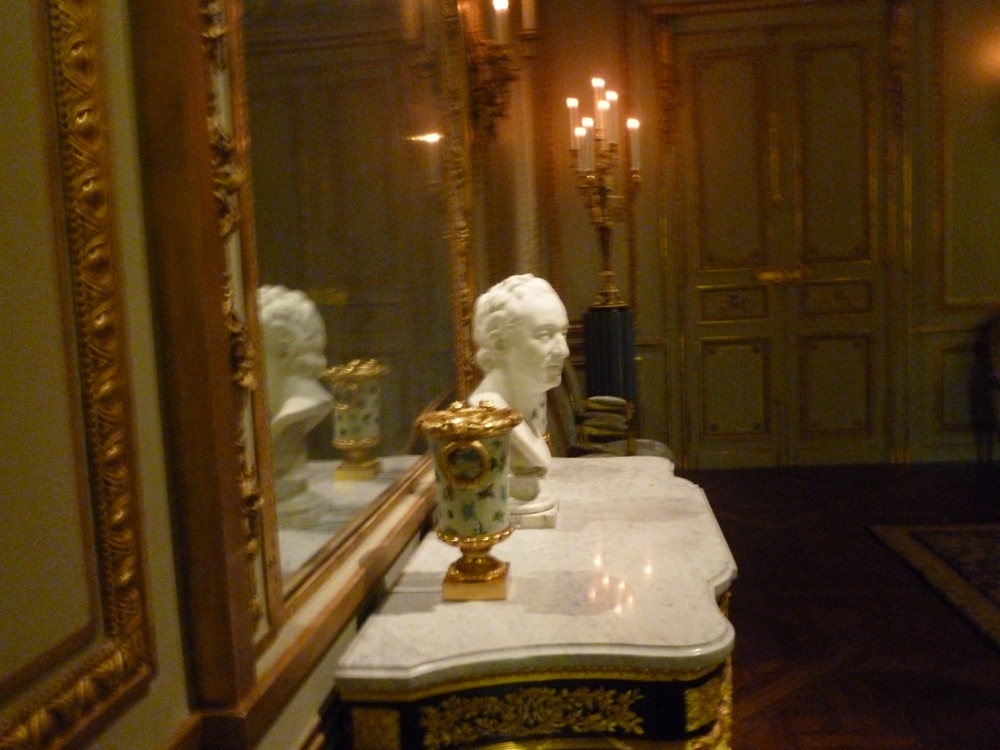
The bust of Diderot, a contemporary, one of the philosopher-creators of the Enlightenment era and the creator of the first encyclopedia, stands on a side table in the room.
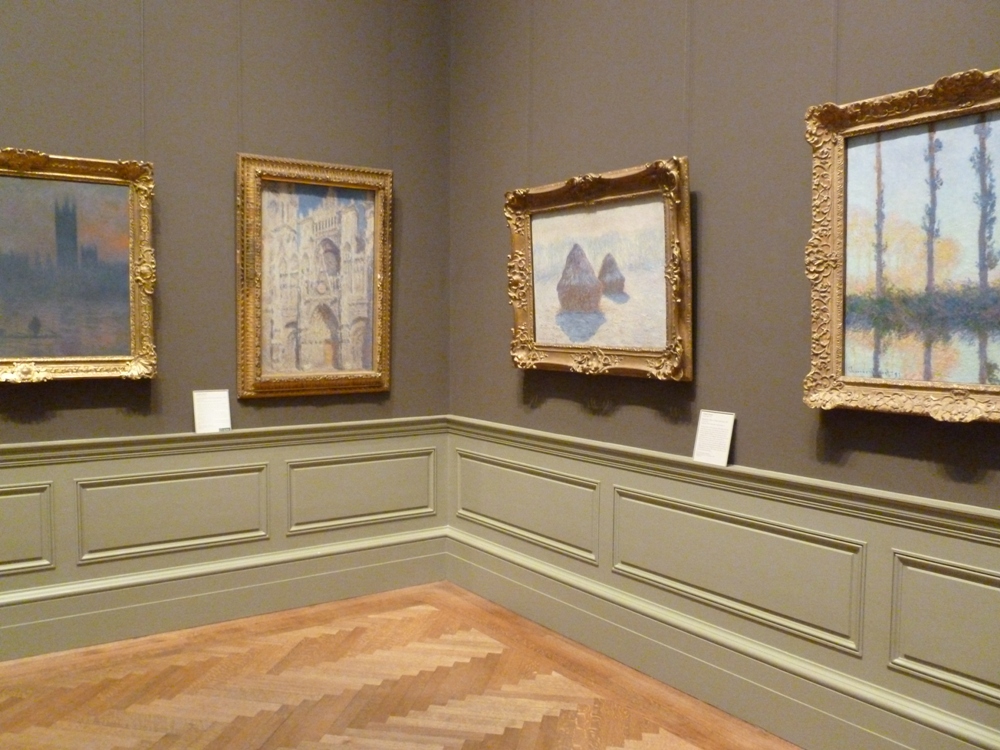
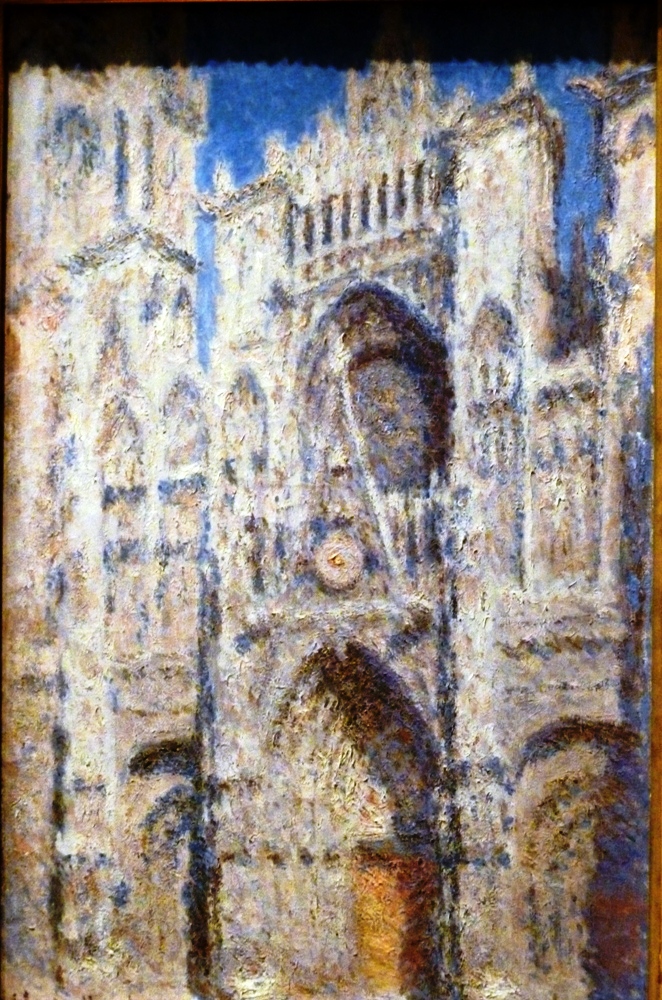
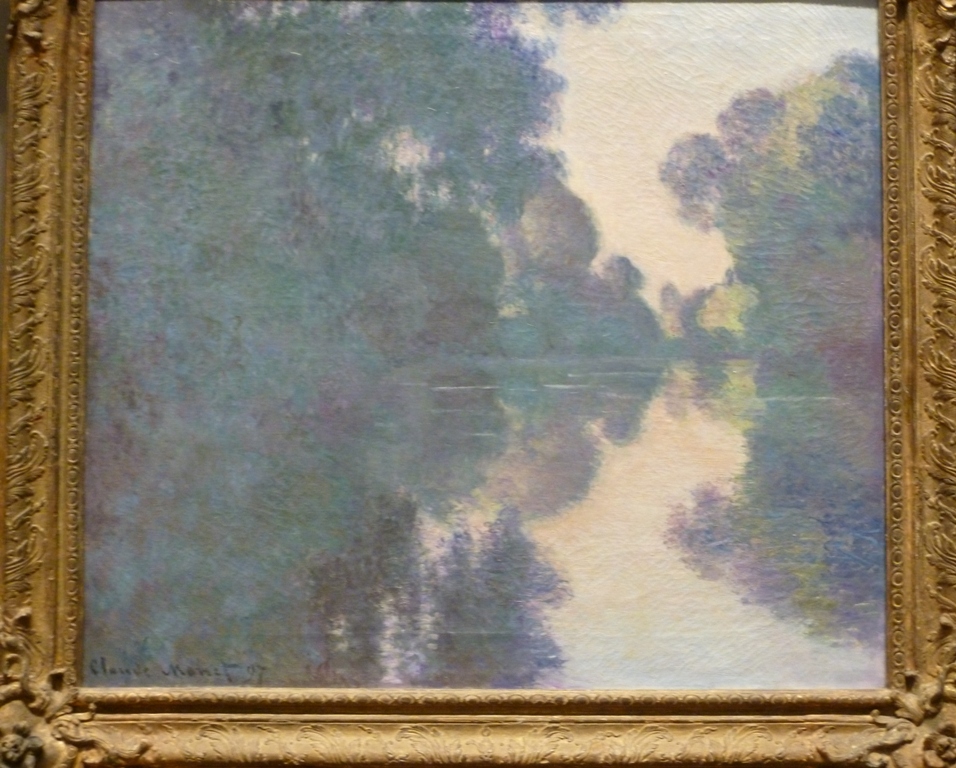
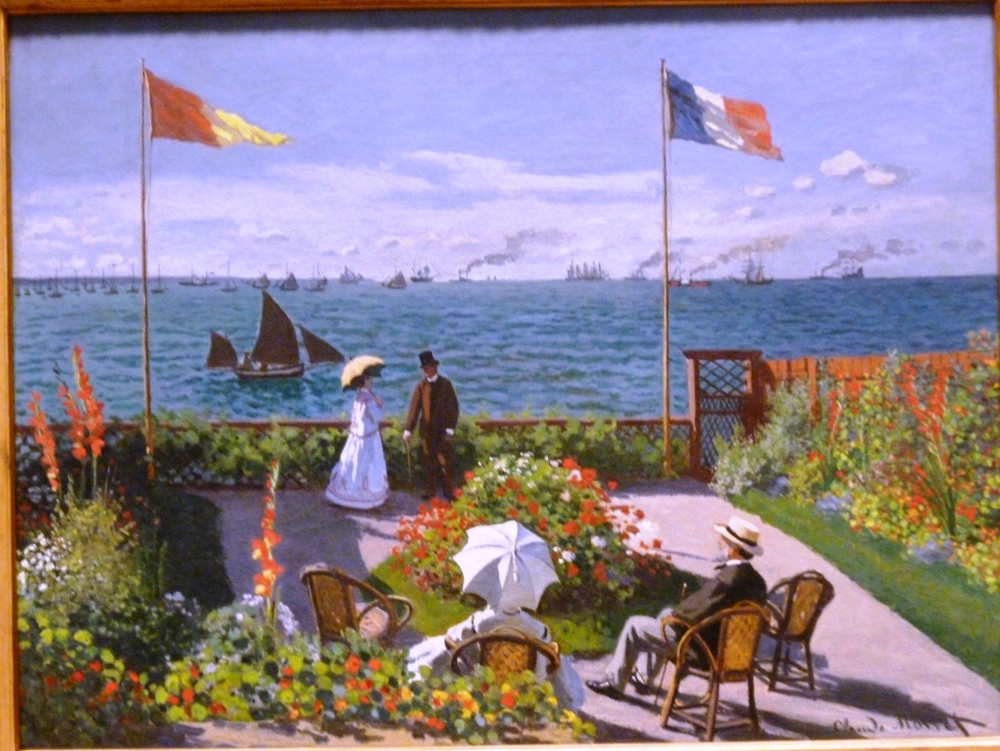
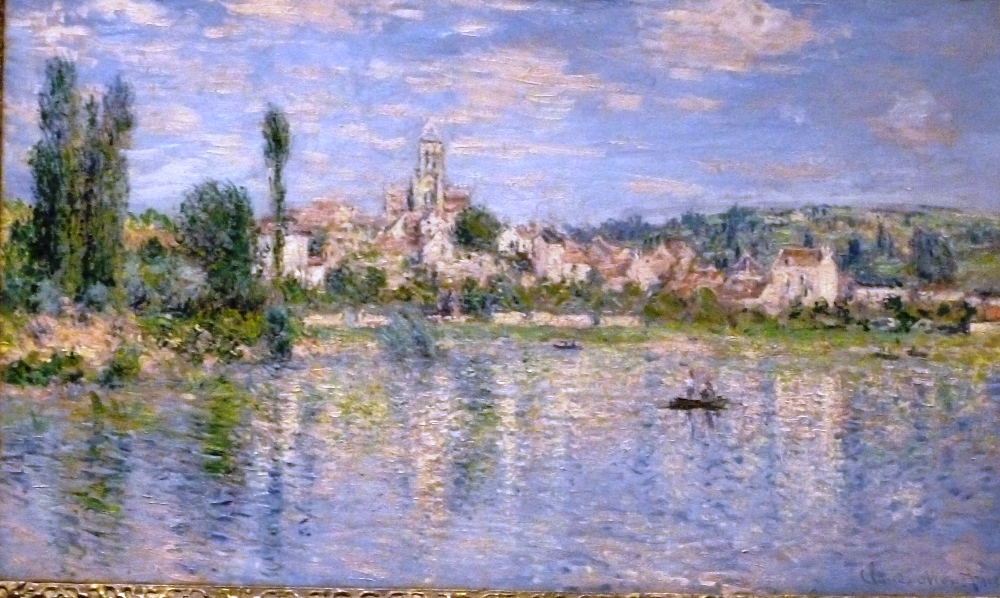
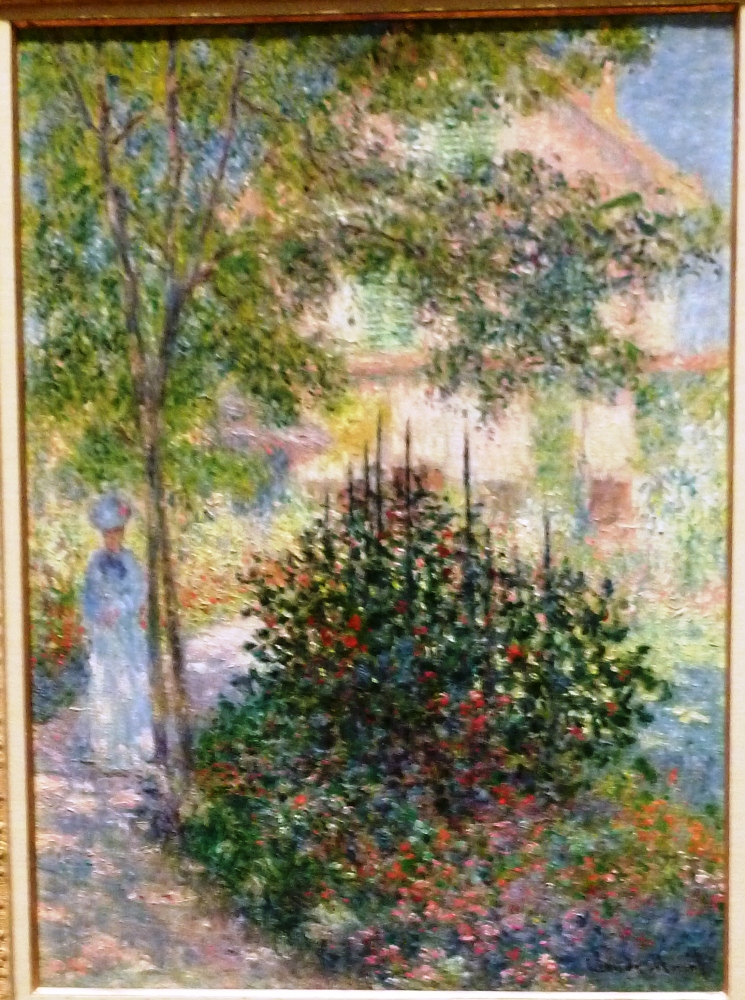
Next a corner of Impressionists containing four works of Claude Monet, who said, “Light changes even stone.”
Monet worked on the same subject, painting it repeatedly in different lights to explore this idea of light and mood. In these paintings, he also used complimentary colors, blue and gold, to help create a soothing effect. He spent three years on this motif, renting an apartment in a drapery store located across the street from Parliament, so he could render the subject in varying light. He used impasto, a style of layering on paint.
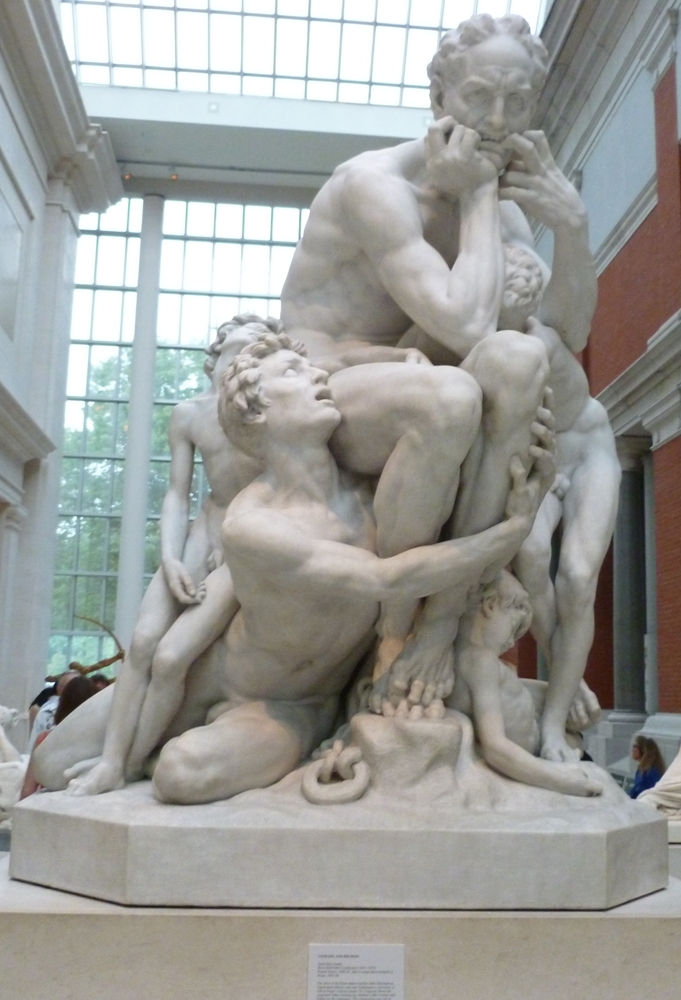
During this period, sculpture employed studied composition, as shown in this piece, which displays a highly orchestrated, triangular arrangement, with smaller figures below and the main figure being the largest in the middle.
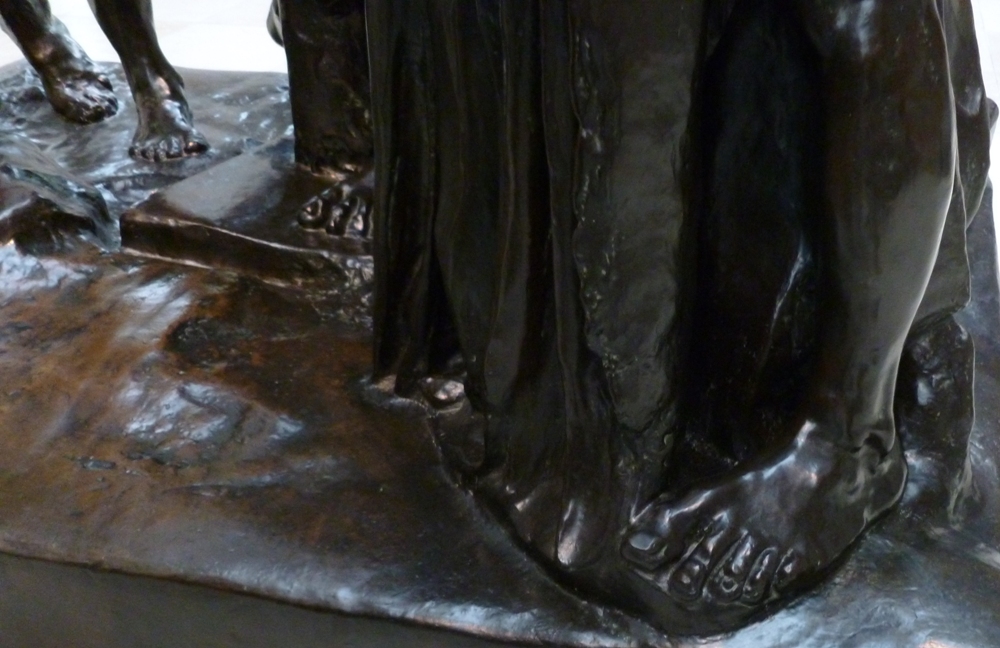
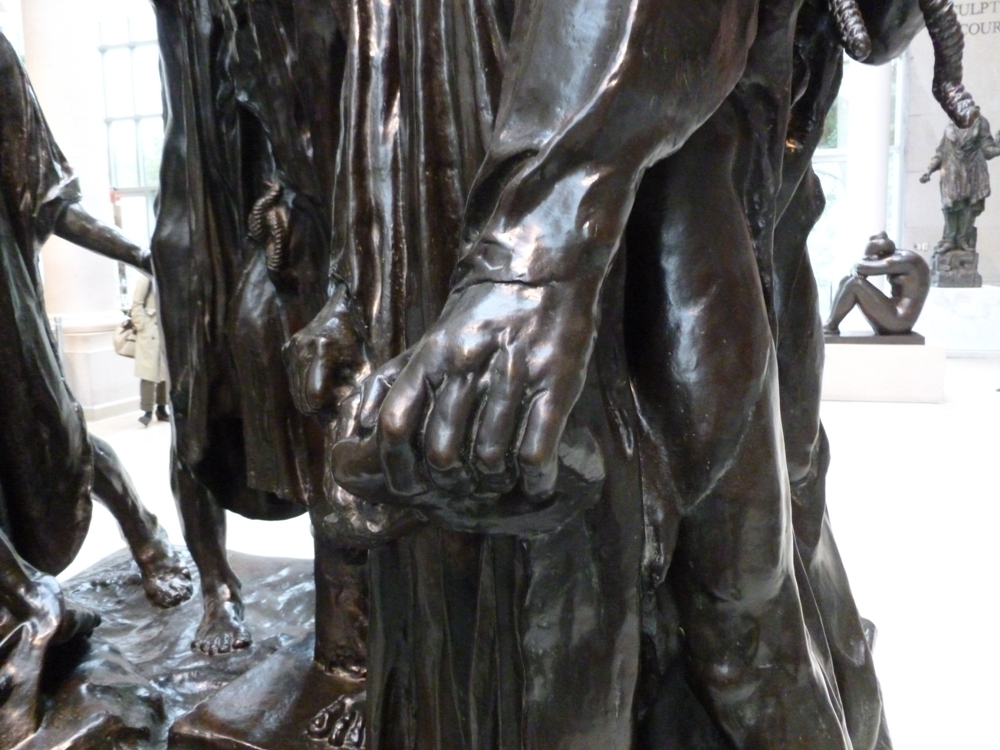
Then Rodin shocked the Paris scene with this sculpture called the Burghers of Calais. Rodin revolutionized sculpture on many levels, depicting ordinary people performing heroic acts, with figures formed in equal and realistic sizes, walking rather than posing,
When Calais was under siege, these burghers offered themselves to the king as hostages to save their town.
Rodin believed that the hands and feet reveal our emotions so he made them larger. The feet are big and heavy, rooted to the ground by the burden they carried.
There is a happy ending to the Burghers-of-Calais story. The queen, upon hearing the story, persuaded the king to set the men free.
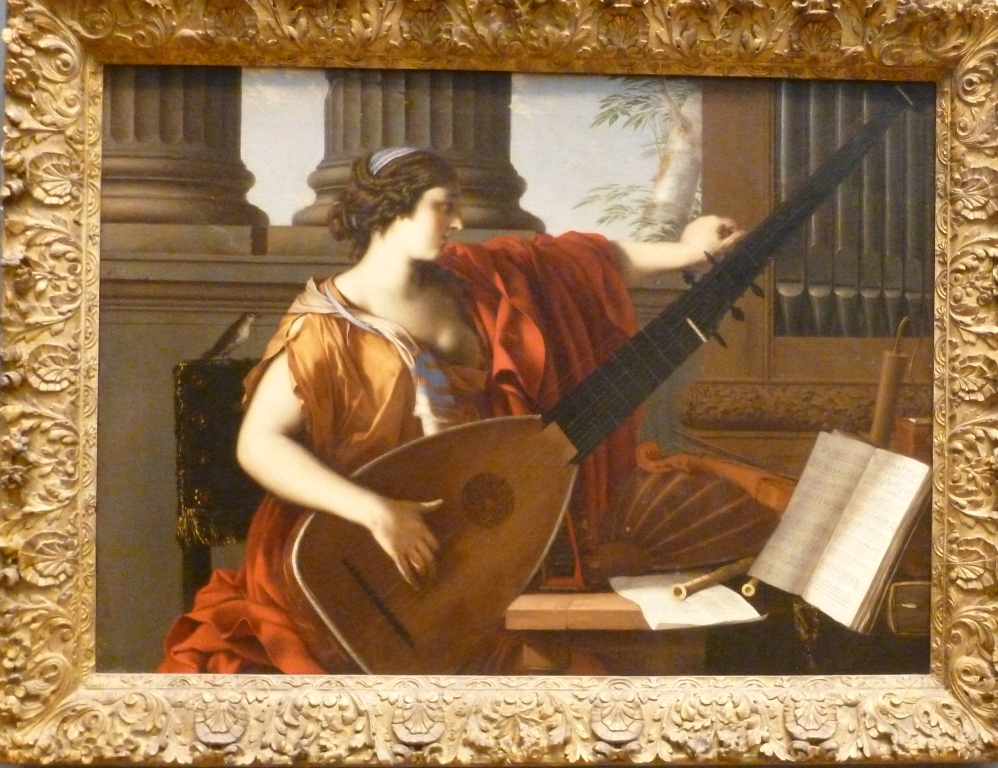
In the baroque period you see allegorical painting, with the different elements of the composition representing different concepts; for example the bird represents natural music and the lute represents man-made music.
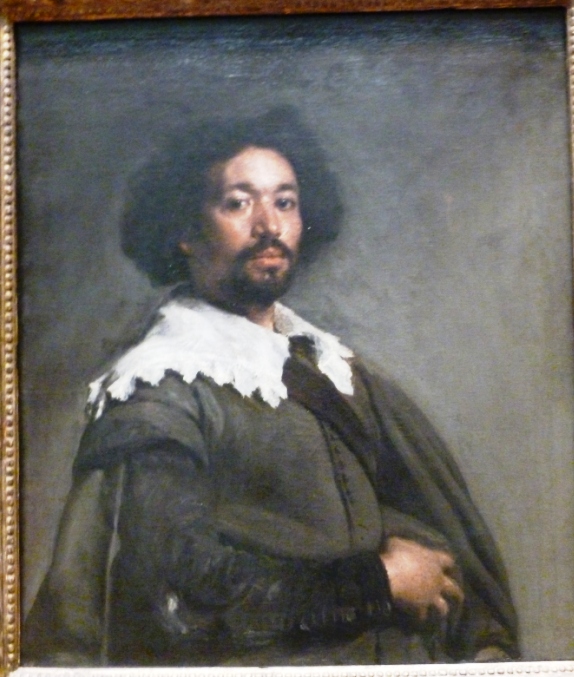
A year, later, Velasquez launched a new direction with this piece, in which he painted an ordinary man and his emotions, breaking with tradition and launching a new period. This painting depicts his slave, whom he freed shortly after doing this portrait. The slave liked working with Velasquez though, so he stayed with him as a salaried employee. The former slave was also a painter.
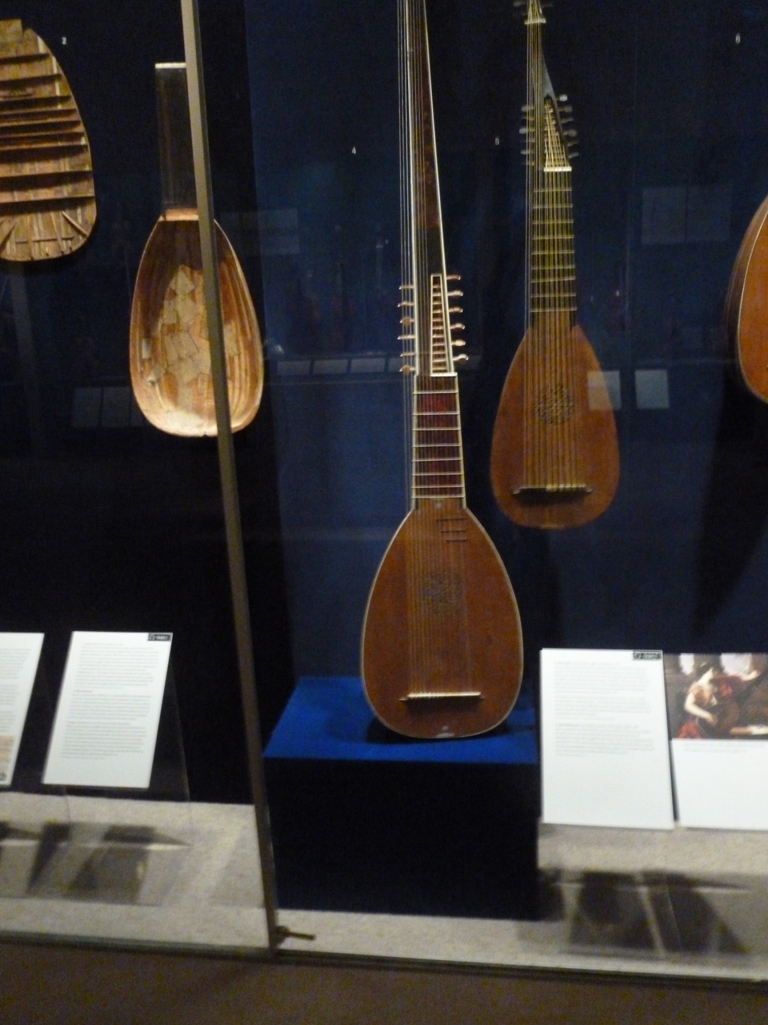
Next, visit the music gallery where you’ll see a lute, invented at the time of the above allegorical painting.
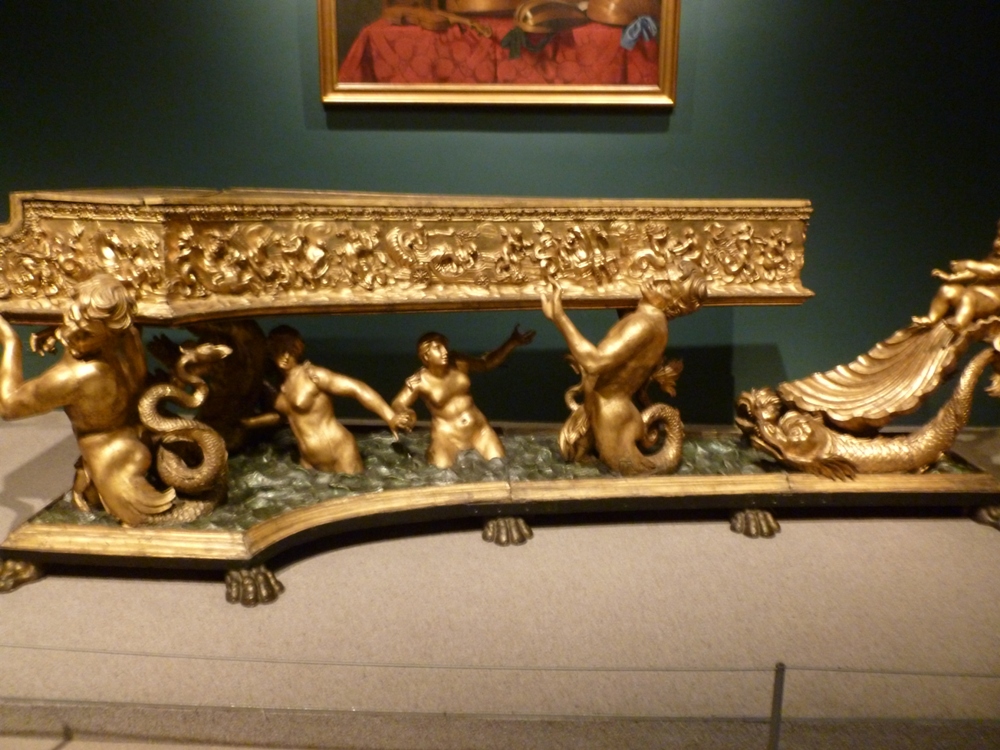
This room shows the baroque period’s leisurely pace and the abundance of the period in which the invention of new instruments blossomed. This harpsichord is decorated in real gold. The frieze and figures depict a story.
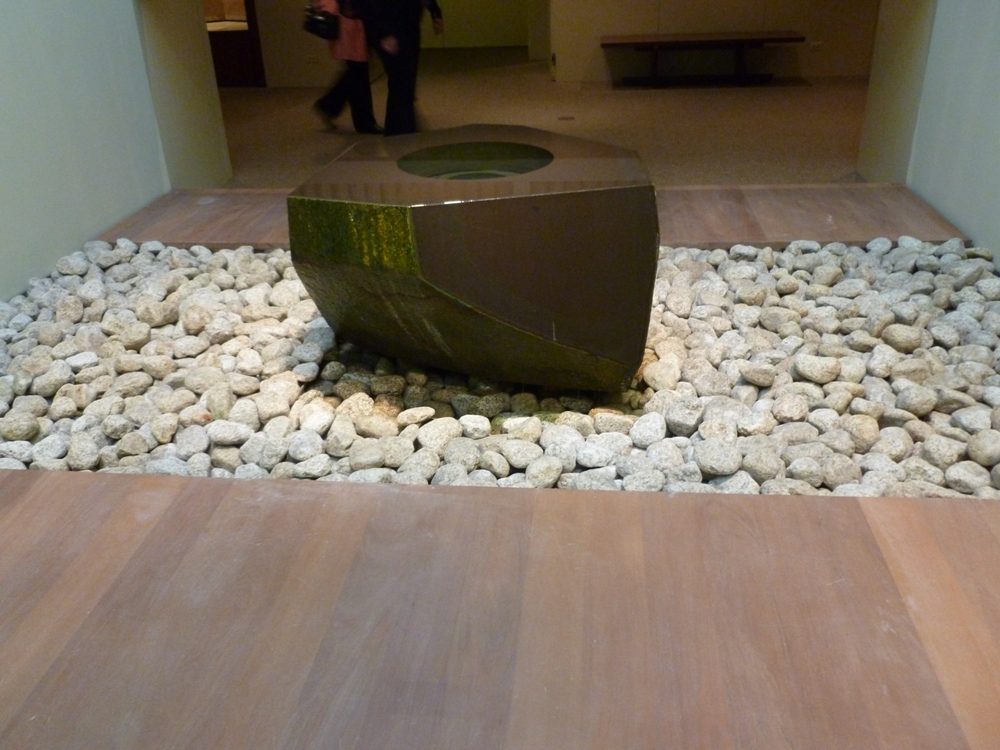
Can a room be art? Visit this room created by a Japanese artist. The water flows evenly over all sides of this stone, which is carved to be different on each side. The giant stone from the artist’s home area sits on a bed of rocks from a sacred river.
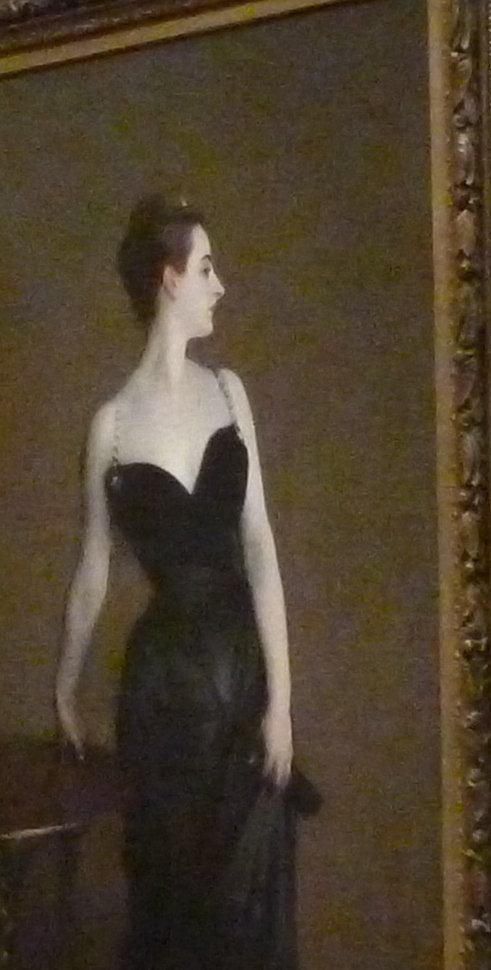
End the tour with this painting of an American woman living in Paris by an American artist. The woman was obsessed with having pale skin, taking arsenic and using lavender powder to make it more pale. (This painting is distorted by the angle from which it was shot.)
The painting created a huge scandal in Paris and nearly destroyed the artist’s career so he went back to painting people in their proper clothes.
At the end of his life, the artist donated the scandalous painting to the Metropolitan and said it was the best work he achieved in his career, and it was one of his first. Artists, pay attention, be careful about creating only things that conform to society’s mores.
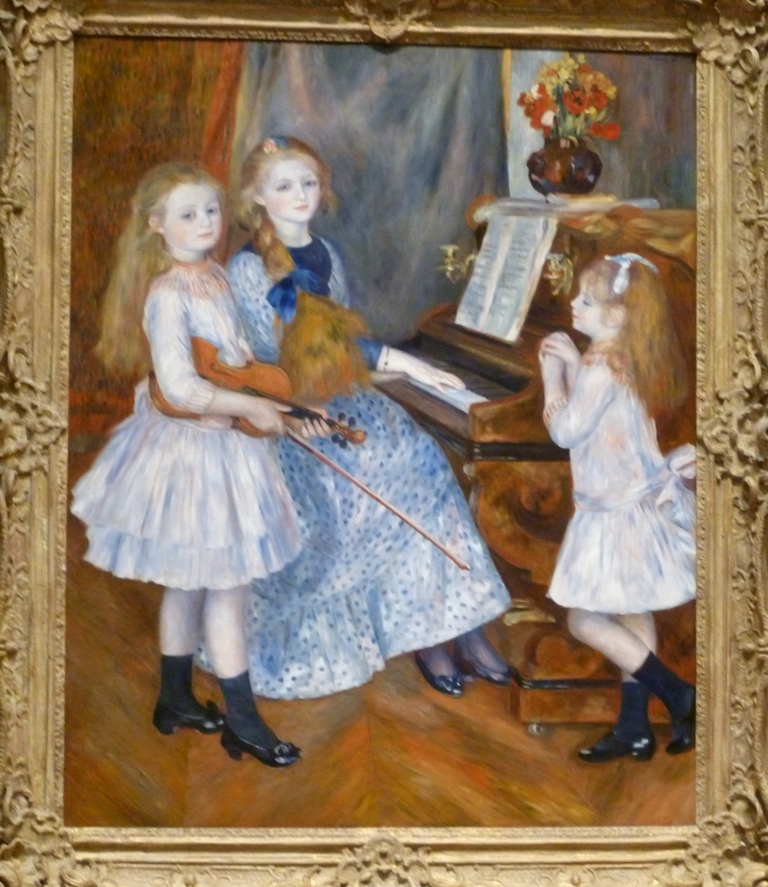
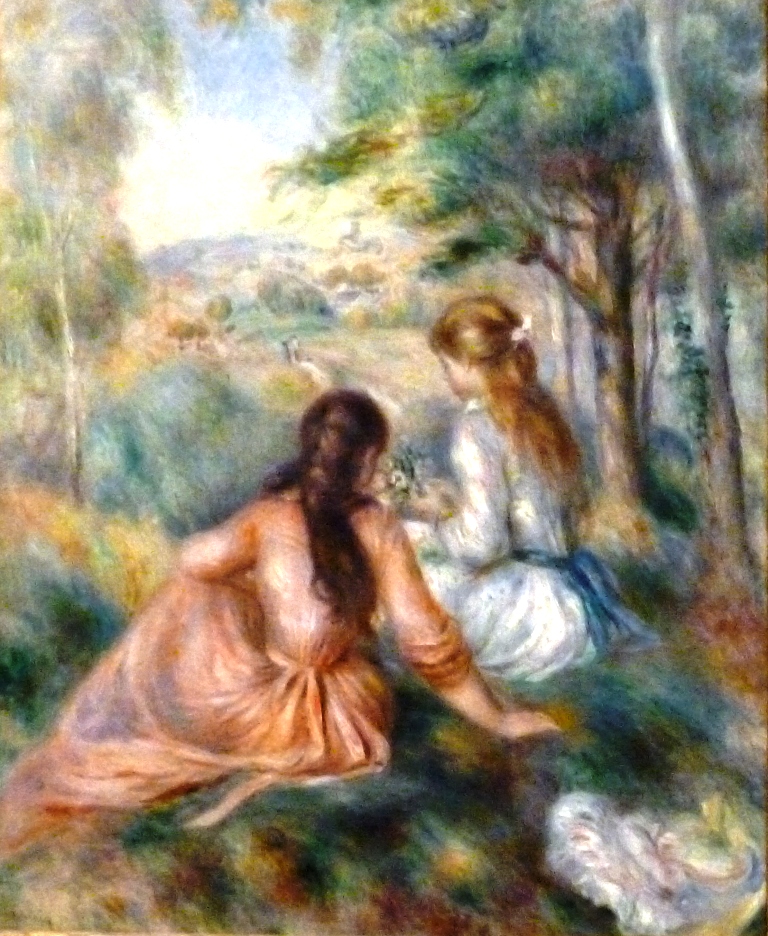
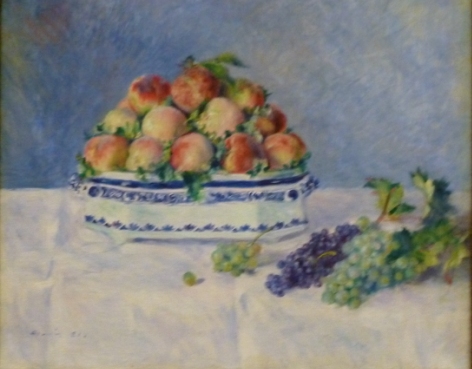
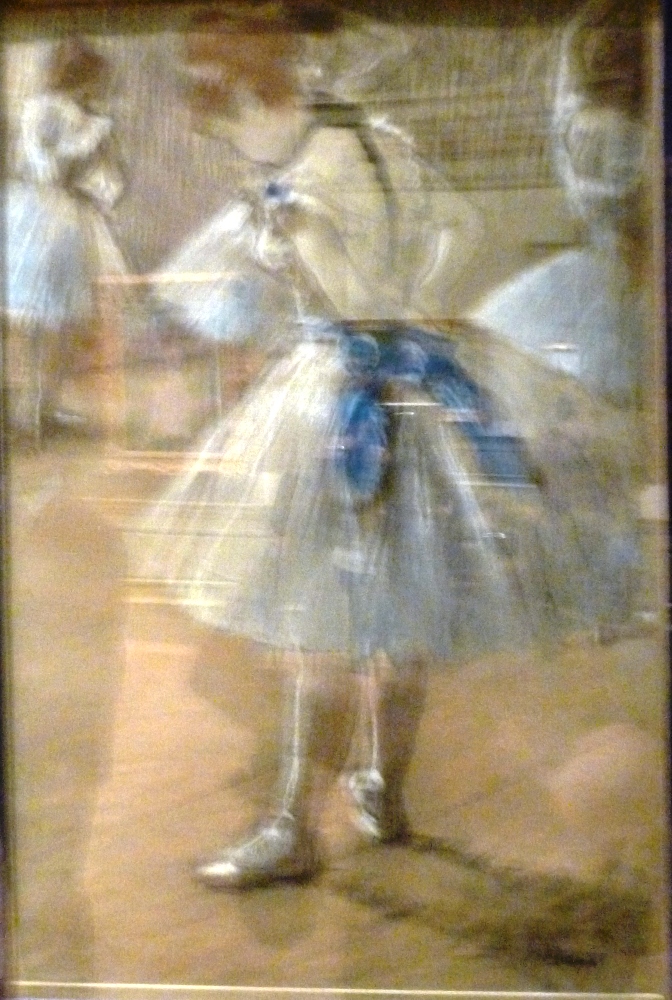
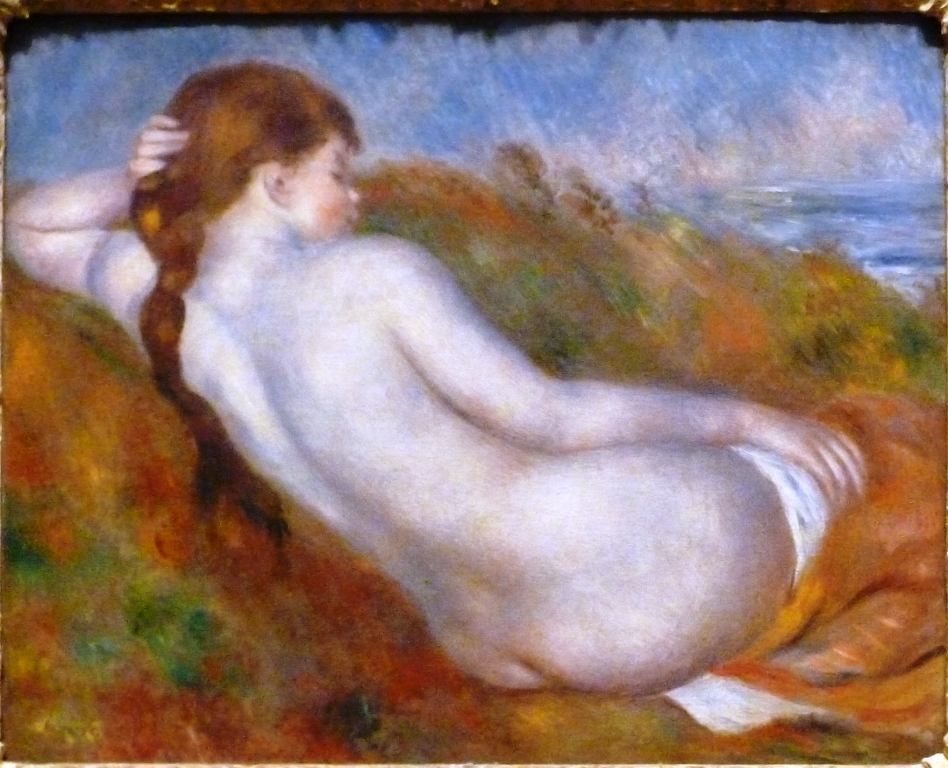
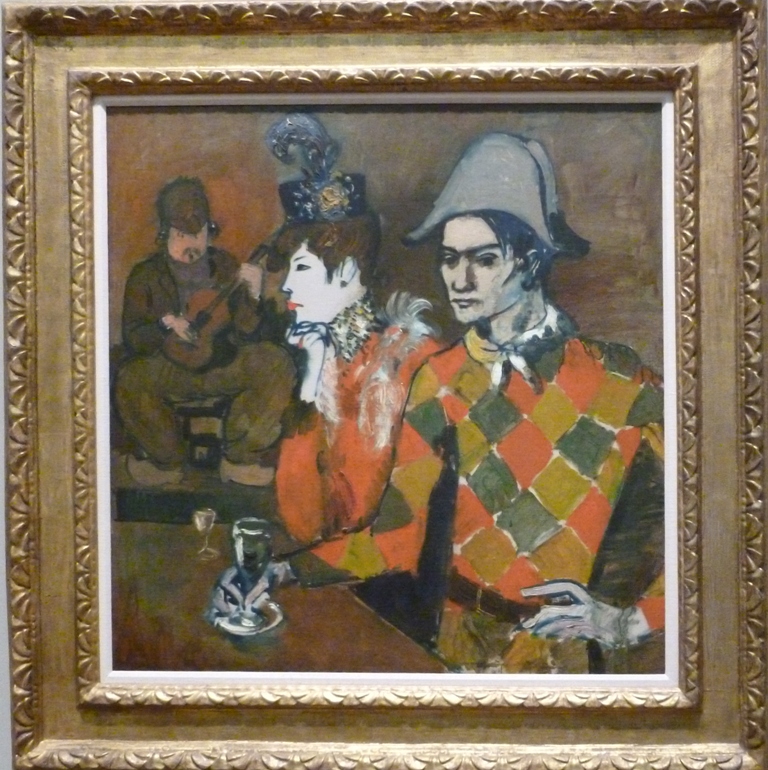
Return to the impressionist galleries to linger over a visual feast.
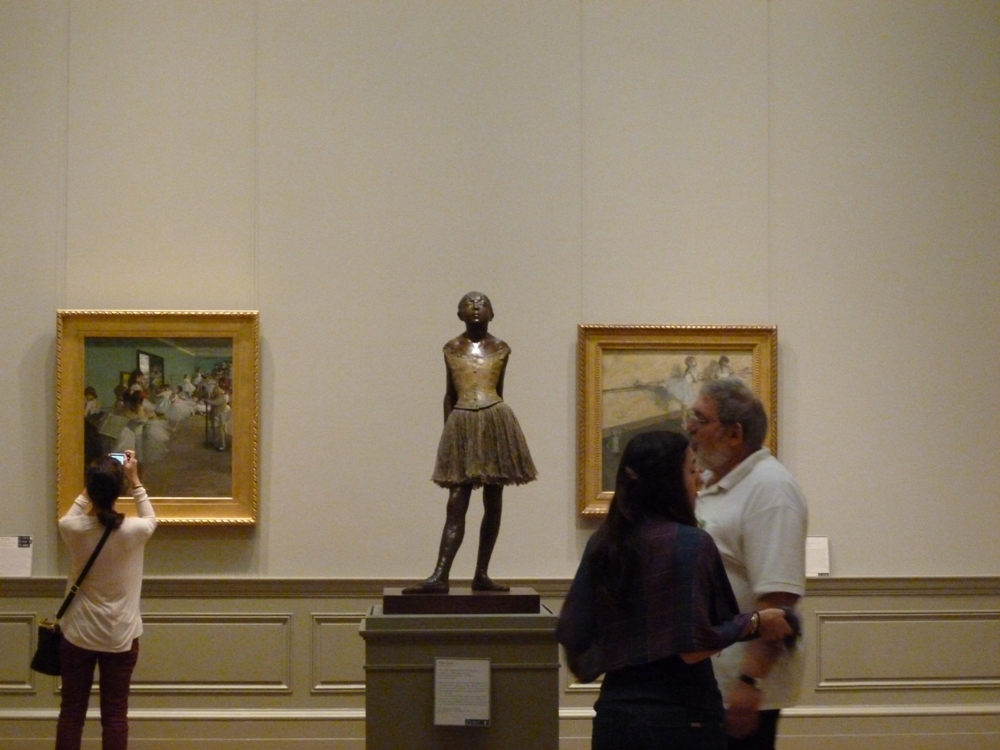
RenoirRenoirMonetMonetMonet (believe it or not)MonetRenoirRenoirDegasRenoir























































 Nicci Carrera